


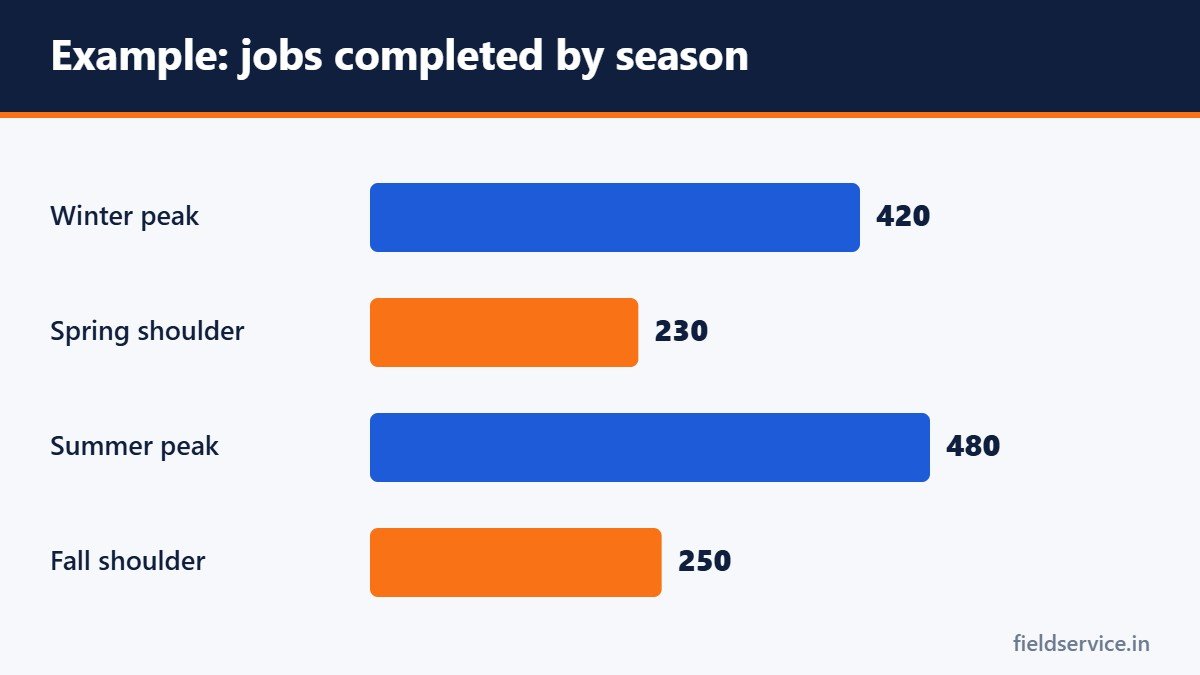
In heating and cooling, the year has a shape. The first hot week of summer and the first cold snap of winter bring more calls than the business can handle. Spring and fall bring long, quiet weeks. Other trades have their own rhythm: plumbers see frozen pipes in winter, and roofers and landscapers are ruled by the weather. A business that plans only week to week is overwhelmed in the peaks and short of cash in the troughs. One that plans the year ahead uses the quiet months to make the busy ones go well.
Map your own year
Take the last two or three years of records and chart, month by month:
- Calls received and jobs completed
- Revenue
- Overtime hours
- Jobs turned away or delayed
The pattern is usually clearer than owners expect, and it repeats. That chart is the basis for everything else.
Before the peak
People
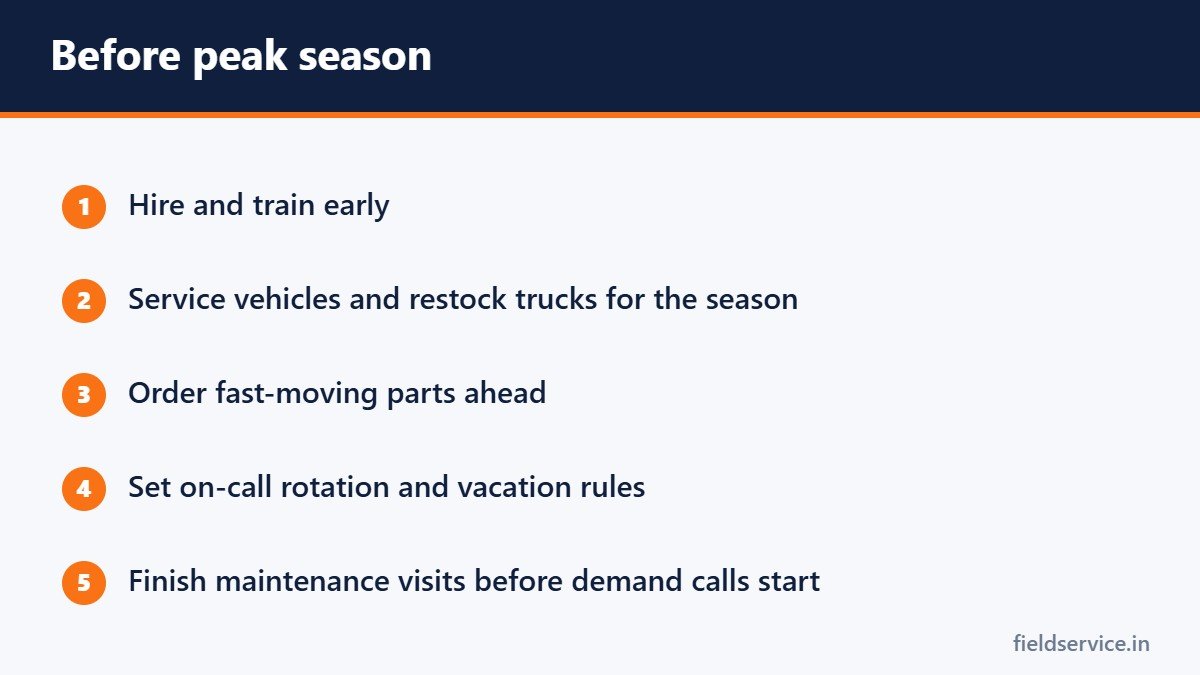
- Hire and train before the season. A technician hired in July is being trained when you can least afford the time. See how to onboard a new technician.
- Set the on-call rotation and the overtime expectations in advance. See on-call pay.
- Agree vacation rules for peak weeks early, so that nobody is surprised.
Trucks and stock
- Service the vehicles.
- Change truck stock to the coming season’s parts. See truck inventory management.
- Order the fast-moving parts early. Suppliers run short in a heat wave.
- Calibrate instruments and check recovery equipment and gauges.
Systems
- Review the price book and after-hours rates.
- Check that phone coverage and call handling can cope with the volume.
- Refresh technicians on the faults they will see most.
During the peak
- Prioritize. Agreement customers, vulnerable customers and no-heat or no-cool emergencies first. Decide the order in advance.
- Be honest about lead times. A customer told “Thursday” who is seen on Thursday is happier than one told “tomorrow” who waits three days.
- Widen arrival windows and add buffers. See arrival windows.
- Watch fatigue. Long weeks in extreme temperatures lead to mistakes, callbacks and accidents. See heat safety and cold stress.
- Capture leads. Technicians on repair calls will find equipment near the end of its life. Record it for follow-up when things are calmer.
- Put cash aside. The peak pays for the trough.
The shoulder seasons
Spring and fall are when a seasonal business is built or wasted.
Maintenance visits
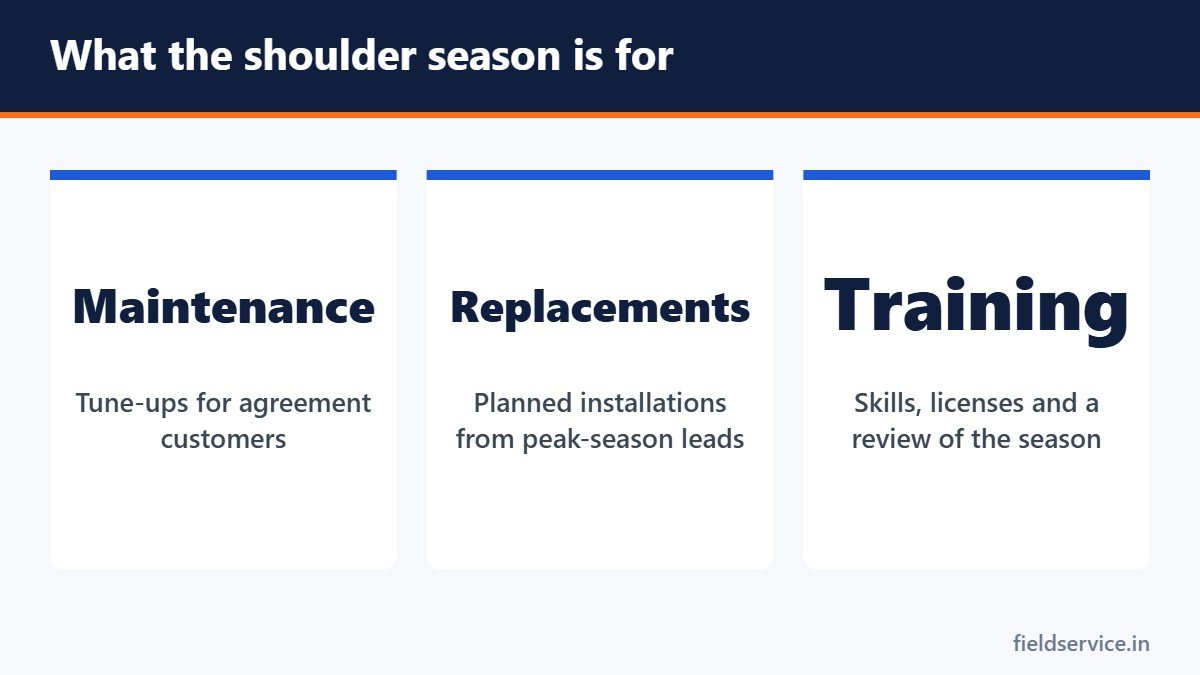
Schedule tune-ups for agreement customers in the shoulder months. They keep technicians billing, find repairs before the peak and reduce emergency calls later. This is the main reason maintenance agreements matter so much to a seasonal business.
Planned replacements and projects
Follow up on the ageing equipment noted during the peak. Customers who replace a system in a mild month avoid an emergency, and you fill your installation schedule when it would otherwise be empty. Some businesses offer off-season pricing for this reason.
Other work
- Indoor air quality: filtration, humidity control, ventilation
- Duct sealing and repair
- Water heaters, thermostats and other add-on work your licenses allow
- Commercial maintenance contracts, which are less seasonal
Training and improvement
- Manufacturer and technical training
- Licenses and certifications. See EPA 608 certification.
- Reviewing the season: callbacks, complaints, parts shortages and what you would change
- Updating the price book, the truck stock list and the procedures
- Vehicle and equipment repairs that were put off
Cash through the year
Revenue is seasonal. Rent, insurance, truck payments and salaries are not.
- Calculate your monthly break-even point and identify which months normally fall below it.
- Build a reserve in the peak months to cover them.
- Collect payment at the time of service. See taking payments in the field.
- Monthly billing for maintenance agreements smooths income.
- Time large purchases for when cash is strong.
- Arrange a line of credit before you need it, and treat it as a safety net.
Keeping technicians through the slow months
Laying off good technicians every fall and hoping to rehire them in summer is risky when skilled people are scarce. Alternatives:
- Fill the schedule with maintenance, replacements and add-on work.
- Use the time for paid training.
- Encourage vacation in the quiet months.
- Reduce hours evenly, by agreement, before cutting jobs.
- Design pay so that peak-season overtime and bonuses balance leaner months, and be open about the pattern when hiring.
Marketing by season
- Promote maintenance before each season, not during it.
- Remind agreement customers when their visit is due.
- In the peak, you rarely need to advertise for repair calls. Spend on answering the phone well.
- In the shoulder months, promote replacements, air quality and maintenance plans.
- Ask for reviews in the peak, when you are doing the most work. See how to get more customer reviews.
Measure by season
Compare each month with the same month last year, not with the month before. Revenue per technician, first-time fix rate and callback rate all move with the season. A callback rate that climbs in July may mean rushed work under pressure, which is worth knowing before next July.
A yearly planning calendar
- Late winter: review the heating season. Plan spring maintenance. Hire for summer.
- Spring: cooling tune-ups. Restock for summer. Train on cooling faults.
- Summer: peak. Prioritize, record leads, save cash.
- Late summer: review the cooling season. Plan fall maintenance.
- Fall: heating tune-ups. Restock for winter. Follow up on replacement leads.
- Winter: peak. Prioritize, record leads, save cash.
The dates shift with your climate and your trade. The principle holds: decide what each quiet period is for before it arrives.
Related guides
- How to Become an HVAC Technician: Pay, Training and Certification
- R-410A in 2026: What the EPA Rule Change Means for HVAC Technicians
- Technician Utilization: What It Measures and What a Good Number Looks Like
Three Excel workbooks that take you from what a technician costs to what to charge, then show whether each job made money.
Not sure yet? Try two forms free or see all packs.
Frequently asked questions
How do HVAC companies stay busy in the slow season?
By scheduling maintenance visits for agreement customers, following up on replacement leads found during the peak, offering related work such as air quality and duct repair, and using the time for training.
When should a seasonal service business hire?
Before the peak, so that new technicians are trained when demand arrives. Hiring in the middle of the busy season means training people when there is the least time to do it.
How can a seasonal business manage cash flow?
Know your monthly break-even, build a reserve during peak months, collect payment at the time of service, bill maintenance agreements monthly and arrange a line of credit before it is needed.
What should be done before peak season?
Hire and train, service vehicles, restock trucks with seasonal parts, order fast-moving parts early, set the on-call rotation and complete maintenance visits.