

If you want to work on air conditioners, heat pumps or refrigeration equipment in the United States, there is one credential you cannot skip. Section 608 of the Clean Air Act requires technicians who work with refrigerants to be certified. This guide explains who needs it, what the four types cover and what to expect from the exam.
Who needs it
The EPA requires certification for anyone who maintains, services, repairs or disposes of equipment in a way that could release refrigerant into the atmosphere. In practice that includes attaching gauges, adding or removing refrigerant, and opening the sealed system. The requirement covers ozone-depleting refrigerants and their substitutes, including the HFC refrigerants used in most modern equipment.
Sales of these refrigerants are also restricted to certified technicians, so without the card you cannot buy them.
The four types
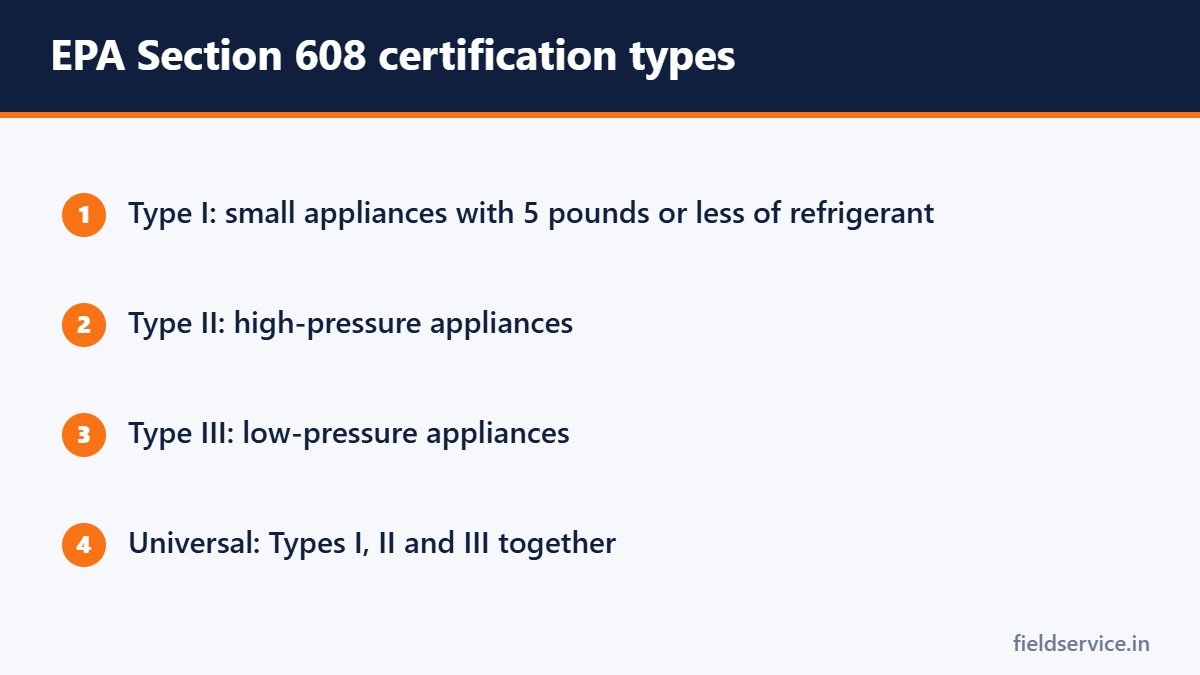
- Type I covers small appliances that are factory sealed and hold five pounds or less of refrigerant, such as household refrigerators, window air conditioners and vending machines.
- Type II covers high-pressure and very high-pressure appliances. This is the category for most residential and commercial air conditioning and heat pumps.
- Type III covers low-pressure appliances, mainly large chillers.
- Universal means you have passed all three.
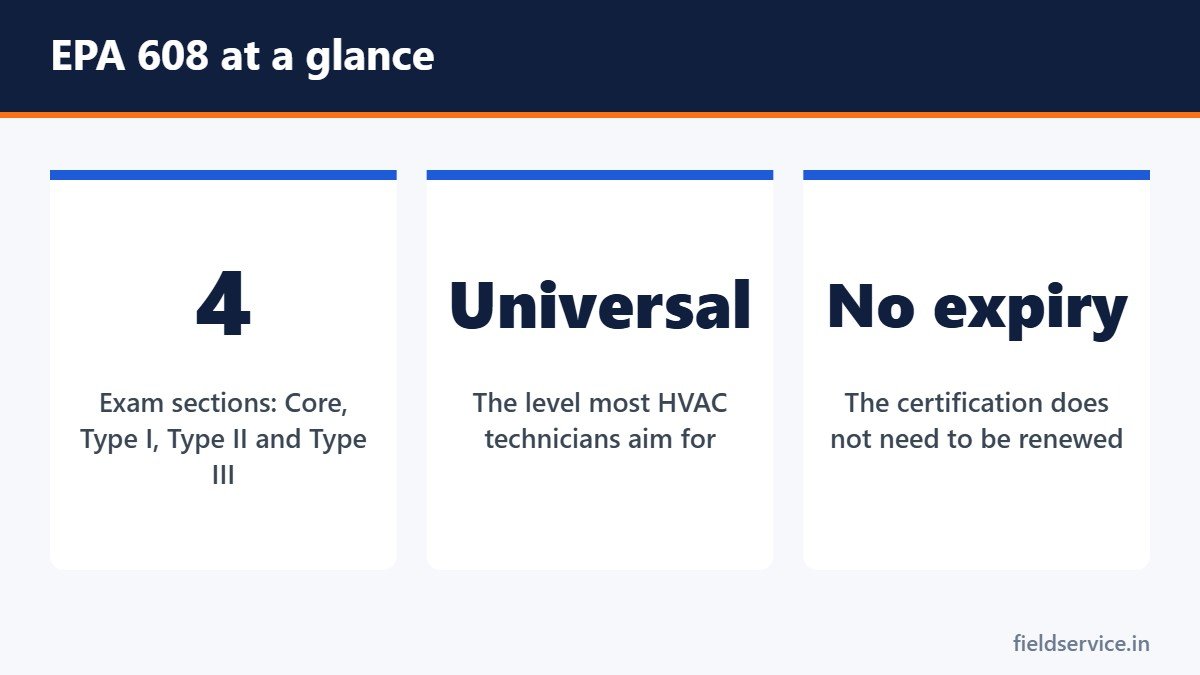
Most people starting out in HVAC aim for Universal so they are not limited later.
How the exam is structured
The test has four sections: a Core section and one for each type. Core covers the material every technician needs, such as ozone depletion, the regulations, the refrigeration cycle, recovery and safe handling. You must pass Core plus the section for each type you want. Pass all four and you hold Universal certification.
Exams are given by organizations the EPA has approved. Trade schools, community colleges, supply houses and unions often host them, and many HVACR training programs include the exam.
What the rules require once you are certified
- No venting. Knowingly releasing regulated refrigerant during service or disposal is prohibited.
- Recover refrigerant with certified recovery equipment before opening or disposing of a system.
- Follow leak repair rules on larger systems, where they apply.
- Keep records where the regulations call for them.
Violations can lead to significant fines for technicians and their employers.
It does not expire
Section 608 certification does not have to be renewed. Keep your card or certificate somewhere safe, and keep a photo of it on your phone. Employers and supply houses will ask to see it. If you lose it, the organization that certified you can issue a replacement.
How to prepare
- Get a current study guide from an EPA-approved certifying organization.
- Learn the Core material thoroughly, since every other section builds on it.
- Take practice tests until you pass them consistently.
- Sit the exam through a school, a supply house or another approved provider.
What it does not cover
- Vehicle air conditioning falls under a separate program, Section 609.
- State and local licenses are separate and vary widely.
- Voluntary industry certifications, such as NATE, are additional.
Newer refrigerants such as R-454B and R-32 are covered by the same certification, though extra training on handling them is worthwhile. Our guide to the R-410A rule change explains what is different about them, and how to become an HVAC technician covers the wider path into the trade.
Related guides
- How to Write a Field Technician Resume
- How to Ask for a Raise as a Field Technician
- Apprentice, Journeyman and Master: What the Trade Levels Mean
Sources
- EPA, Section 608 Technician Certification
- EPA, Section 608 of the Clean Air Act: Stationary Refrigeration and Air Conditioning
Six everyday forms in Word and PDF, plus Excel workbooks that total mileage reimbursement and overtime pay.
Not sure yet? Try two forms free or see all packs.