

The busiest weeks of the year for many technicians are also the hottest. An attic in July can be far hotter than the air outside, and a rooftop offers no shade. Heat illness develops faster than most people expect, and it affects experienced workers as well as new ones. The good news is that it is largely preventable.
Why field technicians are at risk
- Attics, crawl spaces and mechanical rooms trap heat.
- Rooftops and paved areas are in direct sun.
- The work is physical.
- Protective clothing holds heat in.
- Long days during a heat wave leave little time to recover.
Water, rest and shade
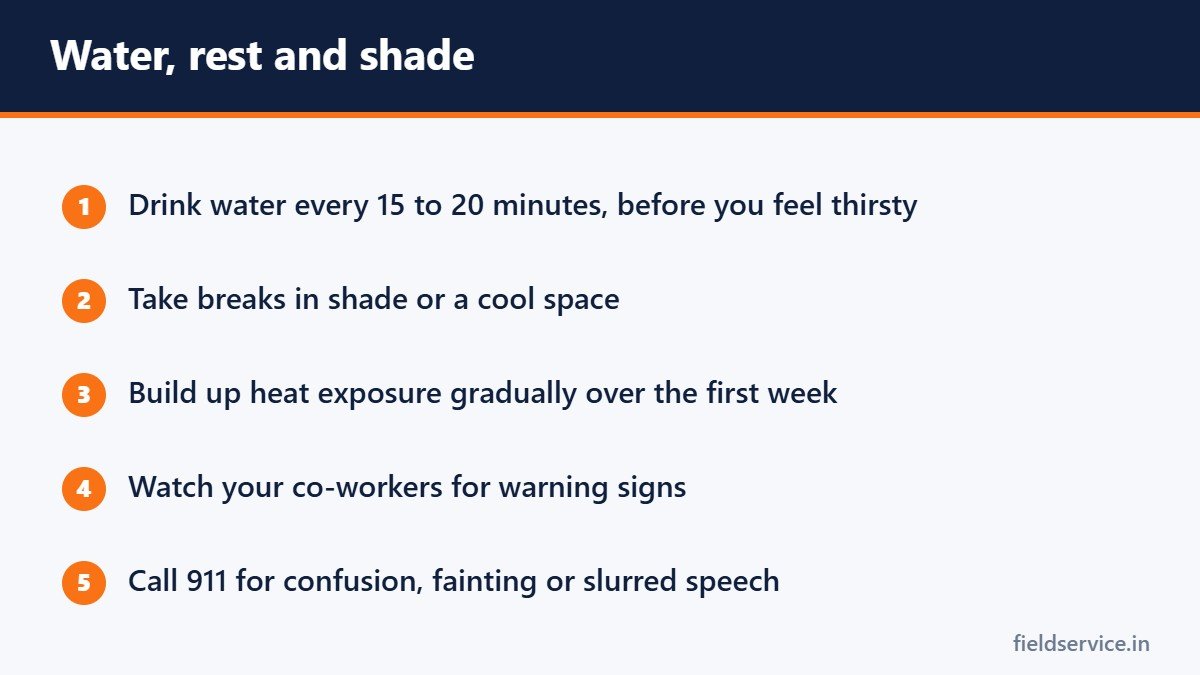
OSHA’s heat guidance comes down to three words: water, rest, shade.
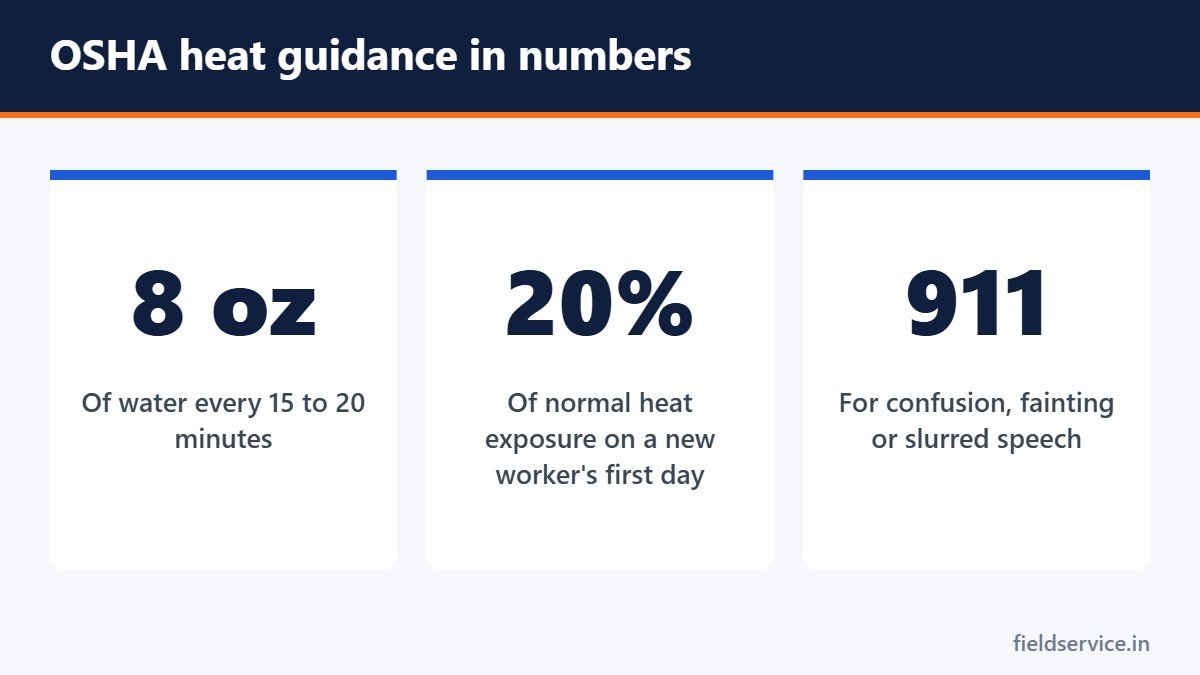
- Water. Drink about one cup (8 ounces) every 15 to 20 minutes while working in the heat, even if you are not thirsty. For long periods of sweating, add drinks that contain electrolytes.
- Rest. Take breaks long enough to cool down. On very hot days, take them more often.
- Shade. Rest somewhere cool. An air-conditioned truck counts.
Build up gradually
Many serious heat illnesses happen in a worker’s first days on the job or after time away, before the body has adapted. OSHA recommends that new workers do no more than 20 percent of the usual duration of work in the heat on the first day, and increase by no more than 20 percent on each following day. Workers returning from a week or more away need a shorter version of the same build-up.
Know the warning signs
Heat exhaustion
- Headache, dizziness or weakness
- Heavy sweating
- Nausea
- Thirst and irritability
Move the person to a cool place, give water, loosen clothing and cool them with wet cloths. Do not leave them alone, and get medical help if they do not improve quickly.
Heat stroke
- Confusion or slurred speech
- Fainting or seizures
- Very high body temperature
- Skin that is hot and dry, or heavy sweating
Heat stroke is a medical emergency. Call 911 immediately. Move the person to a cooler area and cool them as fast as you can with cold water, ice or wet cloths until help arrives.
Practical steps for attic and rooftop work
- Schedule the hottest locations for early morning where you can.
- Limit time in the attic and come down for regular breaks.
- Take water with you.
- Tell someone where you are and when you expect to be finished.
- Use a fan or portable ventilation if it is available.
- Stop and get out if you feel dizzy, sick or unusually tired.
Clothing and gear
- Light-colored, breathable, loose clothing
- A hat with a brim for outdoor work
- Sunscreen
- A cooling towel or vest on the hottest days
For owners and dispatchers
- Stock every truck with water and replace it daily.
- Allow more time per job during heat waves.
- Bring new hires up to full workload gradually.
- Train everyone to recognize the signs and to speak up.
- Make it clear that nobody will be criticized for stopping to cool down.
- Check on technicians who are working alone.
Some states have their own heat rules for employers. Check what applies where you work.
This article is general information and is not medical advice. In an emergency, call 911.
Related guides
- Working Alone: Safety for Lone Field Technicians
- Working Safely in Attics and Crawl Spaces
- How to Prepare for Emergency and After-Hours Service Calls
Sources
Seven safety forms in Word and PDF, plus an Excel log that counts incidents, open actions and safety meetings.
Not sure yet? Try two forms free or see all packs.