


Toolbox talks are short, informal safety meetings held at the start of a shift or a job. They take five to fifteen minutes and cover one topic. For a service company, where technicians leave the shop early and work alone all day, toolbox talks are often the only regular moment when the whole crew hears the same safety message. Done well, they prevent injuries. Done badly, they are a form to sign while people look at their phones.
What a toolbox talk is, and is not
A toolbox talk is a brief discussion of one hazard or one safe work practice that matters to the work people are about to do. It is not a replacement for formal training. OSHA standards require specific training for many hazards, such as hazard communication, respirators, lockout/tagout and powered equipment. A toolbox talk reinforces that training and keeps it fresh; it does not satisfy the training requirement by itself.
How to run one in ten minutes
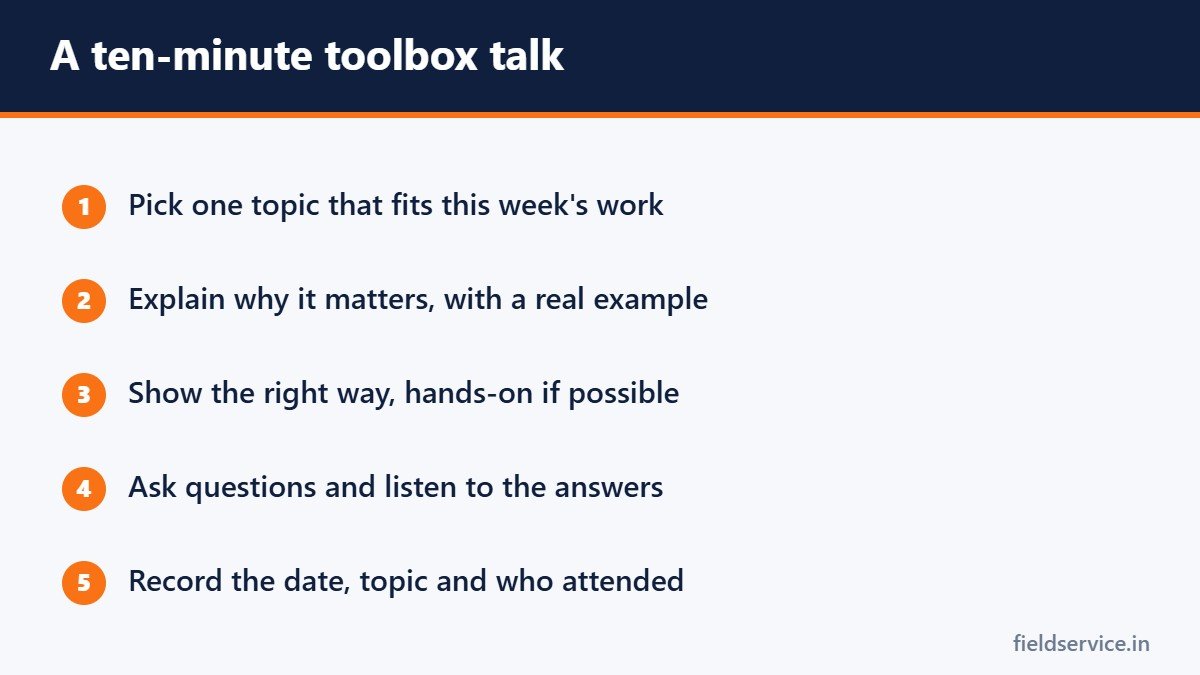
- Choose one topic. Tie it to the season, a recent near miss, or the jobs on the board this week.
- Start with a story. A real incident from your company or your trade holds attention far better than reading a rule aloud.
- Show, do not only tell. Bring the ladder, the harness or the meter. Have someone demonstrate the inspection.
- Ask questions. “Where have you seen this go wrong?” gets better answers than “Any questions?”
- Agree one action. End with one thing everyone will do differently this week.
- Record it. Note the date, topic, presenter and attendees.
Tips that keep people listening
- Hold it at the same time each week so it becomes routine.
- Keep it short. Ten minutes that people remember beats thirty that they do not.
- Rotate the presenter. Technicians listen to each other, and preparing a talk teaches the presenter more than anyone.
- Stand at the truck or the workbench, not in a conference room.
- Use plain language, and present in the language your crew speaks. OSHA expects training to be given in a way workers understand.
- Follow up. If someone raises a hazard, fix it and report back at the next talk.
A 12-month topic calendar for service work
Plan topics around the seasons so each talk arrives just before the hazard does.
| Month | Topic | Related guide |
|---|---|---|
| January | Cold stress, ice and winter driving | Cold stress on winter calls |
| February | Carbon monoxide and combustion safety | Carbon monoxide safety |
| March | Ladder inspection and setup | Ladder safety |
| April | Electrical safety and lockout/tagout | Lockout/tagout basics |
| May | Heat illness: water, rest, shade | Heat safety |
| June | Attics and crawl spaces | Attic and crawl space safety |
| July | PPE: inspection and replacement | PPE for field technicians |
| August | Lifting, carrying and back injuries | |
| September | Driving, backing and distraction | Driving safety |
| October | Job hazard analysis before each job | Job hazard analysis |
| November | Working alone and check-in routines | Lone worker safety |
| December | Slips, trips and falls; year-end review |
Use near misses as topics
The best topics come from your own jobs. A ladder that slipped but did not fall, a breaker that was labeled wrong, a van that nearly backed into a post: each is a free lesson. Ask technicians to report these without blame, and discuss one at the next talk. People pay attention when the example happened to someone they know.
What to record
Keep a simple sign-in sheet for every talk. It shows what was covered and who was there, which matters if an insurer, a customer or an inspector asks about your safety program.
- Date, time and location.
- Topic and the name of the presenter.
- Printed names and signatures of everyone who attended.
- Questions or hazards raised, and who will follow up.
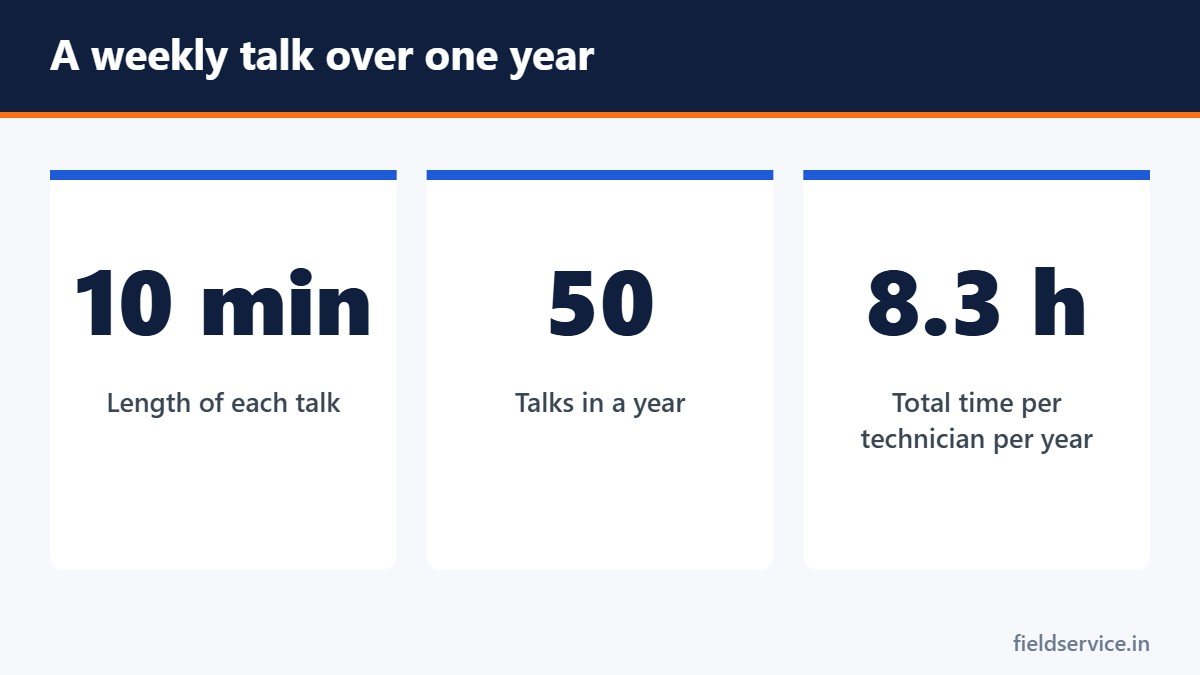
Ten minutes a week adds up to about one working day per technician per year. Compared with the cost of a single lost-time injury, it is a small investment.
Common mistakes
- Reading a printed sheet word for word.
- Covering three topics instead of one.
- Holding talks only after an accident.
- Collecting signatures without holding the talk. A signed sheet for a meeting that did not happen is worse than no sheet.
- Never acting on what technicians raise.
New hires should hear the core topics in their first weeks; see onboarding a new technician.
Related guides
- What to keep in a service vehicle
- How to organize a field service day
- Emergency and after-hours service calls
Sources
- OSHA: Recommended practices for safety and health programs
- OSHA: Training requirements and resources
Seven safety forms in Word and PDF, plus an Excel log that counts incidents, open actions and safety meetings.
Not sure yet? Try two forms free or see all packs.
Frequently asked questions
How long should a toolbox talk be?
Five to fifteen minutes is typical. It should be long enough to cover one topic properly and short enough to hold attention.
How often should toolbox talks be held?
Weekly is the most common schedule for service and construction crews. Some companies hold a brief talk daily and a longer one each week.
Does OSHA require toolbox talks?
OSHA does not require toolbox talks by that name for most service work, but it does require employers to train workers on the hazards of their jobs. Toolbox talks support that training and help show an active safety program.
Who should lead a toolbox talk?
A supervisor or lead technician usually does, but rotating the role among experienced technicians keeps talks fresh and builds ownership.
Do we need to keep records of toolbox talks?
Keeping a dated sign-in sheet with the topic and attendees is good practice. It documents your safety efforts for insurers, customers and regulators.
This article is general information and does not replace your company’s safety program or the training that OSHA and your state require.