

Most field technicians spend the day alone. They drive alone, work in attics and mechanical rooms alone and go into strangers’ homes alone. Nearly all of the time that is fine. The difference shows when something goes wrong. An injury that a co-worker would deal with in a minute becomes serious when nobody knows it has happened. Lone worker safety is about making sure that someone always knows where you are and would notice if you did not come back.
Why working alone raises the stakes
- If you are hurt or become ill, nobody is there to help or to call for help.
- Some places, such as crawl spaces, rooftops and plant rooms, have no phone signal and nobody passing by.
- A second person often spots a hazard the first one missed.
- You are alone with customers, and occasionally with people who are hostile or unpredictable.
- Late-night and remote calls combine all of these.
Make sure someone knows where you are
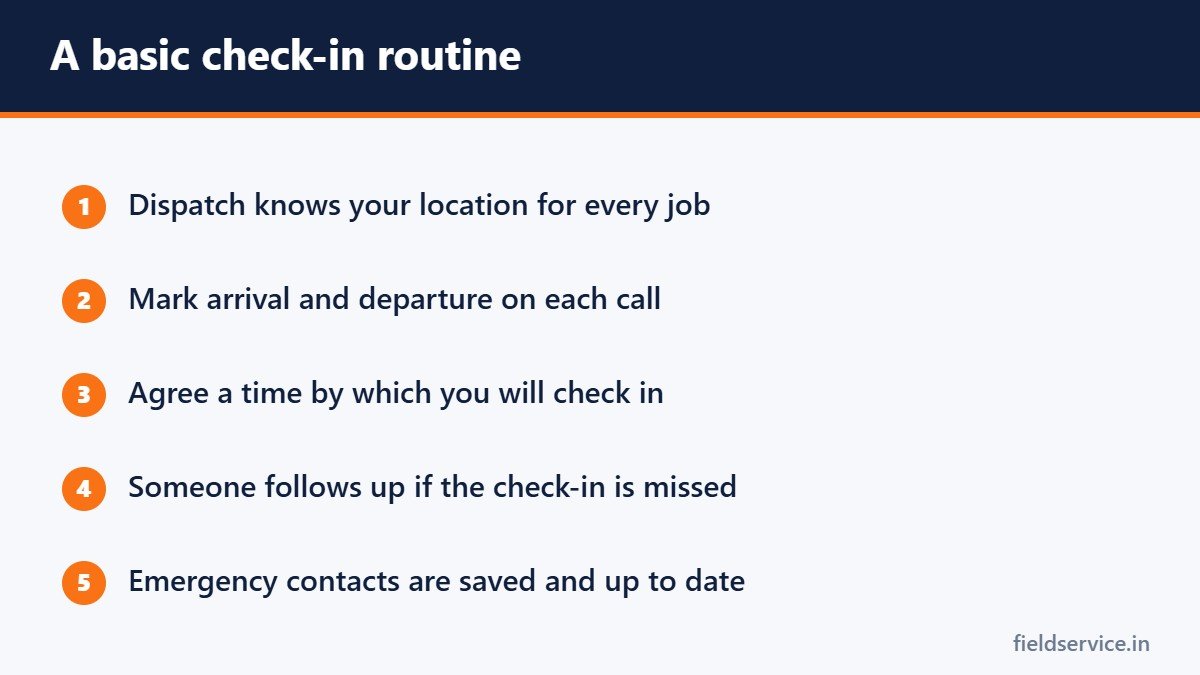
A check-in routine is the foundation.
- Status updates. Mark each job as started and finished in your scheduling app, or tell dispatch.
- Expected duration. If you are about to do something risky or go somewhere with no signal, say so, and say when you expect to be done.
- A missed check-in is acted on. A routine only works if someone calls when the technician is overdue, and escalates if there is no answer.
- After hours. On night calls, tell a supervisor or the on-call contact when you arrive and when you leave. See emergency and after-hours service calls.
Vehicle or phone location tracking helps someone find you. See GPS fleet tracking for service businesses.
Tasks that should not be done alone
Some work needs a second person. Your employer’s safety program should say which tasks these are, and some are set by regulation. Common examples:
- Entry into a permit-required confined space
- Certain energized electrical work
- Work at height that requires a rescue plan
- Lifting or moving equipment beyond what one person can handle safely
- Work where a hazardous atmosphere is possible
- Extension ladder work in poor conditions, where someone is needed to steady the ladder
If you arrive and find the job needs two people, say so. Calling for help or rescheduling is the correct decision.
Assess before you start
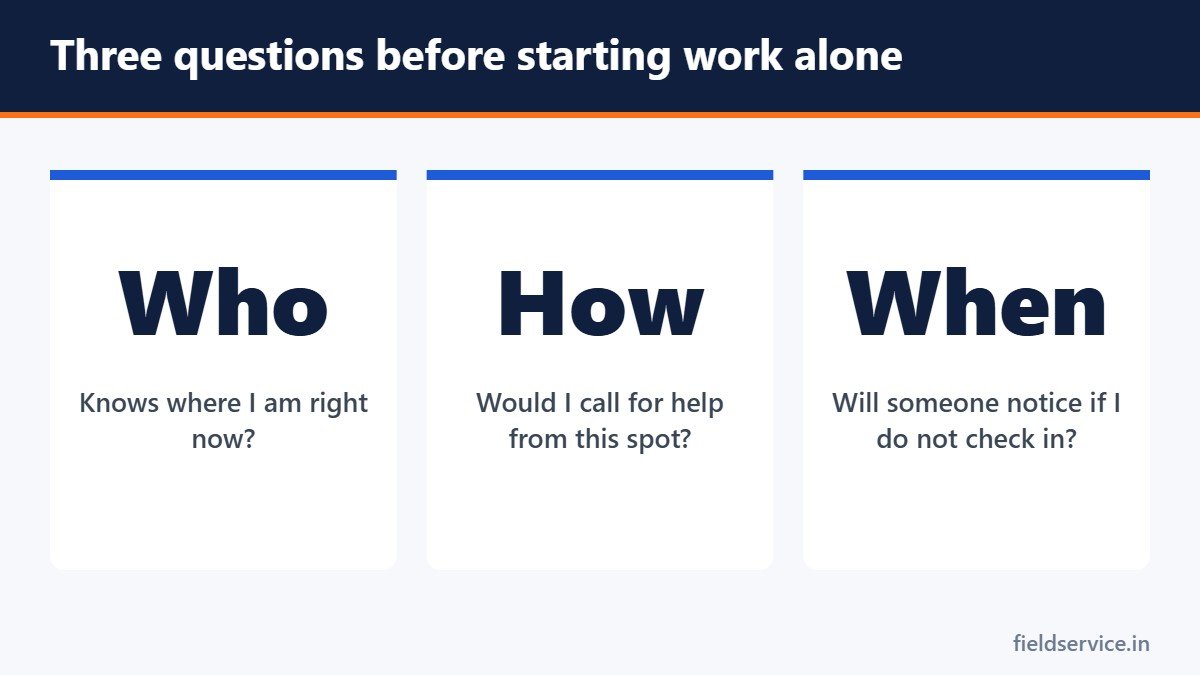
Take one minute at the start of each job to ask:
- What could hurt me here?
- If it did, could I call for help?
- Does anyone know I am here?
- Is there a way out?
If you would not be able to summon help, change something first. Tell dispatch, ask the customer to stay within earshot, or wait for a second person.
Equipment for working alone
- A charged phone, kept on you and not in the truck
- A power bank or vehicle charger
- A headlamp and a backup light
- A first aid kit you know how to use
- A personal carbon monoxide monitor where fuel-burning equipment is involved. See carbon monoxide safety.
- A lone worker device or app, if your company provides one. These can raise an alarm if you press a button, miss a check-in or stop moving.
Hazards that deserve extra care alone
- Attics and crawl spaces. Tell someone before you go in. See working safely in attics and crawl spaces.
- Ladders and roofs. See ladder safety.
- Electrical work. Lock out and verify. See lockout/tagout basics.
- Heat and cold. Nobody is watching you for the early signs. See heat safety and cold stress.
- Driving when tired. See driving safety.
Personal safety at a customer’s property
- Note the exits when you go in, and keep your route to the door clear.
- Keep your phone and keys on you.
- Park where you can leave without being blocked in.
- Ask customers to secure dogs before you enter.
- If a customer’s behavior makes you uneasy, trust that. Step outside and call your supervisor.
- Leave if you are threatened. See dealing with difficult customers.
- Do not enter a home where only a child is present. Follow your company’s policy.
If you are injured or become ill
- Stop work and get to a safe position.
- Call 911 for anything serious. Give the address, which should be on your job ticket.
- Call dispatch or your supervisor.
- If you can, unlock the door or tell the customer, so that responders can reach you.
- Report every injury, including small ones.
Keep medical information that responders might need, such as allergies and conditions, in your phone’s emergency information or wallet.
What employers should set up
- A written procedure for check-ins and for what happens when one is missed
- A list of tasks that require two people
- Job information that warns of known hazards at a site, including aggressive animals and previous incidents
- A named contact for technicians working after hours
- Devices or apps suited to the risks
- Training, and regular practice of the procedure
- Support for technicians who stop or leave a job for safety reasons
Employers are responsible for providing a workplace free from recognized serious hazards, and several OSHA standards restrict specific tasks from being done alone. Know which apply to your work.
For dispatchers
You are often the only person who knows where a technician is. Watch for jobs that have run far past their expected time with no update, and call. A check-in call that turns out to be unnecessary costs thirty seconds.
Related guides
- PPE for Field Technicians: What to Wear and When
- AI in Field Service: What It Changes for Technicians
- In the Customer’s Home: Etiquette Every Field Technician Should Follow
Seven safety forms in Word and PDF, plus an Excel log that counts incidents, open actions and safety meetings.
Not sure yet? Try two forms free or see all packs.
Frequently asked questions
Is it legal for technicians to work alone?
In general, yes. Working alone is common and lawful, but some specific tasks, such as entry into permit-required confined spaces and certain electrical work, require additional people under OSHA rules. Employers must assess the risks.
What is a lone worker check-in procedure?
It is an agreed routine in which a worker reports their location and status at set points, and someone follows up if a check-in is missed.
What should a technician do if they feel unsafe at a customer’s home?
Step outside, call a supervisor and leave if there is any threat. Personal safety comes before the job.
What equipment helps lone workers?
A charged phone kept on the person, a backup light, a first aid kit, a personal carbon monoxide monitor where relevant, and a lone worker device or app that can raise an alarm.
This article is a general overview. Follow OSHA requirements and your employer’s safety program.