


The truck is a technician’s workshop, parts counter and office. When it is stocked and organized, jobs get finished on the first visit. When it is not, the day fills up with supply house runs, and every one of those is paid time with nothing billed.
There is no single correct list, because a plumber, an electrician and an HVAC tech carry different things. What follows is a way to decide what belongs on your vehicle and how to keep it there.
Start with your own data
Look back over the last three months of jobs and answer two questions:
- Which parts did you use most often?
- Which missing parts caused a second trip?
The first list is your core stock. The second is what you should add. A part that is cheap, small and regularly sends you back to the supply house has earned its place on the truck. An expensive part that you use twice a year has not.
Tools
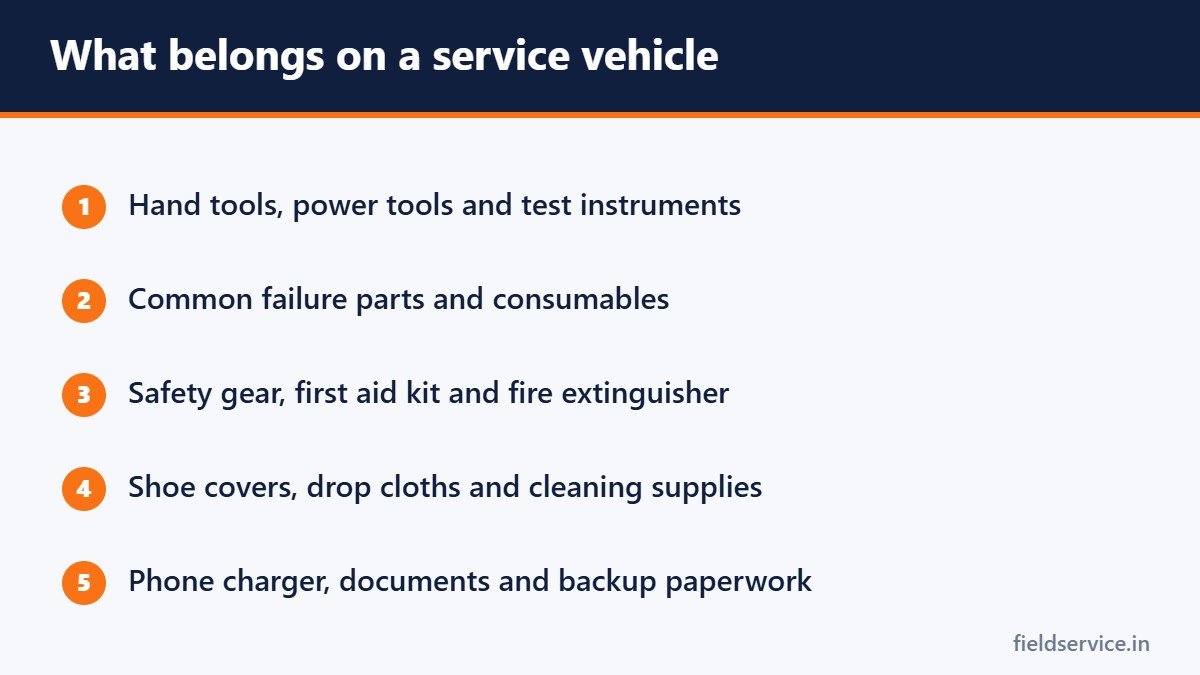
- Hand tools: screwdrivers and nut drivers, pliers, wrenches, cutters, a hammer, a tape measure, a level and a utility knife.
- Power tools: a drill and impact driver with spare batteries and a charger, and a reciprocating saw if your work calls for one.
- Test instruments: a multimeter is the minimum for most trades. Add the meters and gauges specific to yours, and keep them calibrated.
- Access equipment: a ladder suited to the work, a flashlight and a headlamp.
Keep the tools you use on nearly every job in one bag that goes to the door with you, so the first trip from the truck is usually the only one.
Parts and consumables
- The common failure parts for the equipment you service most.
- Fittings, connectors and fasteners in the sizes you use every week.
- Wire, tape, sealants, adhesives and lubricants.
- Filters, batteries, fuses and other items customers often need on the spot.
- Rags, cleaners and drop cloths.
Review the list every season. What you need in the first cold week of the year is different from what you need in a heat wave.
Safety gear
- Safety glasses and gloves suited to the task.
- Hearing protection and a dust mask or respirator where the work calls for it.
- A first aid kit, checked and restocked.
- A fire extinguisher, mounted where you can reach it and inspected.
- Lockout and tagout devices if you work on electrical equipment.
- Drinking water, especially in summer.
Customer care items
- Shoe covers and floor protection.
- A small vacuum or a brush and dustpan.
- Hand cleaner and clean rags.
These cost very little and customers notice them. Leaving a work area cleaner than you found it is one of the things people mention in reviews.
Paperwork and devices
- A charged phone or tablet with a car charger and a spare cable.
- Your license, certifications, vehicle registration and insurance documents.
- Business cards, and paper invoices or forms as a backup for when there is no signal.
Organize it so you can find it
- Give everything a fixed place. Label the bins and shelves so anyone can restock the truck.
- Put the most-used items nearest the door. Things you need twice a year can go at the back or up high.
- Secure the load. Loose tools and parts are a hazard in a sudden stop, and heavy items should sit low.
- Watch the weight. Every vehicle has a gross vehicle weight rating on the door jamb. An overloaded van brakes badly, wears out faster and uses more fuel.
Keep it stocked
Stocking a truck once is easy. Keeping it stocked is the hard part. A simple routine works:
- Set a minimum and maximum quantity for each core part.
- Record every part you use on the job ticket.
- Restock from the ticket at the end of the day or the start of the next, not from memory.
- Do a full count once a month.
A printed checklist taped inside the door is enough to start with. Ten minutes at the end of each day saves the forty-five-minute parts run the next afternoon.
A daily and weekly check
- Daily: fuel, tires, lights, fluid leaks under the vehicle, and that the load is secure.
- Weekly: clear out trash and scrap, check fluid levels, and look over the ladder and its rack.
What it is worth
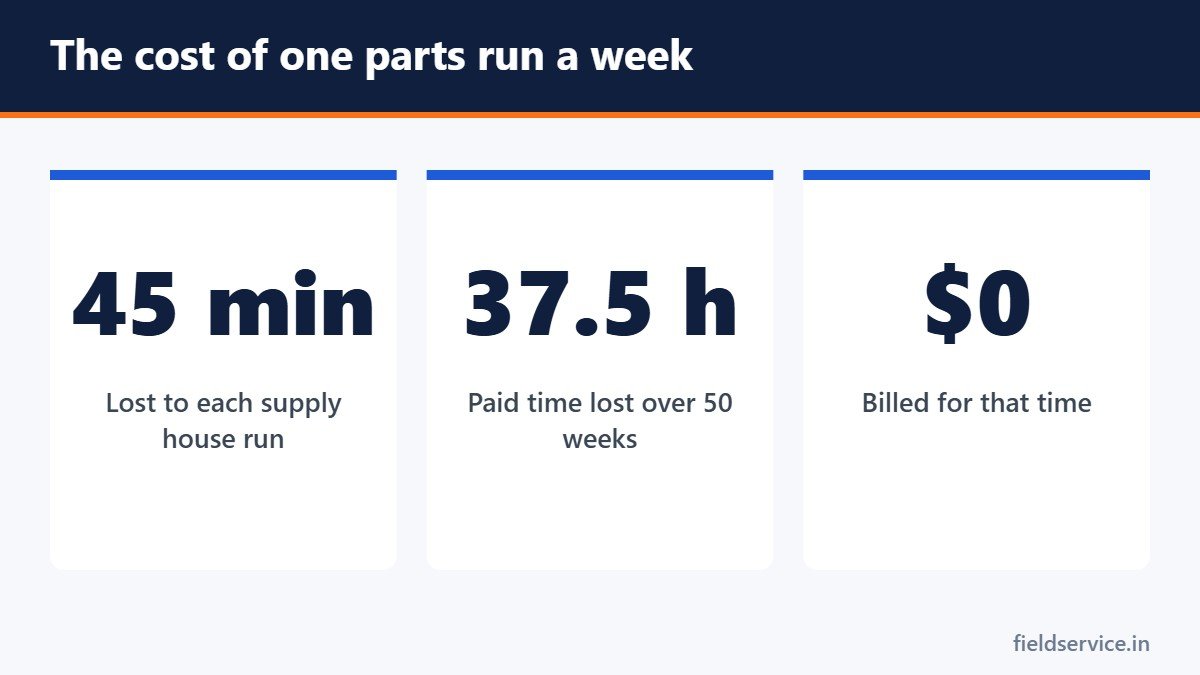
Suppose a missing part costs you one 45-minute supply run a week. Over 50 working weeks that is nearly 38 hours of paid time, close to a full week, with nothing billed. The travel time cost calculator will show what that costs at your labor rate, and the fuel cost calculator will add the fuel.
A well-stocked truck also improves your first-time fix rate, because the most common reason for a return visit is a part that was not on board.
Related guides
- How to Organize a Field Service Day
- In the Customer’s Home: Etiquette Every Field Technician Should Follow
- Ladder Safety for Service Technicians
Six everyday forms in Word and PDF, plus Excel workbooks that total mileage reimbursement and overtime pay.
Not sure yet? Try two forms free or see all packs.