


Carbon monoxide cannot be seen, smelled or tasted. A technician can walk into a house, a mechanical room or a garage where the level is dangerous and have no idea. The first symptoms feel like tiredness or the start of a cold, and by the time thinking is affected, the person may be unable to act. Any call that involves a furnace, boiler, water heater, fireplace, generator or engine carries this risk. A personal monitor and a few habits remove most of it.
What carbon monoxide is
Carbon monoxide, or CO, is a gas produced when fuel burns without enough oxygen. Natural gas, propane, oil, wood, charcoal and gasoline can all produce it. Breathed in, CO binds to the hemoglobin in blood far more readily than oxygen does, so the blood carries less oxygen to the brain and heart.
Where it comes from on service calls
- A cracked or failed heat exchanger
- A blocked, disconnected or corroded flue or chimney
- Backdrafting, where exhaust is pulled back into the building by exhaust fans, a dryer or a tight building envelope
- Burners that are dirty, misadjusted or short of combustion air
- Unvented heaters
- A vehicle or generator running in or near a garage, including your own truck
- Gas ovens used for heating
Symptoms
- Early: headache, dizziness, weakness, nausea, tiredness.
- As exposure continues: confusion, chest pain, vomiting, loss of coordination.
- Severe: loss of consciousness and death.
The early symptoms are easy to mistake for flu or a long day. One clue is that several people, or pets, in the same building feel ill together, and feel better when they go outside.
Exposure limits
Concentration is measured in parts per million, ppm.
| Reference | Level |
|---|---|
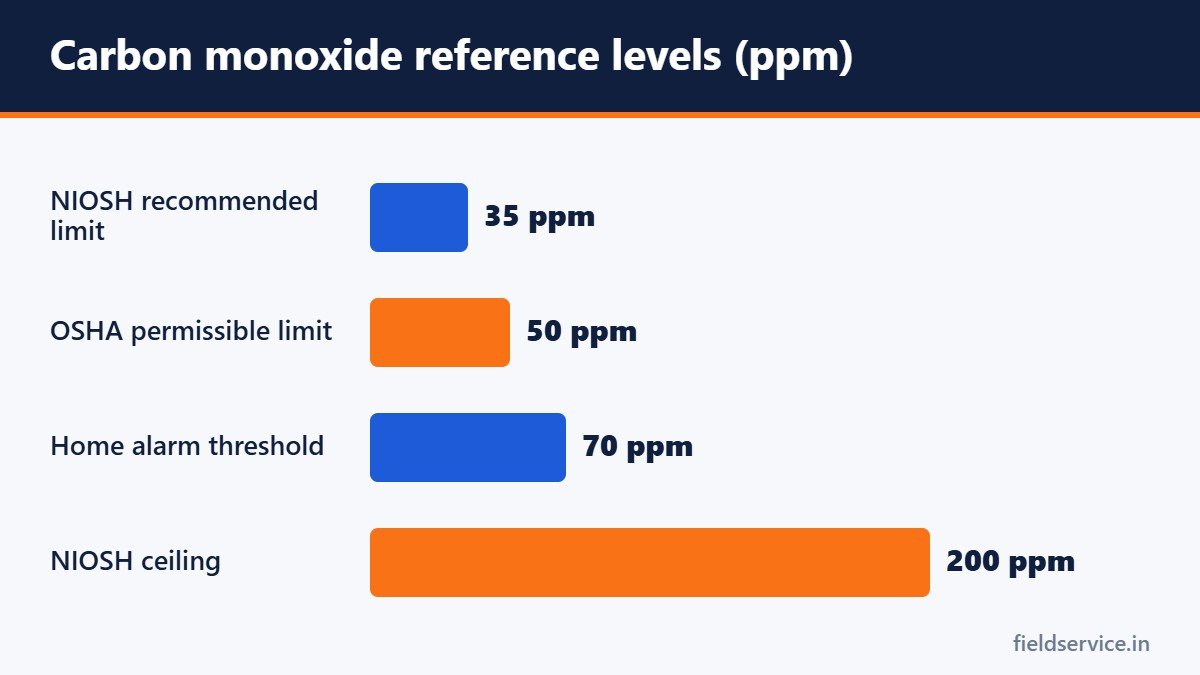
| OSHA permissible exposure limit | 50 ppm averaged over 8 hours |
| NIOSH recommended exposure limit | 35 ppm averaged over a work shift, with a ceiling of 200 ppm |
| Residential CO alarms (UL 2034) | Designed to sound at 70 ppm within 1 to 4 hours, and faster at higher levels |
Notice the last row. A standard home CO alarm is designed to prevent life-threatening exposure, and it does not sound at low levels. A level that never sets off the customer’s alarm can still indicate a faulty appliance, and it is above what many companies allow their technicians to work in. Your employer should set the action levels at which you ventilate, shut equipment down and leave. Follow those.
Wear a personal monitor
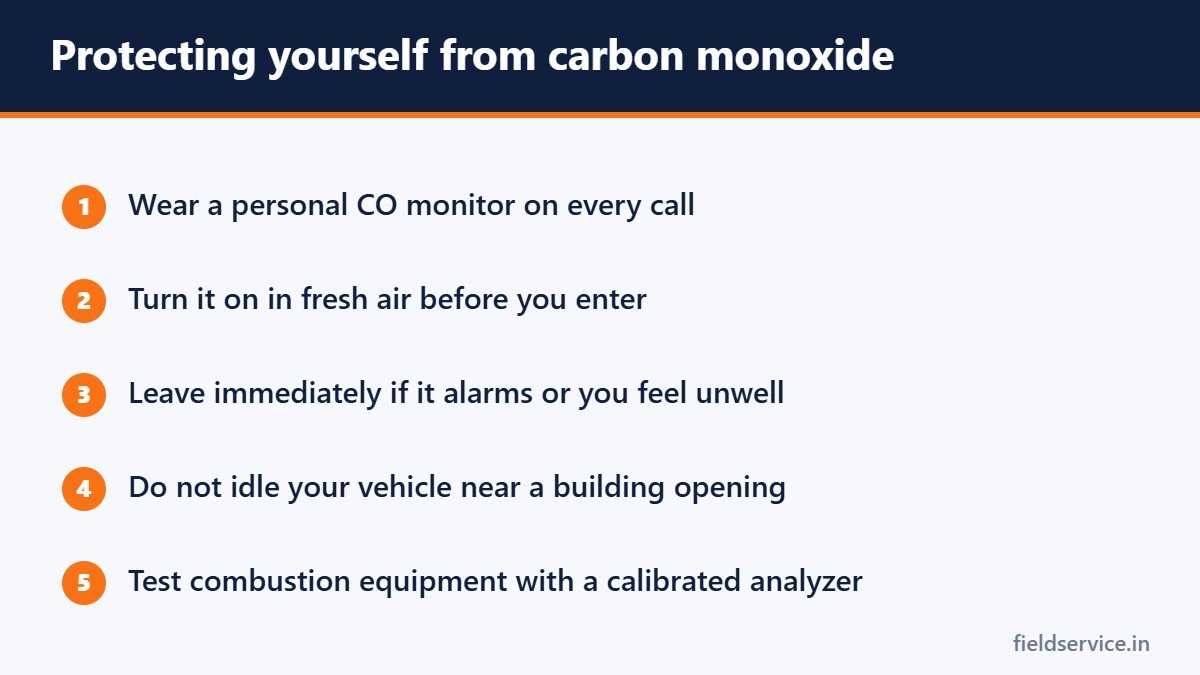
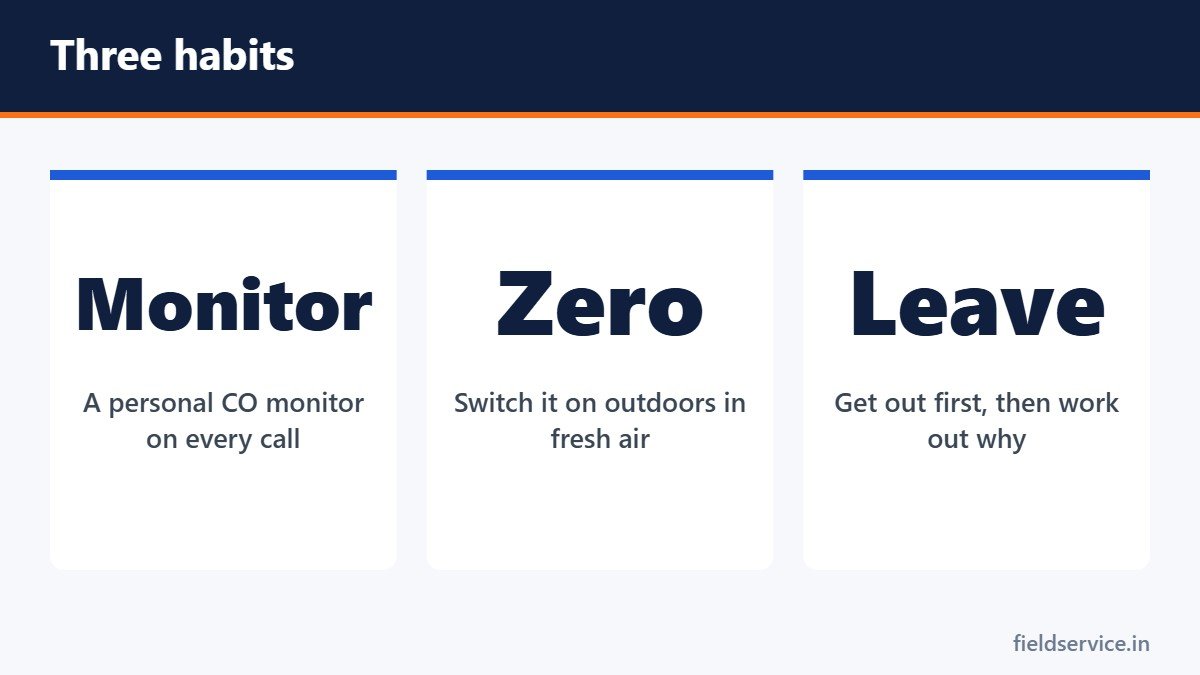
A small CO monitor clipped to your collar or bag is the single most useful protection. It reads continuously and alarms long before you would notice anything.
- Turn it on outdoors, in fresh air, so that it starts from a true zero.
- Wear it near your breathing zone, not in a pocket.
- Check it as you enter a building and again near fuel-burning equipment.
- Follow the manufacturer’s schedule for calibration, bump testing and sensor replacement. Sensors wear out.
If the monitor alarms or you suspect CO
- Leave the building and get everyone else out, including pets.
- Call 911 if anyone has symptoms.
- Do not go back in until the level is safe or the fire department has cleared it.
- If it can be done safely from outside or on the way out, shut off the suspect equipment or its fuel supply.
- Ventilate the building.
- Find the source before the equipment is used again.
- Tell your supervisor and write down the readings and what you did.
Anyone who has had symptoms should be seen by a doctor, even if they feel better in fresh air.
Testing equipment
An ambient monitor tells you whether the air you are standing in is safe. A combustion analyzer tells you what the appliance is producing. Measuring CO in the flue gas, along with oxygen and draft, shows whether a furnace, boiler or water heater is burning cleanly and venting properly. Readings should be compared with the appliance manufacturer’s specifications and recorded on the ticket.
- Test under realistic conditions. Run exhaust fans and the dryer and close interior doors to see whether the appliance backdrafts.
- Inspect the heat exchanger and the venting.
- Check combustion air openings.
- Keep analyzers calibrated.
When you find a problem
If an appliance is producing or spilling carbon monoxide, it should not be left running. Most companies have a red-tag procedure: shut the appliance down, attach a tag explaining why, and tell the customer clearly, in writing, what you found and what it means. Record the readings, take photos and note the customer’s response. Follow your company’s procedure and any rules from the gas utility or local authority. See how to document a service call.
This is a difficult conversation in cold weather, when the customer will have no heat. Be clear and factual. Explain the risk without exaggerating, and tell them what their options are. See how to explain a repair to a customer.
Your own truck and tools
- Do not leave the vehicle idling next to an open door, window or air intake.
- Never run a generator, pressure washer or other engine inside a building, garage, crawl space or near an opening.
- Be careful with propane-fired heaters in enclosed spaces.
What to tell customers
- Install CO alarms on every level of the home and outside sleeping areas, and follow local requirements.
- Test alarms regularly and replace them at the age the manufacturer states.
- Have fuel-burning appliances inspected each year.
- Never use an oven, a grill or a portable generator to heat a home, and never run a generator in a garage.
- If the alarm sounds, go outside and call 911.
For owners
- Issue a personal CO monitor to every technician who works on or near fuel-burning equipment.
- Set written action levels and a red-tag procedure.
- Keep monitors and analyzers calibrated, and record it.
- Train on symptoms, measurement and the conversation with the customer.
- Back technicians who shut down unsafe equipment.
For other winter hazards, see cold stress on winter service calls.
Seven safety forms in Word and PDF, plus an Excel log that counts incidents, open actions and safety meetings.
Not sure yet? Try two forms free or see all packs.
Frequently asked questions
Can you smell carbon monoxide?
No. Carbon monoxide has no color, smell or taste. A monitor is the only way to detect it.
What are the first symptoms of carbon monoxide poisoning?
Headache, dizziness, weakness, nausea and tiredness. They are easily mistaken for flu. Symptoms that ease in fresh air are a warning sign.
At what level does a home CO alarm go off?
Residential alarms built to the UL 2034 standard are designed to sound at 70 parts per million within one to four hours, and sooner at higher concentrations. They do not alarm at low levels.
What is the OSHA limit for carbon monoxide?
The OSHA permissible exposure limit is 50 parts per million averaged over an eight-hour shift. NIOSH recommends a lower limit of 35 parts per million.
This article is general information. Follow your employer’s procedures and local requirements. In an emergency, call 911.
Related guides
- Heat Safety for Field Technicians: Working Through Hot Weather
- Ladder Safety for Service Technicians
- Working Alone: Safety for Lone Field Technicians