

At some point most good technicians think about working for themselves. The reasoning is simple: the company bills $120 an hour for my time and pays me $32, so I will keep the difference. The reality is that most of that difference goes on things the technician never sees. Businesses started by skilled tradespeople rarely fail because of the quality of the work. They fail on pricing, cash and paperwork. Going in with a checklist improves the odds a great deal.
Before you resign
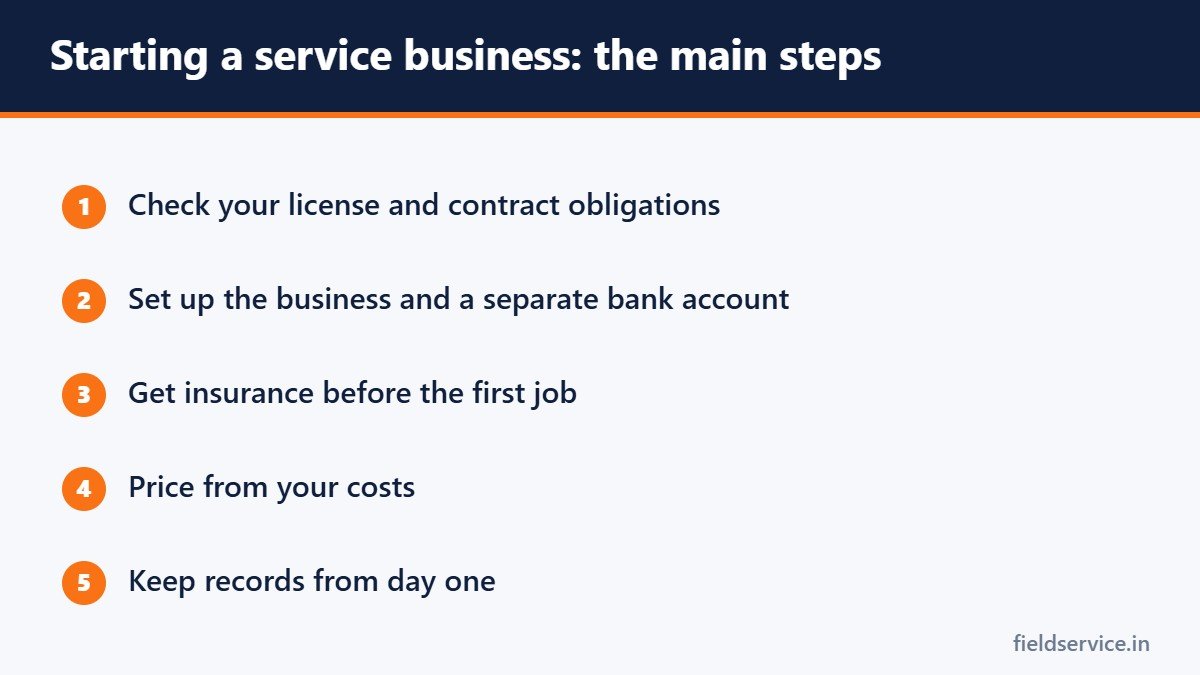
- Read what you have signed. Check your employment agreement for non-compete, non-solicitation and confidentiality terms. Their enforceability varies by state. If in doubt, ask a lawyer.
- Do not take customer lists, price books or other company property.
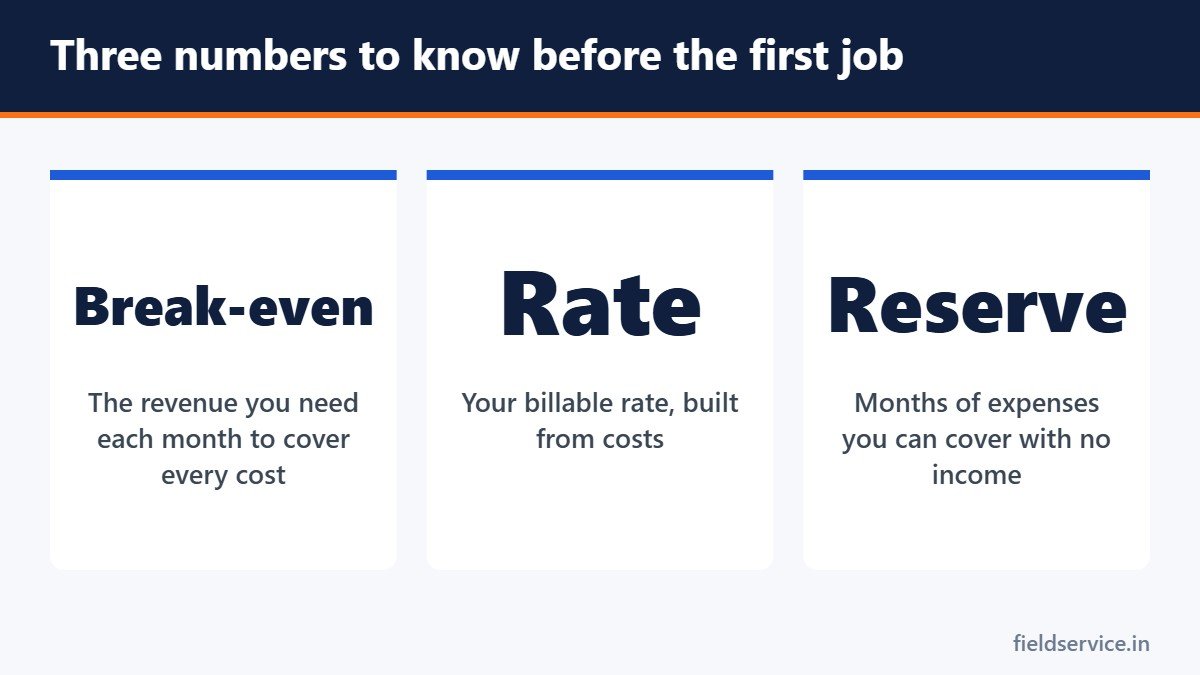
- Build a cash reserve. Aim to cover several months of personal expenses and the start-up costs below.
- Check the licensing requirements where you intend to work.
- Leave on good terms. Former employers can become a source of referrals and overflow work.
Licensing and permits
Being licensed to do the work as an employee is often not the same as being licensed to run a business that offers it. Many states require a contractor license, which can involve an exam on business and law, proof of experience, a bond and proof of insurance. Cities and counties may add a business license and permit requirements. Contact your state contractor licensing board first. See apprentice, journeyman and master.
Set up the business
- Choose a structure. Sole proprietorship, limited liability company and corporation are the common choices. They differ in liability and tax treatment. An accountant or lawyer can advise.
- Register the business and its name with your state as required.
- Get an Employer Identification Number from the IRS. It is free.
- Open a business bank account. Keep business and personal money separate from the first day.
- Register for state taxes. Rules on sales tax for parts and labor vary a great deal by state.
Insurance
- General liability. Covers damage or injury you cause on a job. Customers and general contractors often ask for proof.
- Commercial auto. A personal auto policy usually does not cover a vehicle used for business.
- Tools and equipment cover.
- Workers’ compensation. Required once you have employees in most states, and sometimes for owners.
- Health and disability cover for yourself. You no longer have an employer’s plan.
Have the policies in place before the first job. One uninsured claim can end a new business.
Price from your costs
This is where most new businesses go wrong. Charging a little more than your old hourly wage, or a little less than your old employer, almost guarantees a loss. Work it out properly:
- What you need to pay yourself
- Self-employment tax and your own insurance. See W-2 vs. 1099.
- Vehicle, fuel, tools, phone, software and licenses
- The hours you will actually bill, which are far fewer than the hours you work
Our articles on hourly pay vs. billable rate, how to price a service call and the break-even point walk through the arithmetic. The service call minimum price calculator gives you a floor.
Equipment
- A reliable vehicle, properly shelved. It need not be new.
- The tools and test instruments your trade requires, including recovery and safety equipment where applicable.
- An opening stock of common parts. See truck inventory management.
- Supplier accounts. Ask about trade pricing and payment terms.
Buy what you need for the work you have. Equipment bought for jobs you hope to get is cash you will miss.
Paperwork and systems
- A way to schedule, invoice and take payment. See taking payments in the field.
- Written estimates and sign-off forms. Our templates are a starting point.
- Bookkeeping, whether software or a bookkeeper. Record income and expenses every week.
- A mileage log. See the IRS mileage rate.
- Money set aside for taxes. With no employer withholding, you will generally owe estimated tax each quarter.
Finding the first customers
- Tell everyone you know, and make it easy for them to pass on your number.
- Set up a business profile on the major search and map services, with accurate hours and service area.
- Ask every satisfied customer for a review. See how to get more customer reviews.
- Introduce yourself to property managers, real estate agents and contractors in related trades.
- Offer to take overflow or subcontract work from established companies.
- Answer the phone. A new business that picks up every call has an advantage over larger ones that do not.
Cash flow
- Collect payment when the job is finished.
- Take a deposit on larger jobs to cover materials.
- Invoice commercial customers the same day and follow up when payment is due.
- Keep a reserve for the slow season and for tax.
- Pay yourself a regular amount and leave the rest in the business.
Common reasons new service businesses fail
- Prices too low to cover real costs
- No cash reserve for a slow month or a late-paying customer
- Tax not set aside
- No insurance, or the wrong insurance
- Taking every job, including unprofitable ones far from base
- Doing the books once a year
- Growing too fast: a second truck before the first is profitable
Is it right for you?
Running a business means being the technician, the dispatcher, the salesperson, the bookkeeper and the person who answers the phone at night. Some people thrive on it. Others find they miss simply doing the work. Neither is a failing. Consider starting with side work where your license and your employment agreement allow it, or talk frankly with someone who has made the move.
Three Excel workbooks that take you from what a technician costs to what to charge, then show whether each job made money.
Not sure yet? Try two forms free or see all packs.
Frequently asked questions
Do I need a contractor license to start my own service business?
In many states, yes. A license to do the work as an employee is often different from the license required to run a contracting business. Check with your state contractor licensing board and your city or county.
What insurance does a one-truck service business need?
At a minimum, general liability and commercial auto insurance. Workers’ compensation is required in most states once you have employees. Consider cover for your tools and for your own health and disability.
How should I set my prices when starting out?
Build the rate from your costs: your own pay, taxes, insurance, vehicle, tools and overhead, divided by the hours you will realistically bill. Charging slightly more than your old wage is a common and costly mistake.
How much money do I need to start?
It depends on your trade and what you already own. Plan for licensing, insurance, a vehicle, tools, opening stock and enough cash to cover several months of personal and business expenses.
This article is general information and is not legal, tax or financial advice.
Related guides
- How to Set Your Labor Rate as a One-Truck Service Business
- How to Ask for a Raise as a Field Technician
- How to Become an HVAC Technician: Pay, Training and Certification