


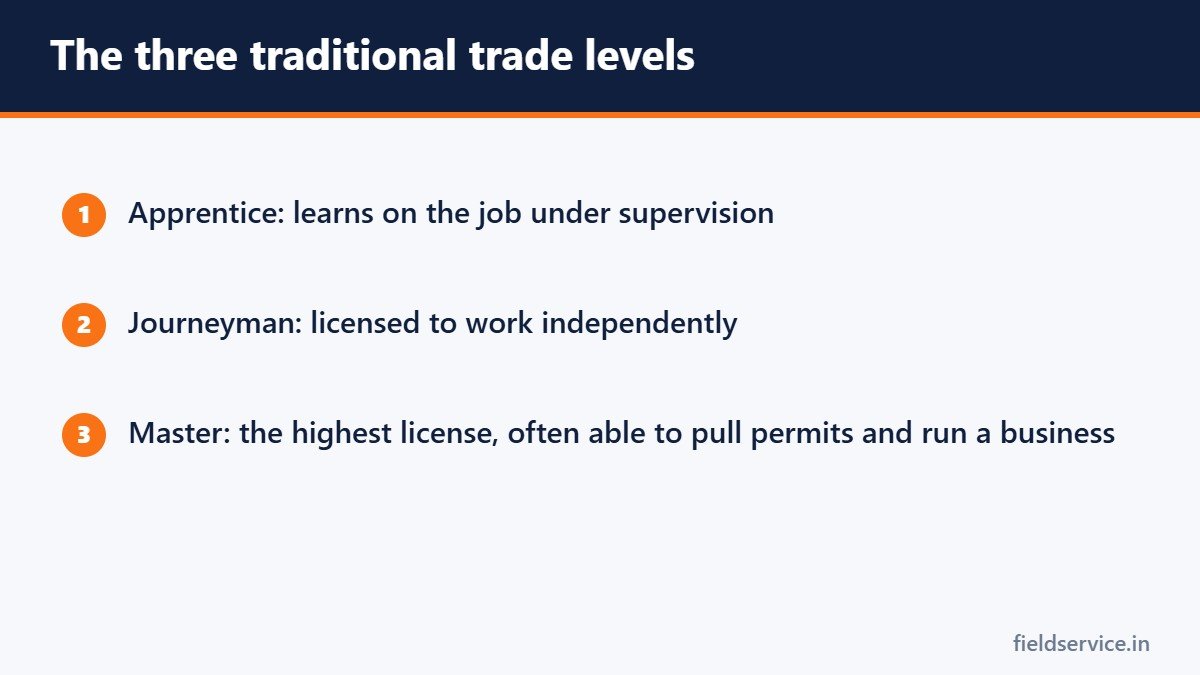
Job postings in the trades often mention levels: apprentice, journeyman, master. The terms come from a system that is centuries old and still shapes licensing for electricians, plumbers and, in many states, HVAC technicians. If you are entering a trade, knowing what each level means helps you plan the next several years.
Apprentice
An apprentice is learning the trade while working under a licensed tradesperson. Formal apprenticeships combine paid on-the-job training with classroom instruction. They often last around four to five years, depending on the trade and the program, and they are sponsored by unions, contractor associations or individual employers. Many states require apprentices to register.
Apprentices earn a wage from the start, usually set as a percentage of the journeyman rate that rises as they progress.
Journeyman
A journeyman has completed the required training and passed a licensing exam. A journeyman can work without direct supervision and can usually supervise apprentices. In most places a journeyman cannot pull permits or run a contracting business on that license alone.
To qualify you generally need a set number of documented work hours, a set amount of classroom instruction, and a pass on an exam covering the trade and the relevant code.
Master
A master license is the highest level. It usually requires a period of experience as a journeyman, often two years or more, plus a further exam. Masters can typically design systems, pull permits and supervise other tradespeople. In many states a master license, or a separate contractor license, is required to operate a contracting business.
It depends on the state and the trade
There is no national standard. Each state, and sometimes each city or county, sets its own rules.
- Electrical and plumbing follow the three-level structure in most states, though the hours and exams differ.
- HVAC varies more. Some states license individual technicians at several levels. Others license only the contractor and leave technicians unlicensed at state level.
- Reciprocity between states is limited. A license from one state may not be accepted in another without further steps.
Always check with the licensing board in the state where you plan to work.
| Level | Typical requirements | What it usually allows |
|---|---|---|
| Apprentice | Enrollment in a program or registration | Work under supervision |
| Journeyman | Documented hours, classroom time and an exam | Independent work, supervising apprentices |
| Master | Journeyman experience and a further exam | Permits, design and supervision |
Journeyman and contractor are different things
A trade license says you are qualified to do the work. A contractor license says you can run a business that offers that work to the public. The contractor license often adds requirements such as insurance, bonding and a business and law exam.
How to move up
- Find a registered apprenticeship or an employer who will sponsor your training.
- Record your hours carefully and have your supervisor sign them off.
- Complete the classroom requirement.
- Study the code and sit the journeyman exam as soon as you are eligible.
- Find out early what the master license requires, so that your experience counts toward it.
What it means for pay
Each level usually brings a higher wage, and licensed tradespeople are harder to replace. To see what a rate works out to over a year, use the hourly to annual pay calculator.
For the wider set of options once you are qualified, see field service career paths, and for HVAC in particular, how to become an HVAC technician.
Related guides
- Trade School vs. Apprenticeship: Which Route Into the Trades Is Right for You?
- Skills That Make a Field Technician More Valuable
- How to Become an Electrician: Training, Licensing and Pay
Six everyday forms in Word and PDF, plus Excel workbooks that total mileage reimbursement and overtime pay.
Not sure yet? Try two forms free or see all packs.