


Finding a good technician is hard. Losing one in the first three months is expensive, and it usually has less to do with the person than with how they were brought in. Too many new hires are handed a truck and a tablet on Monday and sent to run calls on Tuesday. Some survive. Many leave, or pick up habits that cost the company for years. A written plan for the first ninety days takes an afternoon to prepare and pays for itself with the first hire it keeps.
Why onboarding matters
- New technicians decide early whether they have made the right choice.
- Habits formed in the first weeks, good and bad, tend to stick.
- A new hire who is unsure of your procedures produces callbacks and complaints.
- Safety incidents are more likely among workers who are new to a job.
| Period | Focus | Goal |
|---|---|---|
| Before day one | Preparation | Everything is ready when they arrive |
| Day one | Welcome, paperwork, safety | They know who is who and how things work |
| Week one | Ride-alongs, systems | They have seen how your company runs a call |
| Days 8 to 30 | Supervised work | They run calls with support |
| Days 31 to 60 | Independent calls with review | They run a normal day alone |
| Days 61 to 90 | Full schedule | They meet the standard on the key measures |
Before the first day
- Prepare the vehicle: cleaned, stocked and inspected.
- Order uniforms, ID and any company tools.
- Set up logins for the phone, tablet and software.
- Choose a mentor, and tell that person what you expect of them.
- Write the schedule for the first week.
- Tell the team who is starting and when.
Arriving to a truck that is ready and a schedule with your name on it says more about a company than any welcome speech.
Day one
- Introduce them to the office staff and the other technicians.
- Complete the employment paperwork.
- Explain pay: the rate, overtime, on-call, bonuses and when payday is. See how to read your pay stub.
- Cover safety: the company safety program, protective equipment, vehicle policy and how to report an incident.
- Go through the truck: what is stocked, where it goes and how restocking works.
- Set up and demonstrate the software.
- Explain what the first week will look like.
Week one
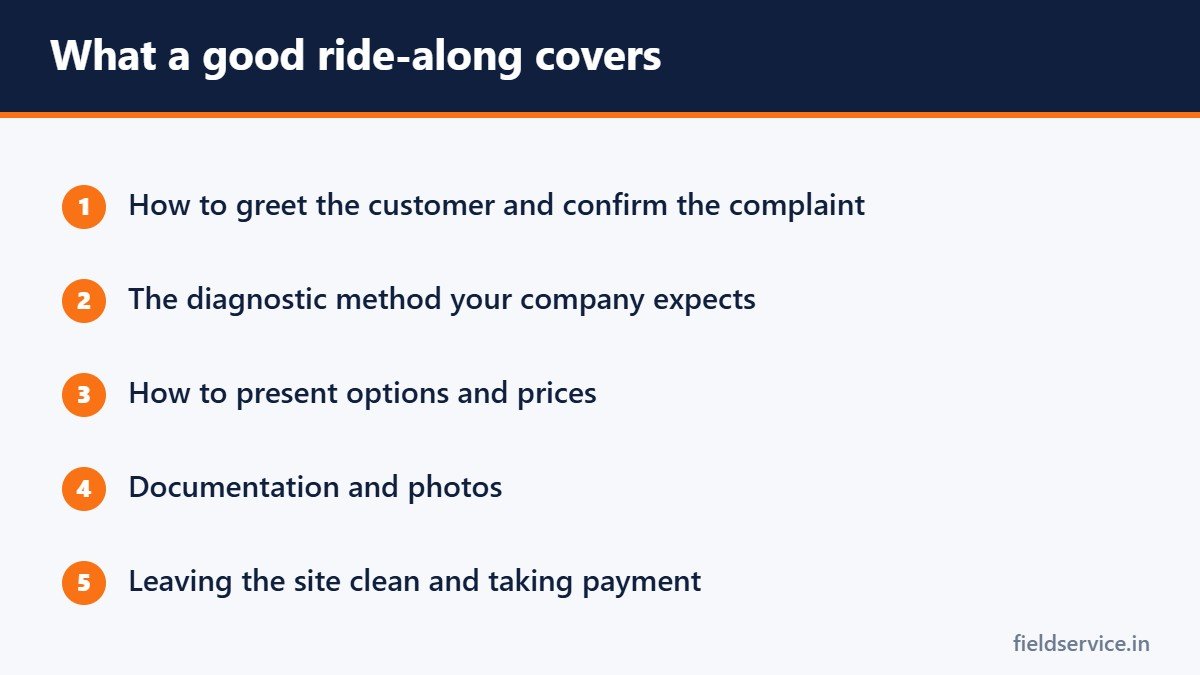
The first week is for watching. Have the new technician ride with your best people, not whoever happens to be free. They should see:
- How a call is opened with the customer
- How diagnosis is approached
- How prices are presented and approved
- How the job is documented. See how to document a service call.
- How payment is taken
- How the truck is restocked
By the end of the week, the new hire should be doing parts of the call with the mentor watching.
Days 8 to 30: supervised work
- The new technician leads calls with the mentor present, then runs simpler calls alone.
- Start with maintenance visits and straightforward repairs.
- Make sure they can reach someone by phone, and that asking for help is welcomed.
- Review their tickets every day for the first two weeks.
- Meet weekly for fifteen minutes: what went well, what was hard, what they need.
Days 31 to 60: independent calls
- A normal schedule, with harder calls introduced gradually.
- Ticket reviews drop to a sample each week.
- A supervisor rides along once to observe and gives feedback the same day.
- Start watching the numbers: callbacks, first-time fix and customer feedback.
Days 61 to 90: full schedule
- The full range of calls, and on-call duty if that applies, with a back-up for the first rotation.
- A formal review at ninety days.
- A training plan for the next six months.
What to teach
An experienced hire knows the trade. What they do not know is how your company does things:
- Your price book and how to present it
- Your paperwork and software
- Your standards for cleanliness, uniforms and customer contact
- Your procedure for callbacks and complaints
- Your truck stock system. See truck inventory management.
- Your safety rules
For a hire who is new to the trade, add the technical foundations and allow much longer before they work alone.
Choosing and supporting the mentor
The best technician is not always the best teacher. Choose someone patient who follows your procedures. Running calls with a trainee is slower, so recognize that in the mentor’s pay or targets. A mentor who loses income by training will, understandably, stop doing it well.
Measuring progress
Agree on what good looks like at thirty, sixty and ninety days, and tell the new hire on day one. Useful measures:
- First-time fix rate and callback rate
- Completeness of tickets
- Customer reviews and complaints
- Jobs completed per day, compared with the plan for their stage
- Safety and vehicle record
Do not expect a new hire to match the team average straight away. Expect steady improvement.
Common mistakes
- Sending a new hire out alone in the first week because the board is full
- No written plan, so every new hire gets a different experience
- A mentor who has not been told what to cover
- No feedback until something goes wrong
- Overloading the first day with paperwork and nothing else
- Assuming experience elsewhere means they know your way of working
Keep people after ninety days
Onboarding ends, but development should not. Technicians stay where they can see a future. Show them the path, the pay that goes with each step and the training you will support. See field service career paths and skills that make a field technician more valuable.
A checklist to start from
- Write a one-page plan for the first ninety days.
- List what must be covered in week one.
- Choose mentors and agree how they are rewarded.
- Set review dates at 30, 60 and 90 days.
- Ask each new hire, at ninety days, what would have made it better.
Related guides
- Arrival Windows: How to Schedule Service Calls Customers Can Plan Around
- How to Use a Multimeter: A Field Guide for New Technicians
- Warranty Work: How to Track It and Stop It Draining Profit
Six everyday forms in Word and PDF, plus Excel workbooks that total mileage reimbursement and overtime pay.
Not sure yet? Try two forms free or see all packs.
Frequently asked questions
How long should it take to onboard a new service technician?
An experienced technician typically needs about ninety days to work fully to your company’s standards. Someone new to the trade needs considerably longer before working alone.
What should happen on a new technician’s first day?
Introductions, employment paperwork, an explanation of pay, a safety briefing, a walk-through of the truck and software, and a clear plan for the first week.
How long should ride-alongs last?
At least the first week for an experienced hire, followed by supervised calls. A hire who is new to the trade should ride with a mentor for much longer.
How do I know when a new technician is ready to run calls alone?
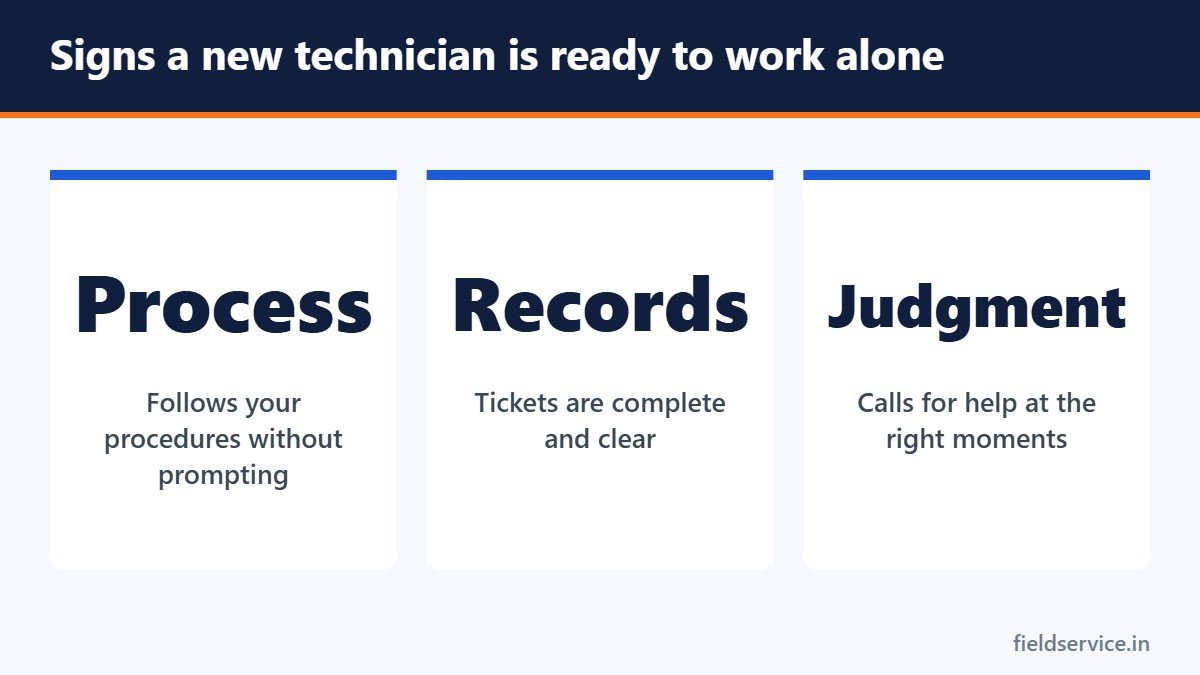
When they follow your procedures without prompting, complete their tickets properly and ask for help at the right moments on the calls they lead under supervision.