


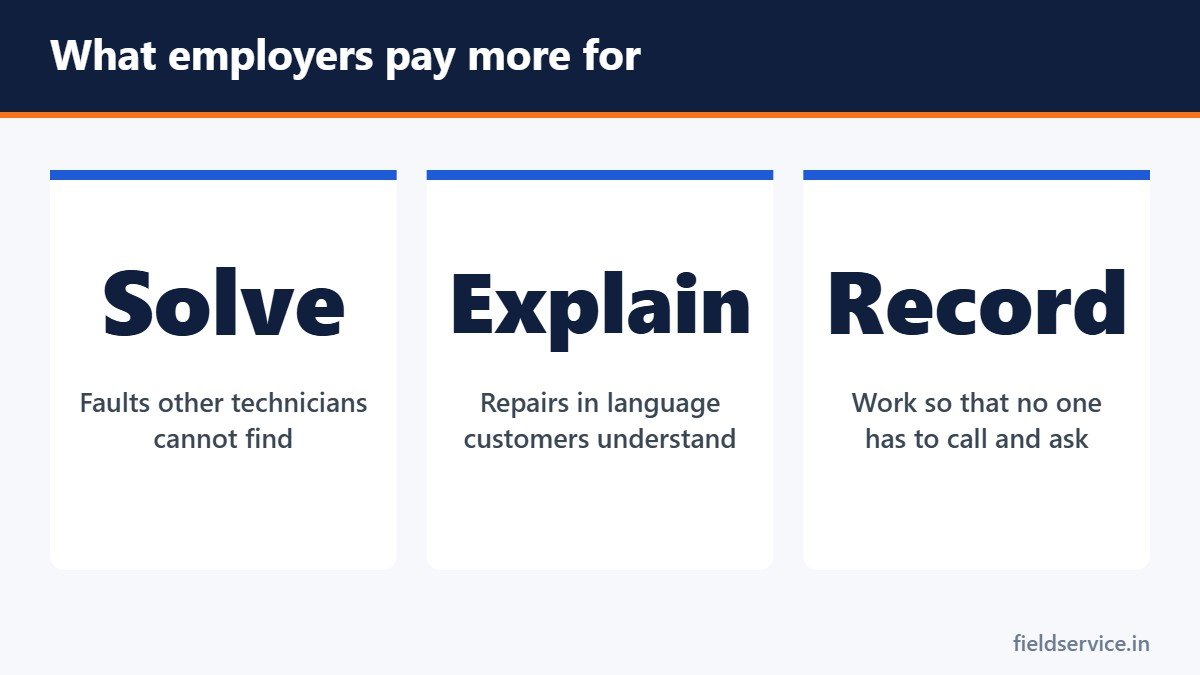
Two technicians with the same years of experience can earn very different pay. Time served does not explain the difference. The better-paid tech can usually do things the other cannot: find the fault that stumped everyone else, calm an upset customer, or leave a ticket so clear the office never has to call. Those are skills, and each of them can be built on purpose.
Technical skills
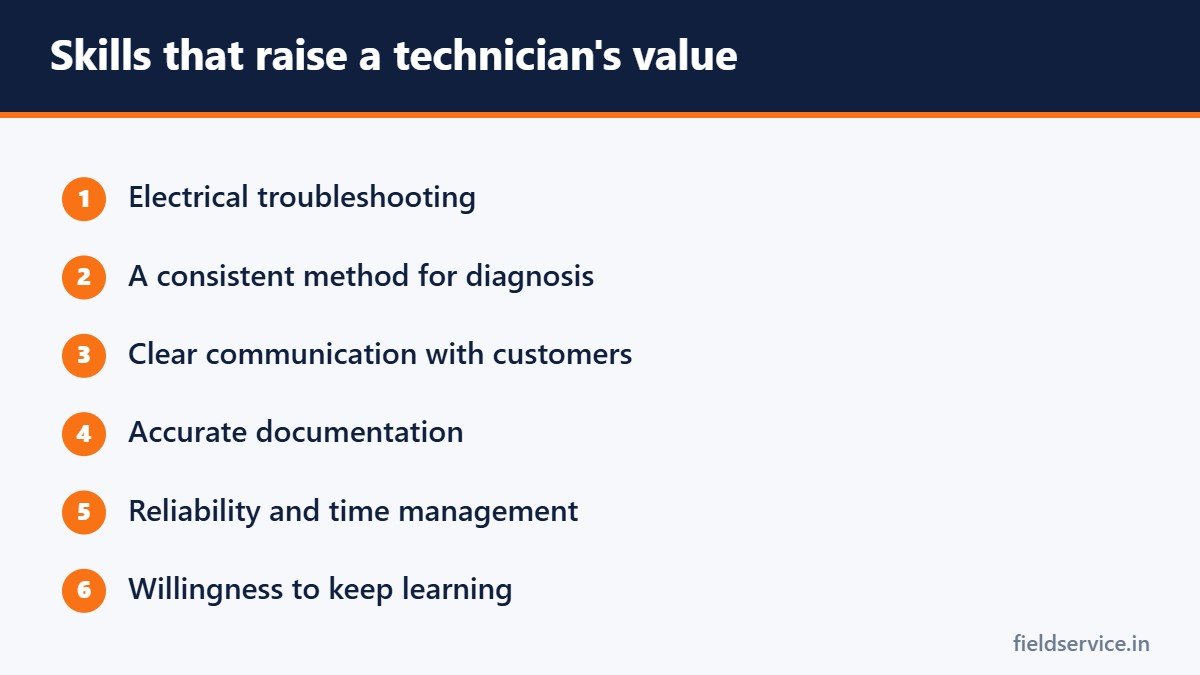
Electrical troubleshooting
A large share of service calls, in almost every trade, involve an electrical fault. Technicians who can read a wiring diagram and work through a circuit with a meter solve problems that others guess at. Start with Ohm’s law and how to use a multimeter.
A method for diagnosis
Good diagnosticians work the same way every time. They confirm the complaint, check the simple things first and test in a logical order. They find the cause of a failure before replacing the part, which is what keeps their callback rate low.
Understanding the whole system
Knowing how airflow, refrigerant, controls and electrical supply affect one another lets you see why a part failed, and not only that it did.
Keeping up with new equipment
Variable-speed motors, communicating controls, heat pumps and new refrigerants have changed the work. Technicians who take the manufacturer training become the people everyone else calls.
People skills
Communication
Being able to explain a fault and its repair in plain language builds trust, wins approval for work and prevents complaints. See how to explain a repair to a customer.
Honest recommendations
Pointing out a real problem and giving the customer options is a service, and it raises the value of each visit. It only works over time if the recommendations are honest.
Staying calm
Customers are often stressed when they call. A technician who stays steady with an upset customer saves the account and often earns a good review.
Work habits
- Documentation. Clear notes and readings protect you and help the next technician. See how to document a service call.
- Time management. A stocked truck and an organized day mean more jobs finished. See how to organize a field service day.
- Reliability. Showing up on time, with a clean vehicle and a clean driving record, matters more to employers than most technicians realize.
- Safety. Working safely every time, including when nobody is watching.
Business awareness
Technicians who understand how the company makes money make better decisions in the field. Knowing why a second trip is costly, what a billable hour has to cover, and how the numbers are measured helps you focus on what counts. Hourly pay vs. billable rate and field service KPIs are a good introduction.
Credentials
Certifications and licenses give an employer proof of what you know. Examples include EPA 608 certification, state trade licenses, manufacturer certifications and voluntary industry credentials.
How to build these skills
- Choose one skill to work on each quarter.
- Ask to ride along with the best diagnostician in the company.
- Take the manufacturer and distributor training on offer. Much of it is free.
- Keep a notebook of unusual faults and how they were solved.
- Ask your manager which skill would make you most useful to the business.
- Track your own results, such as callbacks, reviews and first-time fixes.
Showing your value
When you ask for a raise, bring numbers. A low callback rate, strong reviews and a record of difficult jobs solved make a clearer case than years on the payroll. For where these skills can lead, see field service career paths.
Related guides
- How to Prepare for a Field Technician Interview
- Going Out on Your Own: A Checklist for Starting a One-Truck Service Business
- How to Become an Electrician: Training, Licensing and Pay
Six everyday forms in Word and PDF, plus Excel workbooks that total mileage reimbursement and overtime pay.
Not sure yet? Try two forms free or see all packs.