


Most customers are easy to work with. A few are not, and they tend to be the ones you remember at the end of the week. The homeowner who stands over you for the whole job. The one who is certain the last company caused the problem and you are about to do the same. The one who agrees to the price and disputes it when the work is done. You cannot choose your customers, but how you respond in the first few minutes decides how most of these visits end.
Why customers are difficult
It is rarely about you. By the time you arrive, the customer may have gone two days without heat, taken a morning off work and already paid someone else who did not fix it. People who are worried about cost or who feel they have been taken advantage of before come across as hostile. Seeing the cause makes it easier not to take it personally.
The first two minutes
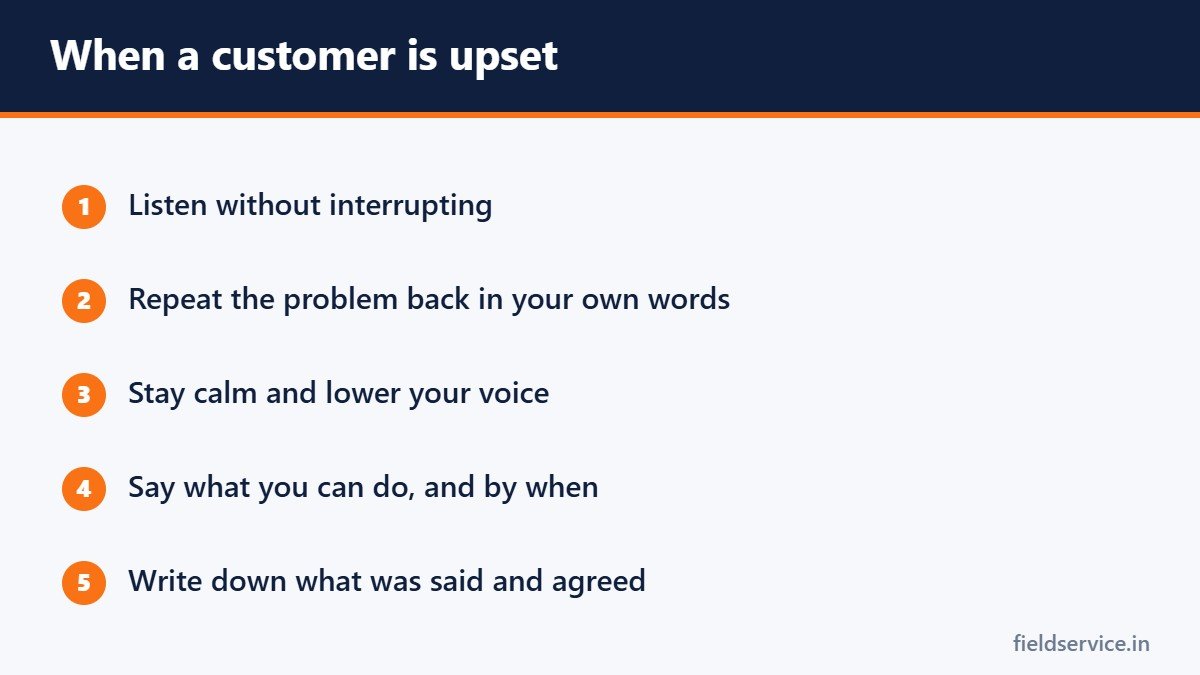
- Let them finish. Interrupting to explain or defend makes people repeat themselves more loudly.
- Repeat it back. “So the unit was repaired on Monday and stopped again last night. I understand why you are frustrated.”
- Acknowledge without accepting blame you do not know is yours. “I am sorry you have been without cooling” is true whoever is at fault.
- Say what you will do next. “Let me look at it and I will tell you exactly what I find.”
Most anger drops once the person feels they have been heard and someone has a plan.
Common types and what works
The angry customer
Keep your voice lower and slower than theirs. Do not argue about the past. Move to what you can do now. If the anger turns into personal abuse, see the section on when to leave.
The hoverer
Some customers watch every move. Often they are curious or anxious, not suspicious. Explain what you are doing as you go. If you need space or it is unsafe for them to be close, say so politely: “I need to work with the power on for a few minutes, so I would ask you to stand back there.”
The price challenger
Give the price before you start, explain what it covers and offer a lower-cost option if a sound one exists. Do not cut the price on the spot, and do not criticize it yourself. If the customer wants a discount, that is a decision for the office.
The self-diagnoser
A customer who has researched the problem online may be right, partly right or wrong. Listen, then test. “That is a common cause, and I will check it. I would like to confirm it before replacing anything.” If they insist on a repair you believe is wrong, explain your view, record it and involve your supervisor.
The customer who was let down before
When a previous repair failed, whether by your company or another, avoid criticizing whoever did it. You do not know the full story. Concentrate on finding the cause this time and explain what you find.
What not to do
- Do not argue or raise your voice.
- Do not blame a co-worker, the office or another company.
- Do not promise something you cannot deliver, such as a refund or a time for a part to arrive.
- Do not take insults personally or answer in kind.
- Do not say “calm down.” It has the opposite effect.
- Do not continue work the customer has not approved.
Use the office
You do not have to settle everything yourself. Refunds, discounts, disputed invoices and complaints about earlier visits belong with a manager. Saying “I want to get this right for you, so I am going to call my manager now” is a sign of taking the problem seriously. Our article on how to handle a customer complaint covers the office side.
Write it down
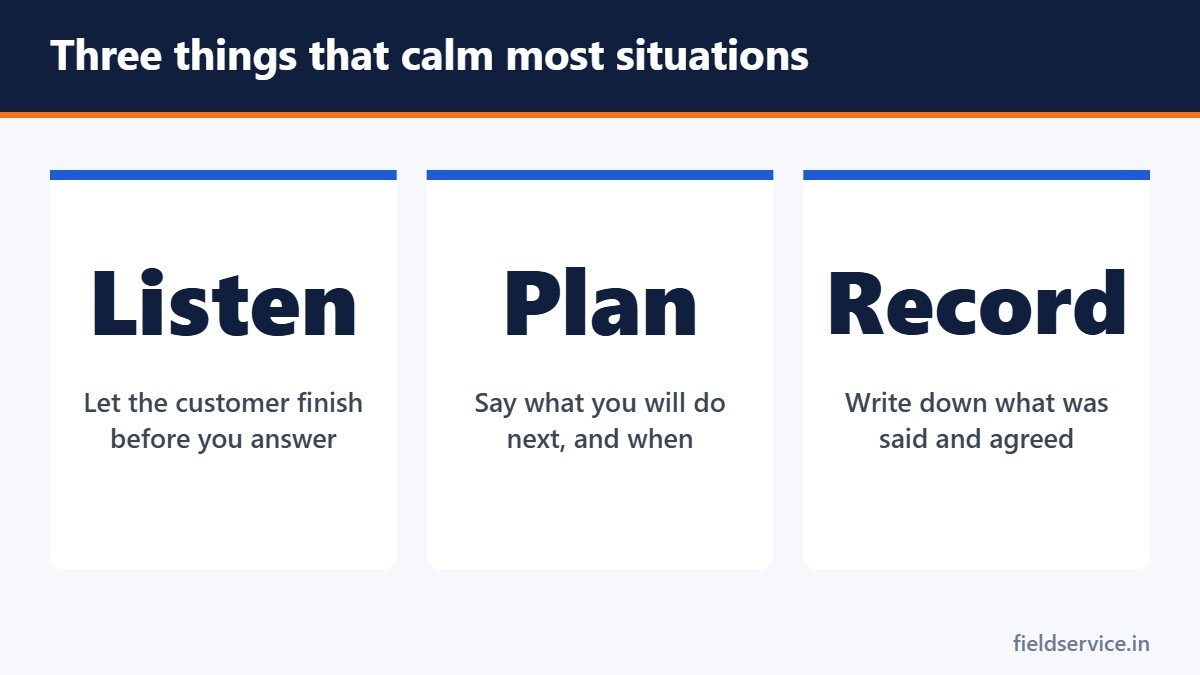
After a difficult visit, record what the customer said, what you found, what you recommended, what was approved and what was declined, in factual language. Keep opinions about the customer out of the notes, because the customer or a court may read them. See how to document a service call. Photos help. See using photos and video on service calls.
When to leave
Your safety comes before any job. Leave, and call your supervisor, if a customer:
- Threatens you or makes you fear for your safety
- Is physically aggressive, or blocks you from leaving
- Directs abuse at you based on who you are
- Appears to be seriously impaired and is behaving unpredictably
- Has an aggressive animal they will not secure
Make the equipment safe if you can do so quickly, say calmly that you are leaving and that the office will be in touch, and go. Do not stay to argue. Report it straight away and write down what happened.
After the visit
Tell dispatch or your manager about any difficult interaction the same day, even if it ended well. They can note the account, follow up with the customer and avoid being surprised by a complaint or a review. Then let it go. One hard customer should not set the tone for the next four.
For owners
- Back your technicians. If they know the office will support a decision to leave an unsafe situation, they will make better decisions.
- Give technicians clear limits on what they can offer, and a fast way to reach someone who can offer more.
- Train with real examples from your own calls.
- Flag accounts with a history, so the next technician is prepared.
- Decline to keep serving customers who are abusive to staff.
Clear explanations at the start prevent many of these situations. See how to explain a repair to a customer.
Related guides
- How to Write a Service Estimate Customers Understand and Accept
- Arrival Windows: How to Schedule Service Calls Customers Can Plan Around
- Driving Safety for Service Technicians
Six everyday forms in Word and PDF, plus Excel workbooks that total mileage reimbursement and overtime pay.
Not sure yet? Try two forms free or see all packs.
Frequently asked questions
What should I say to an angry customer?
Listen first, then repeat the problem back and say what you will do next. For example: “I understand it stopped working again last night. Let me look at it and I will tell you exactly what I find.”
Should a technician offer a discount to calm a customer down?
Not usually. Pricing decisions are better made by a manager. Offer to call the office so the right person can decide.
When should a technician leave a job?
When they are threatened, when a customer is physically aggressive or abusive, or when they otherwise feel unsafe. Make the equipment safe if possible, leave calmly and report it immediately.
How should I document a difficult customer visit?
Record the facts: what the customer reported, what you found, what you recommended, and what was approved or declined. Keep personal opinions out of the notes.