

The coldest days of the year are the busiest for heating technicians. No-heat calls come in at night, rooftop units need attention in the wind, and crawl spaces are damp and close to freezing. Cold injuries build slowly and are easy to dismiss, because one of the early effects of cold is poorer judgment. Knowing the signs, and planning for cold the way you plan for heat, keeps a hard day from becoming a dangerous one.
What cold stress is
Cold stress happens when the body loses heat faster than it can produce it. Skin temperature falls first, then the temperature of the body core. Four things drive it:
- Air temperature
- Wind. Moving air carries heat away from the body much faster. Wind chill describes the combined effect.
- Wetness. Wet clothing, from rain, snow or sweat, loses most of its insulating value.
- Contact with cold surfaces, such as metal equipment, ladders and frozen ground.
Cold stress does not require freezing temperatures. Wet, windy weather well above freezing can cause hypothermia.
Hypothermia
Hypothermia is a fall in body temperature to below 95°F. It is a medical emergency.
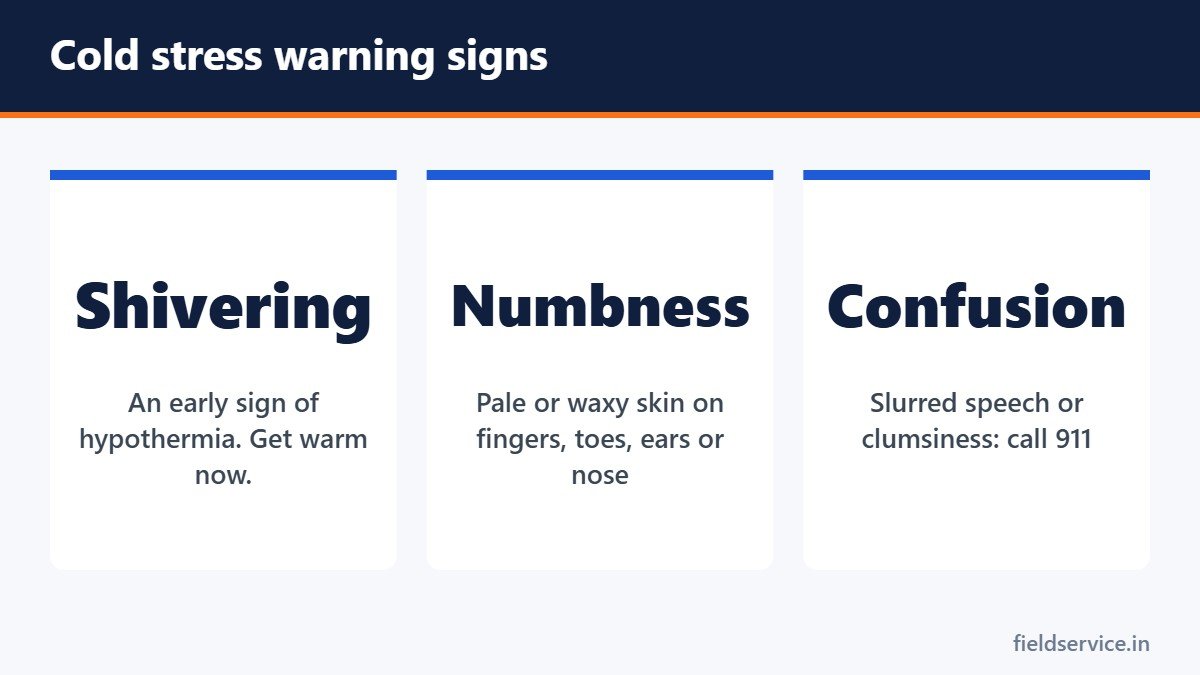
- Early signs: shivering, tiredness, loss of coordination, confusion.
- Later signs: shivering stops, slurred speech, slow breathing and pulse, loss of consciousness.
What to do: call 911. Move the person to a warm, dry place. Remove wet clothing and replace it with dry clothing or blankets, covering the head and neck. If the person is alert, give warm, sweet drinks with no alcohol. Do not leave them alone.
Frostbite
Frostbite is the freezing of skin and the tissue beneath it. It most often affects fingers, toes, the nose, ears and cheeks.
- Signs: numbness, tingling or stinging, skin that looks pale, waxy, gray or bluish, and skin that feels hard.
What to do: get to a warm place and get medical help. Do not rub the area, and do not walk on frostbitten feet if it can be avoided. Do not use direct heat such as a heat gun, heating pad or fire, because numb skin burns easily. Do not rewarm the area if there is any chance it will freeze again before you reach care.
Trench foot
Trench foot is an injury caused by feet staying wet and cold for a long time. It can happen at temperatures well above freezing, for example after hours in a flooded crawl space. Signs include redness, numbness, swelling and blisters. Remove wet boots and socks, dry the feet and get medical attention.
Dress for it
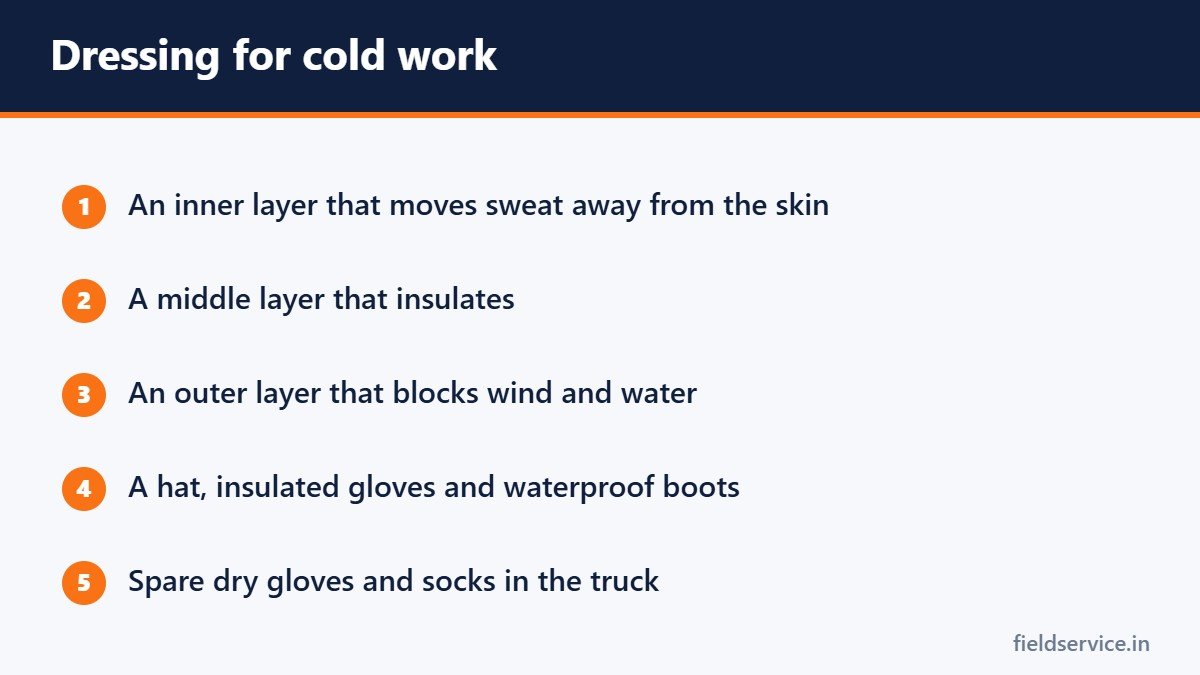
- Wear layers. An inner layer that moves moisture away from the skin, a middle layer of fleece or wool for insulation, and an outer layer that stops wind and water. Avoid cotton next to the skin, because it holds moisture.
- Protect your head, hands and feet. A hat or liner under your hard hat, insulated gloves and insulated, waterproof boots.
- Stay dry. Take off a layer before you start to sweat on heavy work, and put it back on when you stop.
- Carry spares. Dry gloves, socks and a hat in the truck.
- Keep dexterity in mind. Thin liner gloves under work gloves let you handle small parts without baring your hands.
Plan the work
- Check the forecast, including wind chill.
- Schedule outdoor and rooftop work for the warmest part of the day when you can.
- Take warm-up breaks in the truck or indoors. Take them more often as it gets colder and windier.
- Carry in everything you need, so that you make fewer trips.
- Eat properly and drink fluids. Warm drinks help. Dehydration is common in winter because people do not feel thirsty.
- Work in pairs on long outdoor jobs in severe cold, and watch each other for signs.
Winter hazards beyond the cold itself
- Slips and falls. Ice on steps, driveways and roofs. Wear boots with good tread and consider traction devices. Ladders on frozen ground need extra care. See ladder safety.
- Carbon monoxide. Winter is when heating equipment faults show up. See carbon monoxide safety for technicians.
- Driving. Allow more time and more distance. See driving safety for service technicians.
- Metal. Bare skin sticks to very cold metal. Keep gloves on.
- Overexertion. Cold puts extra strain on the heart, and heavy lifting or shoveling adds to it.
Keep the truck ready
- A full fuel tank
- Ice scraper, brush and windshield washer fluid rated for low temperatures
- A blanket, a flashlight and a phone charger
- Water and something to eat
- Sand or traction aid, and a small shovel
- Dry spare clothing
Who is at greater risk
People who are new to outdoor work, are tired, are in poor physical condition or have conditions such as diabetes, heart disease or high blood pressure are more vulnerable. Some medications affect the body’s response to cold. Alcohol does too. If any of these apply to you, take extra care and tell your supervisor.
In customers’ homes
A house with no heat is cold inside as well. On a long no-heat call in an unheated building, you are still exposed. Dress for it, and warm up in the truck when you need to. If occupants are elderly, very young or unwell and the heat cannot be restored that day, tell them plainly so that they can make arrangements, and follow your company’s policy on temporary heat.
For owners and dispatchers
- Allow more time per job in severe cold.
- Encourage warm-up breaks, and do not penalize them.
- Train everyone in the signs and the first aid.
- Check in with technicians who are working alone or late at night.
- Supply or subsidize cold-weather gear.
- Keep vehicles maintained and winter-ready.
For the opposite season, see heat safety for field technicians. For night work, see emergency and after-hours service calls.
Seven safety forms in Word and PDF, plus an Excel log that counts incidents, open actions and safety meetings.
Not sure yet? Try two forms free or see all packs.
Frequently asked questions
At what temperature does cold stress become a risk?
There is no single temperature. Wind and wetness matter as much as the air temperature, and hypothermia can occur well above freezing in wet, windy conditions.
What are the first signs of hypothermia?
Shivering, tiredness, loss of coordination and confusion. If shivering stops and the person becomes more confused or drowsy, the situation is getting worse. Call 911.
Should you rub frostbitten skin to warm it?
No. Rubbing can damage the tissue. Get to a warm place and seek medical help, and avoid direct heat such as a heat gun or heating pad.
What should technicians wear for winter service calls?
Layers: an inner layer that moves moisture away from the skin, an insulating middle layer and a wind- and water-resistant outer layer, with a hat, insulated gloves and waterproof boots.
This article is general information and is not medical advice. In an emergency, call 911.
Related guides
- Arrival Windows: How to Schedule Service Calls Customers Can Plan Around
- Using Photos and Video on Service Calls
- Working Alone: Safety for Lone Field Technicians