


Two technicians doing the same work in the same town can be paid in completely different ways. One earns a fixed hourly wage. The other earns a share of what each job brings in. Each system has loyal supporters, and each has a way of going wrong. If you are comparing job offers, or you are an owner designing a pay plan, it helps to see how the main models work.
The main pay models
Straight hourly
You are paid for every hour worked, with overtime after 40 hours in a week. Income is predictable, and it does not depend on how busy the season is or what the customer buys.
Hourly plus spiffs or bonuses
An hourly wage with extra payments for specific results, such as selling a maintenance agreement or generating a lead for a replacement system. This is probably the most common arrangement in residential service.
Commission or performance pay
You earn a percentage of the revenue from the jobs you complete, sometimes of labor only and sometimes of the whole ticket. Many plans guarantee an hourly minimum and pay whichever is higher.
Flat-rate hours
Each task carries a fixed number of paid hours, sometimes called book time. Finish a two-hour task in ninety minutes and you are still paid for two hours. Take three hours and you are also paid for two.
| Model | Income | Rewards | Main risk |
|---|---|---|---|
| Hourly | Steady | Time on the job | Little reward for efficiency |
| Hourly plus spiffs | Steady plus extras | Specific sales or results | Chasing the spiff |
| Commission | Varies by week and season | Revenue produced | Slow weeks and pressure to sell |
| Flat-rate hours | Varies with speed | Finishing faster than book time | Rushing and callbacks |
The case for hourly
- Your income is predictable, which helps with rent, loans and family budgeting.
- There is no reason to recommend work the customer does not need.
- Time spent on training, callbacks and helping a co-worker is paid the same as any other time.
The drawback is that a fast, skilled technician and a slow one may be paid the same.
The case for commission
- Strong technicians can earn considerably more than an hourly wage would pay.
- Pay follows results, which many people find motivating.
- For the owner, labor cost rises and falls with revenue.
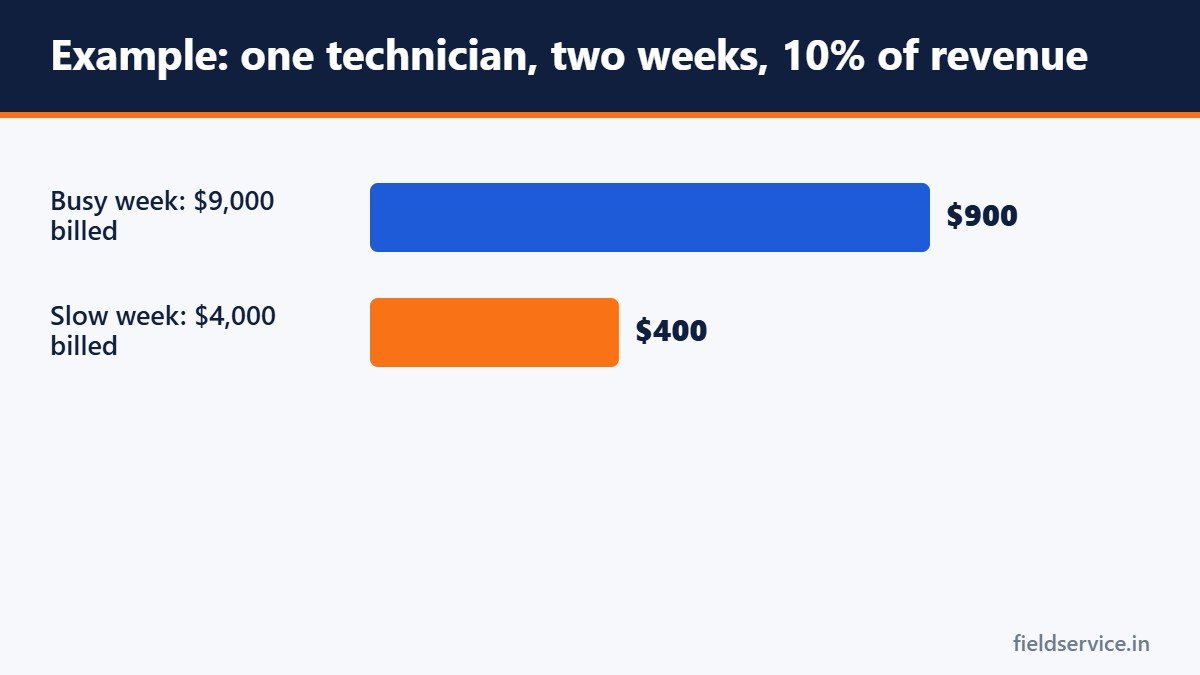
The drawbacks are real. Income drops in slow seasons. Pay depends partly on which calls dispatch gives you. And a plan that rewards only the size of the ticket puts pressure on honesty.
What the law requires
A commission plan does not remove wage protections. In general, employees paid by commission must still receive at least the minimum wage for all hours worked, and overtime for hours over 40 in a week, unless a specific exemption applies. Federal law contains an exemption from overtime for certain commissioned employees of retail or service establishments, with detailed conditions. Whether it applies to a particular business is a legal question, and state law may be stricter.
Where overtime is owed, commissions and most bonuses are included when the overtime rate is worked out. Our article on how overtime pay works explains the regular rate.
Questions to ask about a commission plan
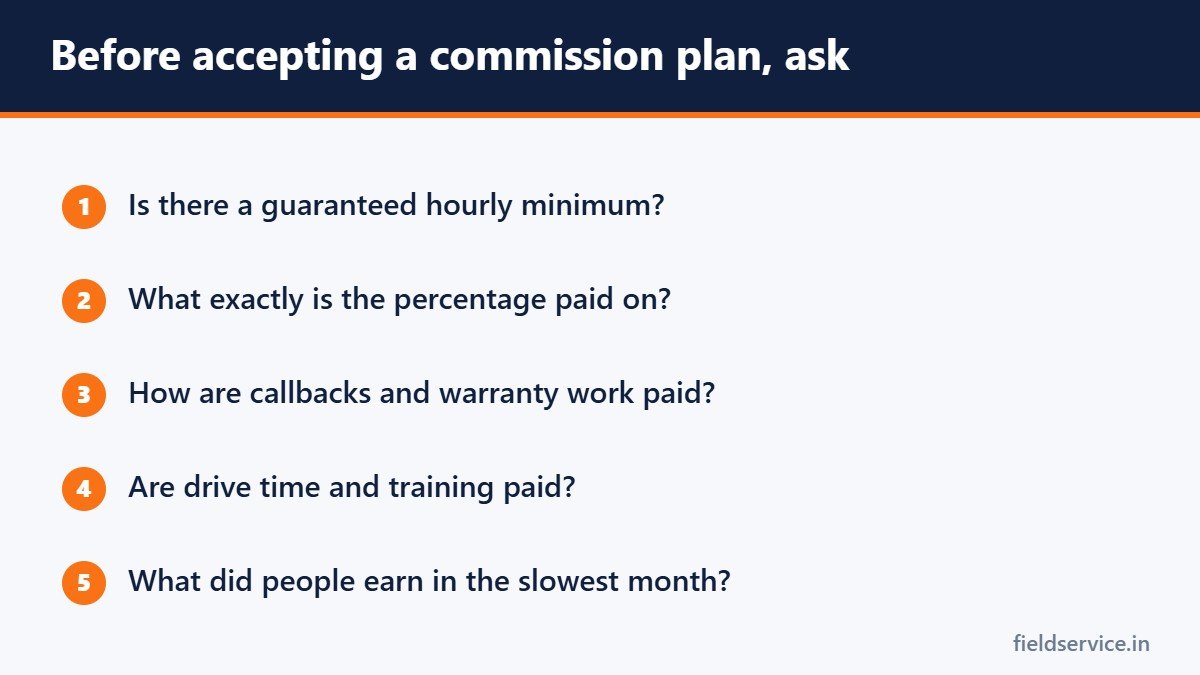
- Is there a guaranteed hourly minimum, and how is it reconciled with commission?
- What is the percentage, and is it paid on labor only or on the whole ticket?
- How are callbacks and warranty work paid?
- Are drive time, meetings and training paid?
- How are calls assigned, and who gets the installation leads?
- What happens to commission on a job that is later refunded?
- What did technicians on this plan earn in the slowest month last year?
How to compare two offers
Convert both to an annual figure. For an hourly offer, use the hourly to annual pay calculator and add a realistic amount of overtime with the overtime pay calculator. For a commission offer, ask for actual earnings across a full year, including the slow months, and compare the two totals. Then add the value of benefits, a take-home vehicle and paid time off.
For owners designing a plan
- Decide what behavior you want to reward. Revenue alone encourages overselling. Consider including quality measures such as callback rate and customer reviews.
- Keep the plan simple enough that a technician can work out their own pay.
- Assign calls fairly and openly.
- Pay for callbacks in a way that does not punish honesty about them.
- Have an employment lawyer review the plan for wage and hour compliance in your state.
Many businesses settle on a hybrid: a solid hourly base with bonuses tied to a mix of results. For how bonuses interact with overtime, see hourly pay vs. billable rate for the business side of the same numbers.
Six everyday forms in Word and PDF, plus Excel workbooks that total mileage reimbursement and overtime pay.
Not sure yet? Try two forms free or see all packs.
Frequently asked questions
Is commission pay better than hourly for technicians?
It depends on the technician, the company and the season. Commission can pay more for strong performers in busy periods. Hourly pay is more predictable. Compare a full year of realistic earnings under each plan.
Do commissioned technicians get overtime?
In general, yes, unless a specific legal exemption applies to the employer and the employee. Where overtime is owed, commissions are included in calculating the overtime rate.
What is performance pay?
It is a term many service companies use for pay based on the revenue a technician produces, often with a guaranteed hourly minimum.
What is a typical commission percentage for a service technician?
Percentages vary widely with what the commission is paid on and what else the company provides. Ask what technicians on the plan actually earned over a full year.
This article is general information and is not legal advice.
Related guides
- On-Call Pay for Technicians: How It Works and What to Ask
- How to Read Your Pay Stub as a Field Technician
- Spiffs and Bonuses for Technicians: How They Work and How They Affect Overtime