

Personal protective equipment is the last line of defense. It does not remove a hazard. It reduces the harm when something goes wrong. In service work, where the hazards change from one job to the next, the technician who has the right gear on the truck and wears it without being asked avoids most of the common injuries: metal in the eye, a cut hand, a lungful of insulation dust.
Where PPE fits
Safety professionals rank controls in order of effectiveness. Removing the hazard is best. Engineering controls, such as guards and ventilation, come next, followed by safe work procedures. PPE is at the bottom of the list because it depends on being worn correctly every time. Use it together with the other controls, not as a substitute for them.
Eye and face protection
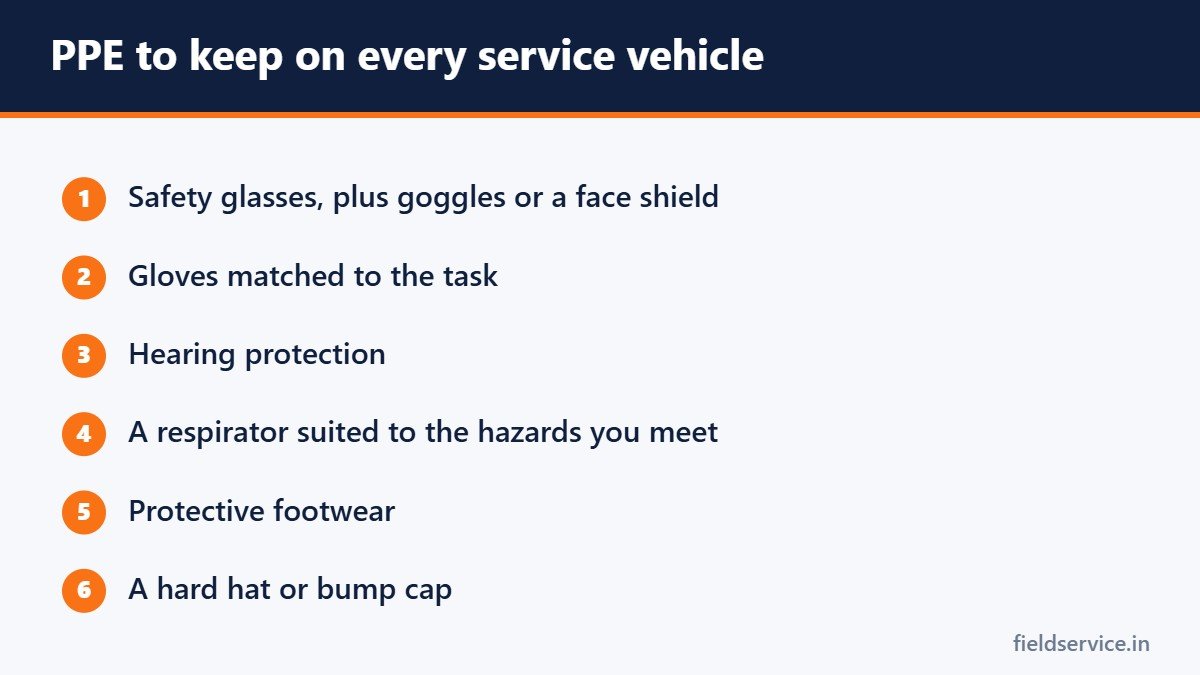
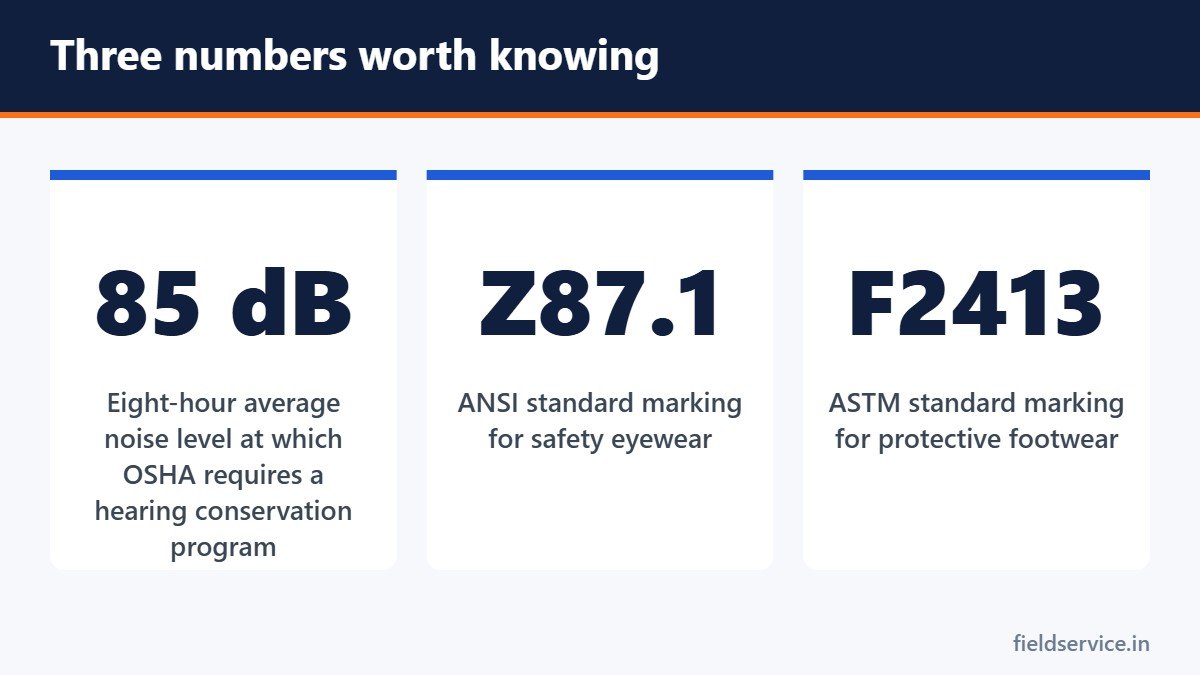
Eye injuries are among the most frequent in the trades, and nearly all are preventable. Wear safety glasses with side protection whenever you drill, cut, grind, braze, work overhead or handle refrigerants and chemicals. Look for eyewear marked as meeting the ANSI Z87.1 standard. Use goggles where there is dust, splashing liquid or work above your head, and a face shield over glasses for grinding or handling chemicals. Ordinary prescription glasses are not safety glasses.
Hand protection
No single glove does everything. Match the glove to the hazard:
- Cut-resistant gloves for sheet metal and sharp edges
- Chemical-resistant gloves for cleaners, solvents and drain chemicals
- Insulated gloves for handling refrigerant, which can cause frostbite on contact
- Leather gloves for brazing and hot work
- Electrically rated rubber gloves with leather protectors for energized electrical work, tested and maintained as the standards require
Take gloves off around rotating machinery, where they can be caught.
Hearing protection
Mechanical rooms, generators, compressors and power tools are loud enough to damage hearing over time, and the damage is permanent. OSHA requires employers to run a hearing conservation program when noise exposure reaches 85 decibels averaged over eight hours. A practical test: if you have to raise your voice to talk to someone an arm’s length away, wear protection. Earplugs and earmuffs both work when they fit properly.
Respiratory protection
Dust from insulation and drywall, mold, fumes from brazing and vapors from chemicals all call for respiratory protection, and the type depends on the hazard. A filtering facepiece such as an N95 protects against particles. It does not protect against gases, vapors or a lack of oxygen.
Under OSHA’s respiratory protection standard, when respirators are required, the employer must have a written program, and tight-fitting respirators must be fit tested. Facial hair that breaks the seal defeats a tight-fitting respirator.
Foot protection
Safety-toe boots protect against dropped equipment and rolling loads. Slip-resistant soles matter on wet floors and roofs. For electrical work, footwear rated for electrical hazard gives an added layer of protection. Look for boots marked as meeting ASTM F2413.
Head protection
A hard hat is required where there is a risk of falling objects or of striking your head on fixed objects, which covers construction sites and many commercial and industrial settings. In attics and crawl spaces, a bump cap protects against nails and framing. A bump cap is not a hard hat and should not be used where falling objects are a risk.
Other gear
- High-visibility clothing when working near traffic or moving equipment
- Arc-rated clothing for energized electrical work, selected under your employer’s electrical safety program
- Fall protection for roof work and other work at height, as the rules and your employer require
- Knee pads for crawl spaces and floor-level work
- Sun protection for outdoor work
Who pays for PPE?
OSHA requires employers to provide the protective equipment needed for the job and, with limited exceptions, to pay for it. The exceptions include ordinary safety-toe footwear and prescription safety eyewear that the employee is allowed to wear off the job, and everyday clothing. Employers must also train employees in when PPE is needed and how to wear and care for it.
Look after it
- Inspect PPE before each use.
- Replace scratched glasses, torn gloves and cracked hard hats.
- Replace a hard hat after any significant impact, and by the date the manufacturer gives.
- Store respirators clean and dry, away from dust and sunlight.
- Keep spare glasses and gloves on the truck.
Why people skip it
The usual reasons are that it is uncomfortable, the job will only take a minute, or the gear is back in the truck. Comfort is a matter of buying gear that fits. The other two are solved by habit: glasses go on when you step out of the vehicle, and the gloves and earplugs live in the bag you carry to every job.
For specific situations, see working safely in attics and crawl spaces, ladder safety and lockout/tagout basics.
Seven safety forms in Word and PDF, plus an Excel log that counts incidents, open actions and safety meetings.
Not sure yet? Try two forms free or see all packs.
Frequently asked questions
Does my employer have to pay for PPE?
OSHA requires employers to pay for most required protective equipment. Exceptions include ordinary safety-toe footwear and prescription safety eyewear that the employee may wear off the job.
Are regular prescription glasses safety glasses?
No. Safety eyewear is built and tested to an impact standard and is marked accordingly. Look for the ANSI Z87.1 marking.
Does an N95 protect against fumes and gases?
No. An N95 filters particles. It does not protect against gases, vapors or low-oxygen atmospheres, which need a different type of respirator.
When should a hard hat be replaced?
After any significant impact, when it shows cracks or damage, and by the service life the manufacturer specifies.
This article is a general overview. Follow OSHA requirements and your employer’s safety program.
Related guides
- What to Keep in a Service Vehicle: A Practical Stocking Guide
- How to Document a Service Call: A Checklist for Technicians
- How to Deal with Difficult Customers as a Field Technician