


Customers cannot judge the quality of a brazed joint or a wiring repair. What they can judge is whether the technician listened, explained what was wrong and told them the price before starting. For many customers that conversation is the service. It is also a skill that can be learned like any other part of the job.
Start by listening
Let the customer describe the problem without interruption, then repeat it back in a sentence. “So it runs, but the house never gets below 78 in the afternoon.” This confirms you understood, and it often turns up a detail that shortens the diagnosis.
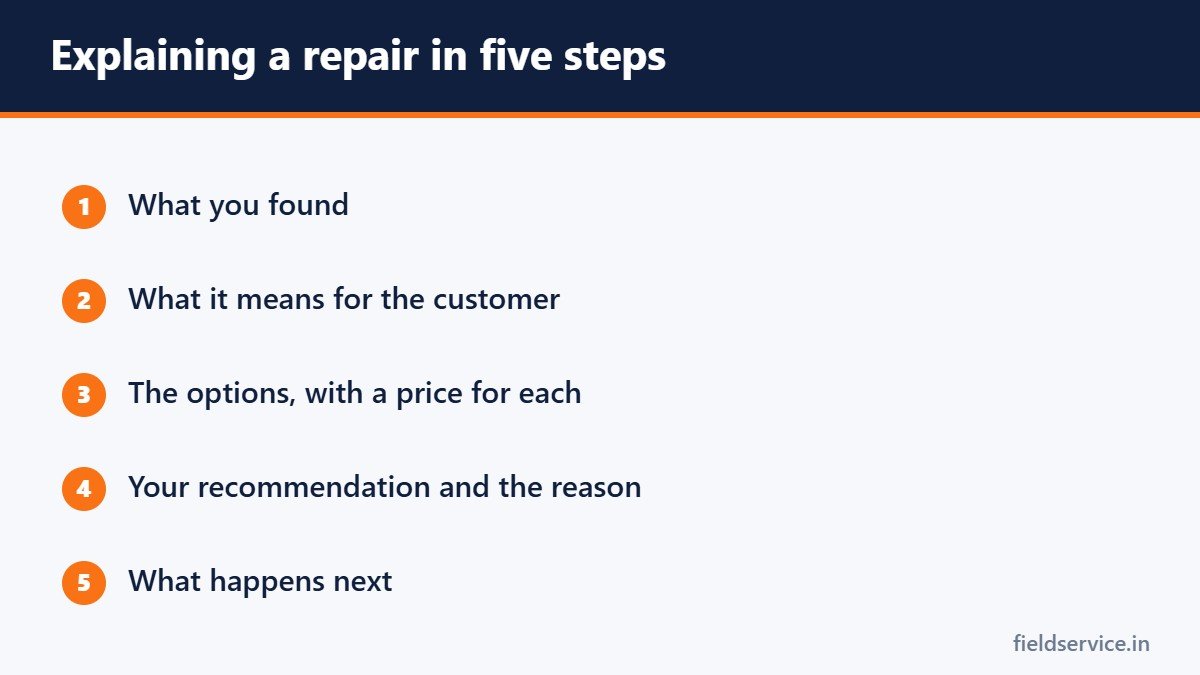
A five-part structure
1. What you found
State the fault plainly. “The capacitor that helps the outdoor fan motor start has failed.”
2. What it means
Connect it to what the customer experienced. “That is why the outdoor unit hums and the fan does not turn.”
3. The options
Give the choices, each with a price. Where it applies, include doing nothing and what that would lead to.
4. Your recommendation
Say which option you would choose and why. Customers want a professional opinion, and they can tell the difference between advice and pressure.
5. What happens next
Explain how long the repair takes and whether anything will be switched off while you work.
Use plain language
- Replace jargon with what the part does. “The control that tells the furnace when to start” is clearer than a part name.
- Use a comparison if it helps, such as comparing a clogged filter to breathing through a cloth.
- Avoid talking down. Plain is not the same as simple-minded.
Show the evidence
Let the customer see the failed part, a photo or the meter reading. Seeing a swollen capacitor or a corroded fitting removes doubt in a way that words do not.
Give the price before the work
Quote the full price and get a clear yes before you begin. If something changes during the job, stop and explain before going further. Most billing complaints come from a surprise at the end, not from the amount itself.
Handling “that seems expensive”
- Stay calm and do not take it personally.
- Explain what the price covers: the part, the labor, the trip and the warranty on the work.
- Offer a lower-cost option if a sound one exists.
- Do not cut the price on the spot. It suggests the first price was not honest.
Recommend without pressure
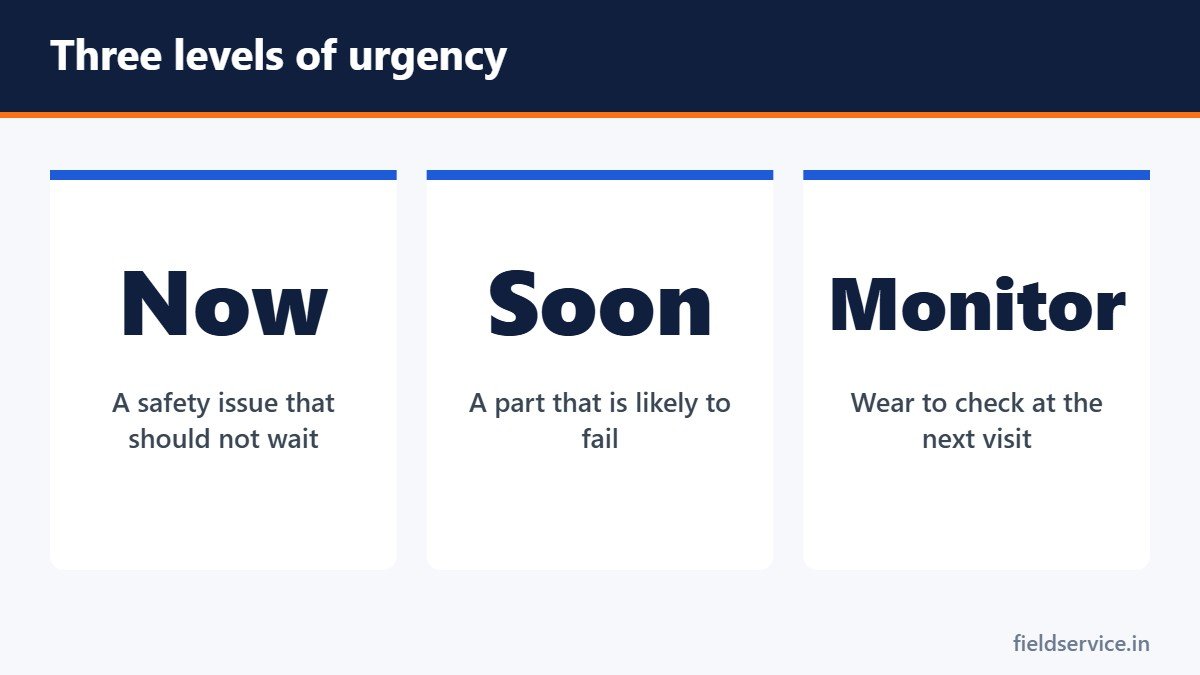
If you noticed something else, mention it and say how urgent it is. Sort findings into three groups: a safety issue, something likely to fail soon, and something to keep an eye on. Then leave the decision with the customer. Write down what you recommended and whether it was declined. Our guide on documenting a service call explains why that matters.
After the repair
- Show that the system is working.
- Explain any maintenance the customer can do, such as changing a filter.
- Tell them what to watch for and who to call.
- Ask whether they have any questions.
Why it pays
Clear explanations reduce the calls that come from misunderstanding, which helps your callback rate. They also lead to better reviews, more approved work and customers who ask for you by name.
Related guides
- In the Customer’s Home: Etiquette Every Field Technician Should Follow
- Working Alone: Safety for Lone Field Technicians
- Heat Safety for Field Technicians: Working Through Hot Weather
Six everyday forms in Word and PDF, plus Excel workbooks that total mileage reimbursement and overtime pay.
Not sure yet? Try two forms free or see all packs.