

A technician arrives, finds a failed inducer motor, and does not have one on the truck. The customer waits two more days without heat, the tech drives back across town, and a job that should have taken ninety minutes takes two visits. Nobody did anything wrong in the usual sense, yet the business paid for the job twice.
First-time fix rate is the number that tells you how often that happens.
How to calculate it
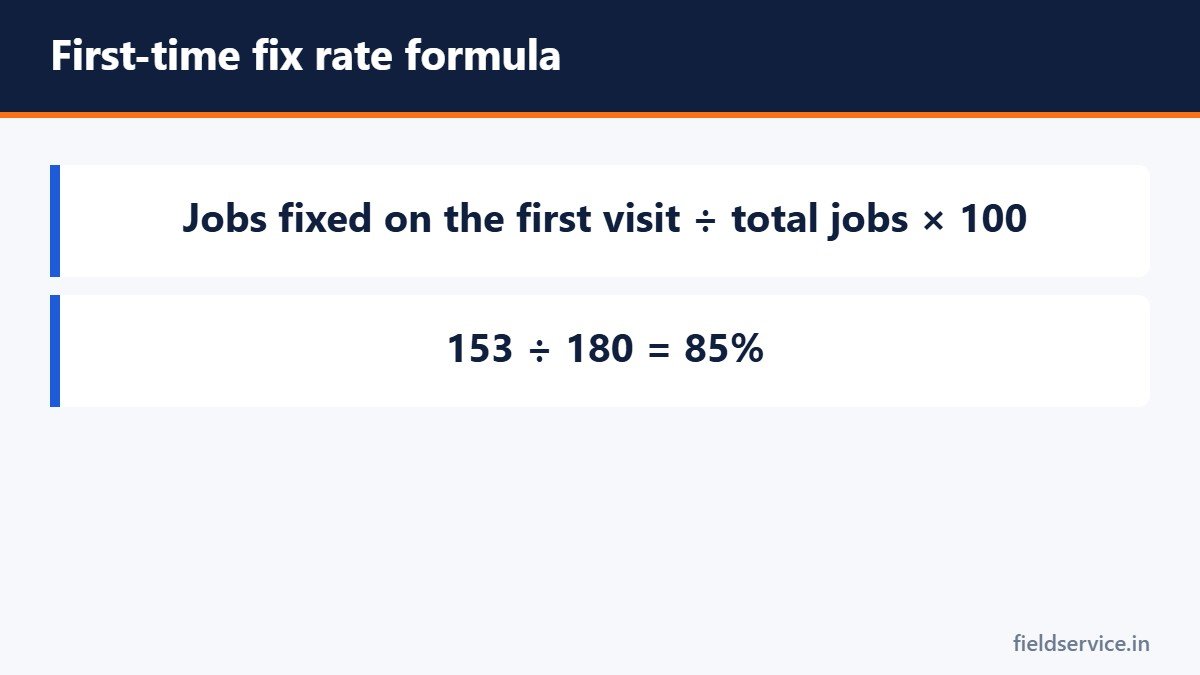
First-time fix rate = jobs completed on the first visit ÷ total completed jobs × 100
If you completed 180 jobs last month and 27 of them needed a return visit, 153 were fixed the first time. 153 ÷ 180 is 85 percent. The first-time fix rate calculator will do this for any period.
Decide what counts before you measure
The formula is simple. The definition is where teams disagree. Settle these questions and write the answers down:
- Does a planned second visit count? A job quoted on day one and installed on day two is not a failed fix. Most shops exclude it.
- How long is the window? A return to the same equipment for the same problem within 30 days is a common rule.
- Does a parts run in the middle of the job count? The customer did not see a second appointment, but you paid for the trip. Track it separately if you can.
A consistent definition matters more than a perfect one. Without it, this month’s number cannot be compared with last month’s.
Why a second trip costs more than it looks
- Unbilled labor and travel. The second drive and the second setup are rarely charged to the customer.
- A lost appointment. The slot used for the return visit could have gone to a new paying call.
- Scheduling knock-on. Return visits get squeezed into full days and push other jobs late.
- Customer confidence. People judge a service company on whether the problem was solved when the tech left.
To put a figure on the direct part of that, use the travel time cost calculator.
Find the reason before you fix anything
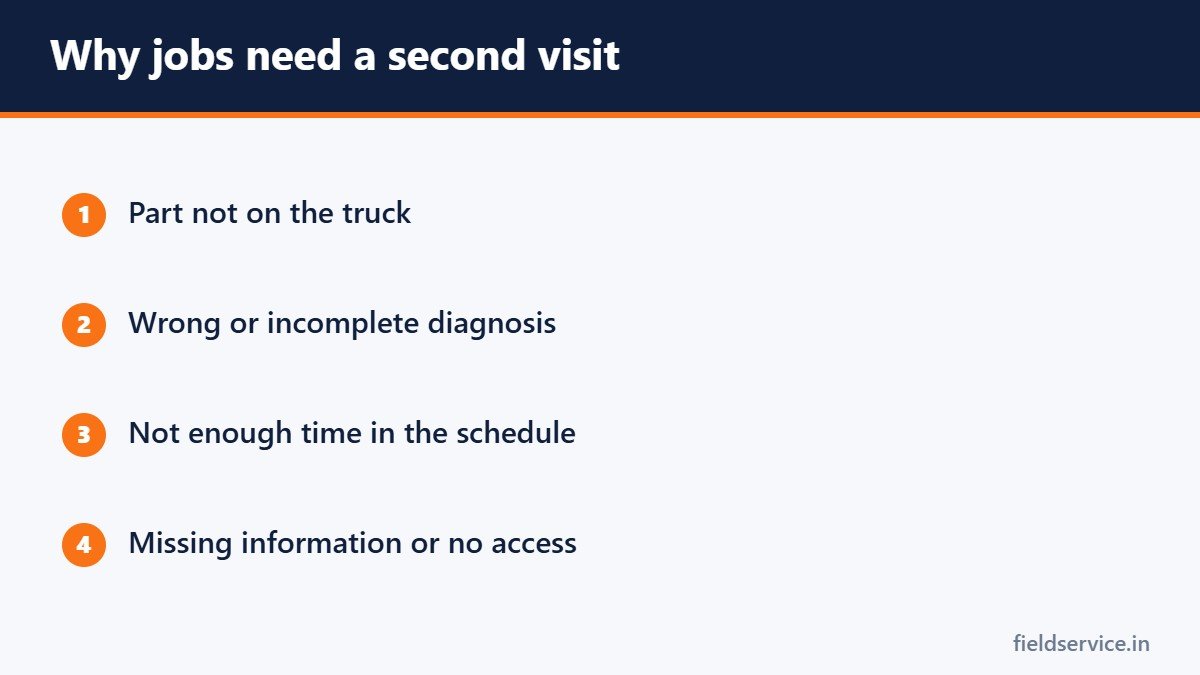
For one month, have every return visit tagged with a reason. Four categories cover most of them:
- Part not available. The diagnosis was right but the part was not on the truck.
- Wrong or incomplete diagnosis. The first repair did not address the real fault.
- Not enough time. The job was bigger than the slot allowed.
- Missing information or access. Wrong equipment details, nobody home, or no way to reach the unit.
The split tells you where to spend effort. A shop where most returns are for parts has a stocking problem. A shop where most are misdiagnoses has a training problem. Treating one with the cure for the other wastes money.
Practical ways to raise the rate
Ask better questions when the call comes in
The person who books the job can collect the make, model, age and symptoms of the equipment, and often a photo of the data plate. That lets dispatch send the right technician with the likely parts.
Stock trucks from data
Look at the parts that caused return trips over the last quarter. The ones that appear again and again belong on every truck. Review the list each season, because what fails in January is not what fails in July.
Match the technician to the job
Sending the nearest tech is efficient only if that tech can finish the work. Route complex or unusual equipment to the people trained on it.
Give technicians access to history
Previous invoices, earlier diagnoses and notes on the site save time and prevent repeated mistakes. See our guide on how to document a service call.
Leave room in the schedule
A day booked to the minute guarantees that the first job to run long turns another into a return visit.
Review misses as a team
Go through a handful of return visits each week without blame. The aim is to learn what would have let the job finish the first time.
Track it alongside callbacks
First-time fix and callback rate are related but different. A return visit for a part means the job was not finished. A callback means the job was reported finished and the problem came back. Watch both. A team can push first-time fix up by closing jobs too early, and the callback rate is what exposes it.
Measured honestly and reviewed every month, first-time fix rate is one of the clearest views you have into how well the whole operation works, from the first phone call to the stock on the truck.
Related guides
- On-Time Arrival Rate: How to Measure and Improve It
- Close Rate: How to Measure and Improve the Share of Quotes You Win
- Technician Utilization: What It Measures and What a Good Number Looks Like
Three Excel workbooks that take you from what a technician costs to what to charge, then show whether each job made money.
Not sure yet? Try two forms free or see all packs.