

A technician diagnoses the problem, writes up the repair, presents the price and the customer says they will think about it. That visit cost the business a truck roll, an hour or more of labor and an appointment slot. Whether the answer becomes a yes is what close rate measures. It is one of the few numbers that connects directly to revenue without adding a single call.
How to calculate it
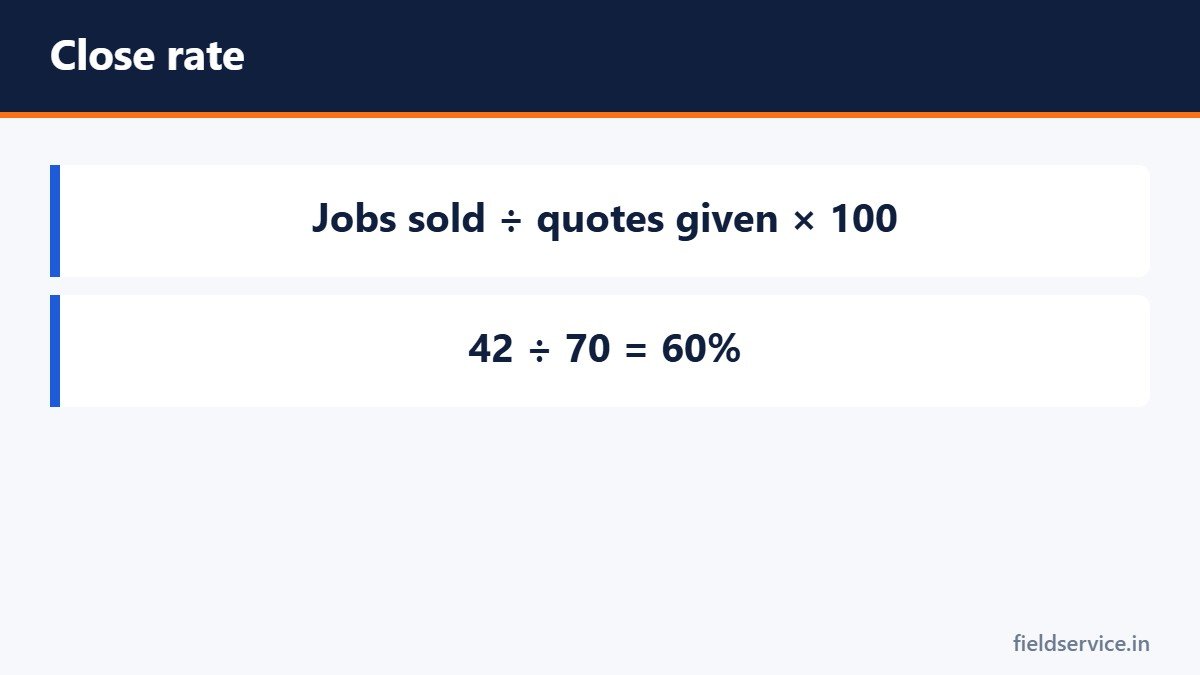
Divide the number of quotes the customer accepted by the number of quotes given, and multiply by 100. If 70 repairs were quoted in a month and 42 were approved, the close rate is 60 percent.
Decide what you are counting
- Count by quotes or by dollars? Winning 42 small jobs and losing 28 large ones looks fine by count and poor by value. Track both.
- Separate the job types. A repair quoted at the door, with the customer standing in a cold house, closes far more often than a replacement system quoted against three competitors. One blended figure hides both.
- Set a time limit. Decide how long a quote stays open before it counts as lost, for example 30 days.
- Count every quote. If only the likely ones are recorded, the rate looks better than it is.
Why it matters
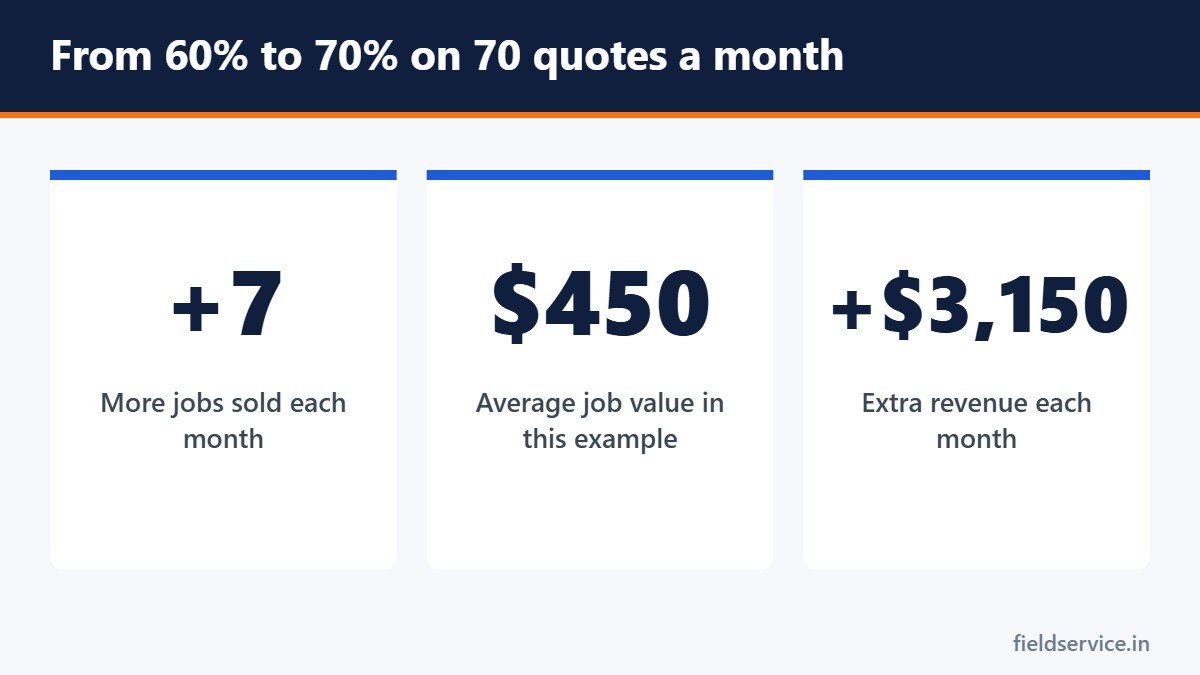
Every unsold quote has already cost you the visit. Raising the close rate turns visits you are already making into revenue. In the example, moving from 60 to 70 percent means seven more jobs a month from the same 70 quotes. At an average of $450 a job, that is $3,150 a month with no extra marketing and no extra driving.
What a low close rate can mean
- The price is out of line with the market, or the customer does not see what the price includes.
- The problem and the repair were not explained clearly.
- Only one option was offered, so the choice was yes or no.
- The customer does not have the money today and no payment option was mentioned.
- Nobody followed up.
- The leads are poor: people who were only collecting prices.
What a very high close rate can mean
A rate near 100 percent is not automatically good news. If nearly everyone says yes without hesitation, your prices may be lower than they need to be. Check them against your costs with how to price a service call. It can also mean that technicians are quoting only the repairs they are sure will be accepted and leaving out legitimate recommendations.
How to improve it
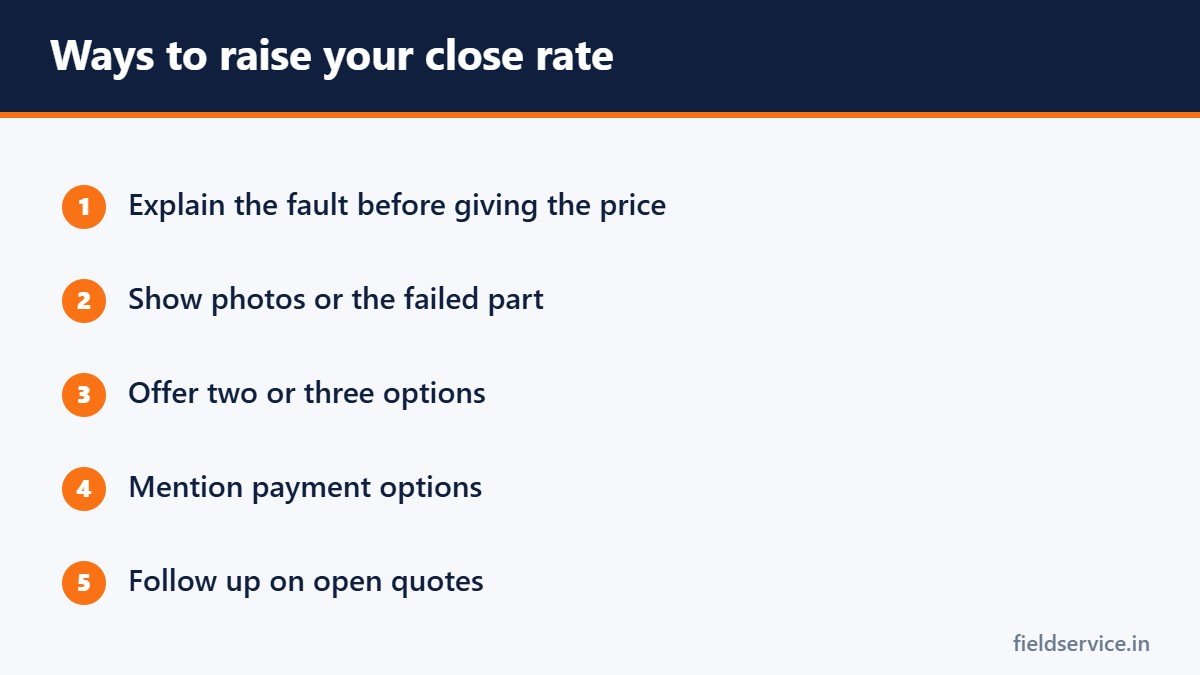
Explain before you price
A customer who understands what failed and why is ready to hear a price. One who does not will hear only the number. See how to explain a repair to a customer.
Show the evidence
Photos of the failed part, or the part itself, remove doubt. See using photos and video on service calls.
Offer options
Two or three choices, such as a basic repair, a more complete repair and replacement, change the question from whether to which.
Give the price clearly and then stop talking
State the total, say what it includes and let the customer think. Filling the silence with discounts teaches customers to wait for one.
Mention payment options
If you offer financing or accept cards, say so. Some customers decline because of timing, not price.
Follow up
Many quotes are lost because nobody called back. A short call or message two or three days later, asking whether there are any questions, recovers some of them. Keep it helpful and do not pressure.
Look at it by technician
Differences between technicians are usually about presentation, not skill on the tools. Pair someone who struggles with someone who closes well and have them watch how the conversation goes. It is one of the fastest ways to improve the number. Bear in mind that technicians sent to different kinds of calls will have different rates for reasons outside their control.
The line not to cross
Pressure tactics raise the close rate for a while. Invented urgency, alarming language about safety that is not justified, and prices that are “only good today” also produce complaints, refund demands and bad reviews, and some of them breach consumer protection rules. A good close rate comes from customers who understood the problem and chose to fix it.
Read it with other numbers
- Average ticket. If the ticket rises while the close rate falls, total revenue may not improve.
- Reviews and complaints. A rising close rate with falling reviews suggests pressure.
- Gross margin. Closing more jobs at too low a price helps nobody.
Close rate is one of the seven KPIs we suggest tracking.
Related guides
- On-Time Arrival Rate: How to Measure and Improve It
- First-Time Fix Rate: What It Is and How to Improve It
- How to Get More Customer Reviews for Your Service Business
Three Excel workbooks that take you from what a technician costs to what to charge, then show whether each job made money.
Not sure yet? Try two forms free or see all packs.
Frequently asked questions
How do you calculate close rate?
Divide the number of quotes accepted by the number of quotes given and multiply by 100. For example, 42 jobs sold from 70 quotes is a 60 percent close rate.
What is a good close rate for a service business?
It depends on the type of work. Repairs quoted on site close far more often than large replacement jobs quoted against competitors. Track each type separately and compare with your own history.
Can a close rate be too high?
Yes. If almost every quote is accepted, prices may be too low, or technicians may be quoting only the work they are sure the customer will accept.
How long should I wait before following up on a quote?
Two or three days is common for repairs. Ask whether the customer has any questions and avoid pressure.