

When temperatures drop well below freezing, water lines in cold spaces can freeze. Ice expands, pressure builds between the ice and a closed faucet, and the pipe can split. The damage often appears only when the ice melts and water pours into a wall or ceiling. For plumbers, HVAC technicians and handymen, winter brings a steady stream of frozen-pipe calls. Knowing how to prevent them, thaw them safely and explain them clearly is valuable for any technician who works in homes.
Where pipes freeze
- Pipes in unheated spaces: crawl spaces, attics, garages and unheated basements.
- Pipes along exterior walls, especially under kitchen and bathroom sinks.
- Where the water service enters the building through the foundation.
- Outdoor hose bibs, sprinkler lines and pool supply lines.
- Pipes near gaps where cold air leaks in, such as around dryer vents or sill plates.
Prevention
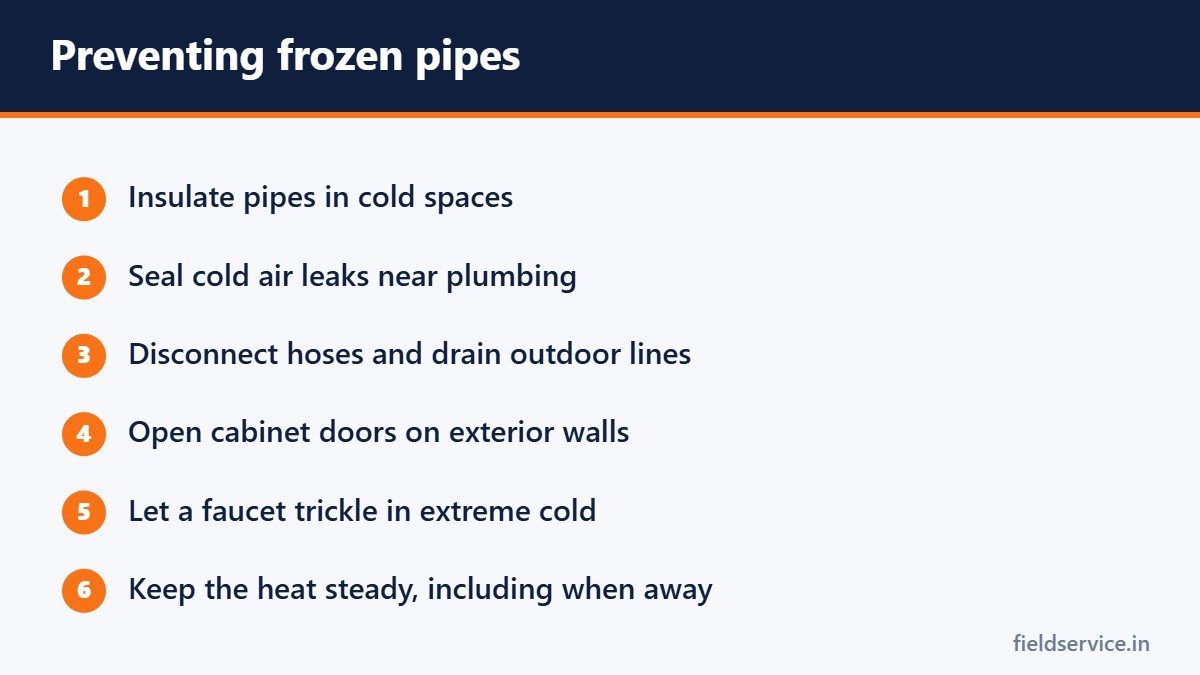
The American Red Cross recommends keeping the thermostat at a steady temperature day and night and, when away during cold weather, leaving the heat set no lower than 55°F. It also suggests letting cold water trickle from faucets served by exposed pipes during extreme cold, and using pipe sleeves or UL-listed heat tape or heat cable on exposed pipes.
Signs a pipe is frozen
- A faucet gives only a trickle, or nothing, in cold weather while others work.
- Frost on an exposed pipe.
- An unusual smell from a drain, which can point to a blocked line.
Thawing a frozen pipe safely
- Open the faucet the pipe serves, so water can flow and relieve pressure as the ice melts.
- Find the frozen section, usually in the coldest part of the run.
- Apply gentle heat: an electric heating pad, a hair dryer, towels soaked in hot water, or a space heater kept well away from anything flammable.
- Work from the faucet end back toward the frozen section.
- Keep applying heat until full water pressure returns, then check other faucets in the building.
Never use an open flame. The Red Cross specifically warns against using a blowtorch, kerosene or propane heater, charcoal stove or any other open-flame device to thaw pipes. Open flames inside walls and crawl spaces start fires, and overheating a pipe can damage it or its joints. Heat sources used with water nearby must be electrically safe.
If a pipe has burst
- Shut off the main water valve immediately. Make sure customers know where it is.
- Turn off electricity to any area where water is reaching wiring or fixtures, if it can be done safely.
- Open faucets to drain the system and relieve pressure.
- Photograph the damage for the insurance claim.
- Arrange a permanent repair by a qualified plumber.
Repairs to water supply piping may require a licensed plumber and must meet local code. See how to become a plumber for an overview of plumbing licensing.
What HVAC and other technicians can check
Technicians on heating calls are often the first to notice risk. A failed furnace in an empty house, a crawl space with an open vent, or exposed lines in an unheated garage are all worth pointing out. Add a short line to your maintenance checklist and service report. See the furnace tune-up checklist and how to document a service call.
| What you see | What to tell the customer |
|---|---|
| Exposed pipes in a crawl space or garage | Insulation or heat tape could prevent a freeze |
| Open foundation vents in winter | Closing them in cold weather may reduce the risk; check local guidance |
| Hose still connected to an outdoor faucet | Disconnect it and drain the line |
| Heating failure in a vacant home | Restore heat quickly or drain the plumbing |
Working safely
Crawl spaces in winter are cold, wet and cramped. Watch for standing water near electrical wiring, wear appropriate PPE and let someone know where you are. See attic and crawl space safety and cold stress on winter calls.
Related guides
- Water heater troubleshooting
- Holiday scheduling and on-call planning
- How to explain a repair to a customer
Sources
Six everyday forms in Word and PDF, plus Excel workbooks that total mileage reimbursement and overtime pay.
Not sure yet? Try two forms free or see all packs.
Frequently asked questions
How do I thaw a frozen pipe safely?
Open the faucet, then apply gentle heat to the frozen section with an electric heating pad, a hair dryer, towels soaked in hot water or a space heater kept away from flammable materials. Never use an open flame.
At what temperature do pipes freeze?
Water freezes at 32°F, but pipes usually freeze when outdoor temperatures stay well below freezing for some time, especially pipes in unheated spaces or along exterior walls.
Does letting a faucet drip prevent frozen pipes?
The American Red Cross recommends letting cold water trickle from faucets served by exposed pipes during extreme cold, because moving water is less likely to freeze and the open faucet relieves pressure.
What should I do if a frozen pipe bursts?
Shut off the main water valve, cut power to affected areas if it is safe, drain the system, document the damage and arrange a repair by a qualified plumber.
This article is general information. Plumbing repairs may require a licensed plumber and must meet local codes.