


A lot of the equipment technicians service sits in the worst parts of a building. Air handlers go in attics, ducts and pipes run through crawl spaces, and both are hot or damp, dark, cramped and full of things that can hurt you. Most injuries in these spaces are ordinary: a foot through a ceiling, a head on a roofing nail, heat exhaustion in July. Nearly all of them can be avoided with a short routine.
Before you go in
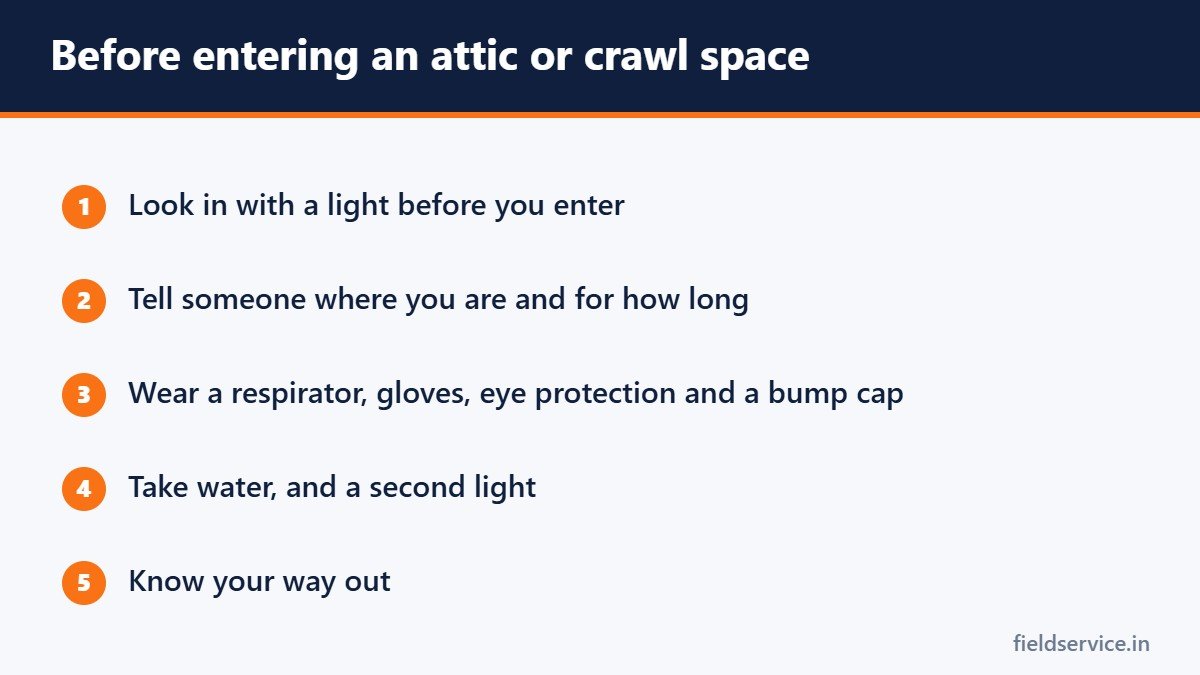
- Look in from the entrance with a good light before committing.
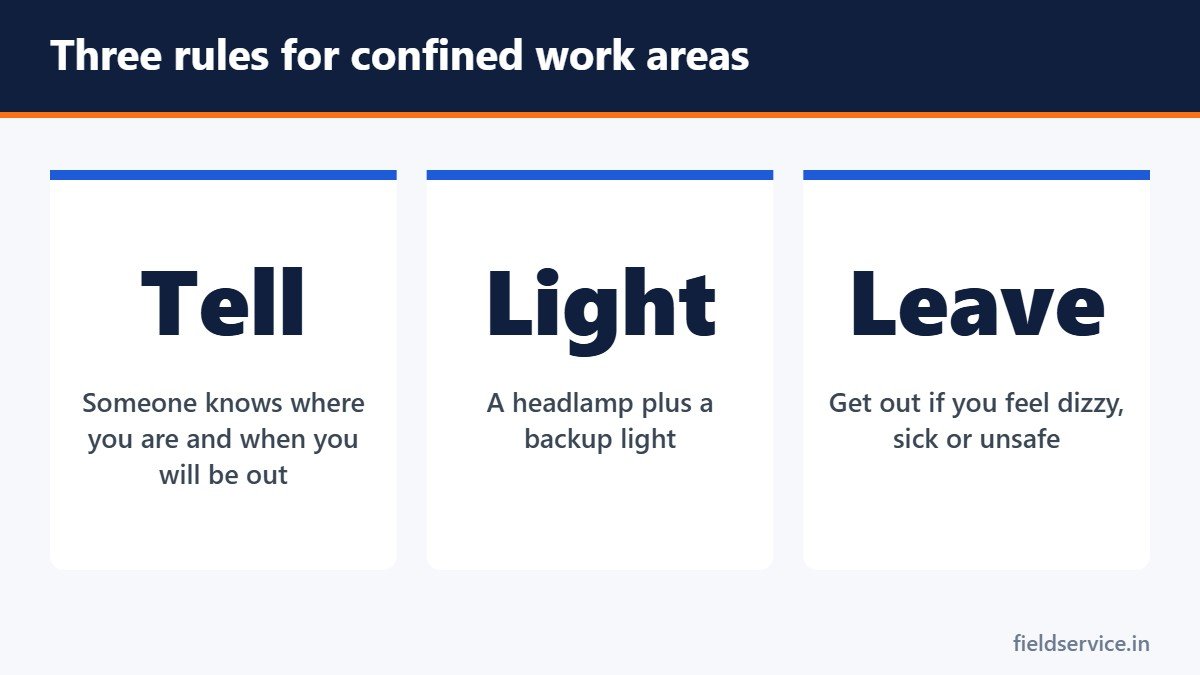
- Tell someone where you are going. If you are working alone, tell the customer or dispatch and say how long you expect to be.
- Plan the visit so you carry in everything you need in one trip.
- Check the weather. An attic on a summer afternoon can be far hotter than the outside air.
- Know how you will get out.
Attic hazards
Footing
Step only on joists, trusses or a proper walkway. The ceiling drywall between them will not hold your weight. Insulation hides the framing, so probe before you put your weight down. A couple of boards laid across the joists make a safe working platform.
Heat
Limit your time, take breaks outside the attic and drink water. Schedule attic work for the morning when you can. See heat safety for field technicians.
Head and hand injuries
Roofing nails come through the roof deck at head height. A bump cap or hard hat, gloves and long sleeves prevent most cuts and punctures.
Insulation and dust
Fiberglass irritates skin, eyes and lungs. Wear a respirator suited to the material, eye protection and long sleeves. Some older homes contain vermiculite insulation, which looks like small gray-brown pebbles. The EPA advises assuming that vermiculite may contain asbestos and not disturbing it. If you see it, stop and tell the customer and your supervisor.
Electrical
Attics contain junction boxes, splices and sometimes old or damaged wiring. Watch where you put your hands and knees, and do not assume a cable is dead.
Crawl space hazards
Water and electricity
Standing water and damp ground combined with wiring or equipment are a serious shock risk. If there is water and any electrical hazard, do not enter until the power is off and verified.
Air quality
Crawl spaces can hold mold, sewage from a leaking drain, pesticide residue and, where there is combustion equipment or a gas line, the possibility of fuel gas or carbon monoxide. If you smell gas or sewage, or feel dizzy or unwell, get out.
Animals and pests
Snakes, spiders, rodents and wasps all like crawl spaces. Look before you reach, and wear gloves.
Tight spaces and sharp objects
Low clearances mean crawling over debris, nails, broken glass and ductwork straps. Knee pads, coveralls and gloves help. Know where the exit is, because turning around can be difficult.
Equipment to take
- A headlamp, and a second light in case the first fails
- A respirator suited to the dust and materials present
- Safety glasses or goggles
- Gloves and long sleeves, or coveralls
- A bump cap or hard hat
- Knee pads for crawl spaces
- Water
- A charged phone
- A non-contact voltage tester
While you work
- Take breaks before you need them.
- Keep tools in a bag or bucket so nothing is left behind.
- Do not compress or move more insulation than you need to, and put it back when you finish.
- Watch for condensate lines, wiring and ducts that are easy to dislodge.
When to stop
Stop and get out if you see suspected asbestos, exposed live wiring in a wet area, signs of structural damage, a strong gas or sewage smell, or if you feel unwell. No repair is urgent enough to justify staying.
For owners and supervisors
Make sure every truck carries lights, respirators and protective gear, allow extra time for attic and crawl space jobs, and back up any technician who decides a space is not safe to enter. Some crawl spaces and similar areas can meet the definition of a confined space under OSHA rules, which brings additional requirements. Know which rules apply to your work.
Seven safety forms in Word and PDF, plus an Excel log that counts incidents, open actions and safety meetings.
Not sure yet? Try two forms free or see all packs.
Frequently asked questions
How long can a technician safely work in a hot attic?
There is no single safe time, because it depends on the temperature, the work and the person. Take frequent breaks outside the attic, drink water regularly and leave straight away if you feel dizzy, sick or unusually tired.
What should I do if I find vermiculite insulation?
Do not disturb it. The EPA advises assuming vermiculite insulation may contain asbestos. Stop work in that area and tell the customer and your supervisor.
Is a crawl space a confined space under OSHA rules?
Some are. It depends on the space and its hazards. Employers are responsible for evaluating the spaces their workers enter and following the rules that apply.
What respirator should I wear in an attic?
It depends on the material present. Your employer should specify the right type as part of its respiratory protection program. A basic dust mask is not suitable for every hazard.
This article is a general overview. Follow OSHA requirements and your employer’s safety program.
Related guides
- Working Alone: Safety for Lone Field Technicians
- Ladder Safety for Service Technicians
- Lockout/Tagout Basics for Service Technicians