

Equipment does not fail on a schedule. Furnaces stop on the coldest night of the year and pipes burst on holidays. If you work in service, sooner or later you will be on call. A few habits make those calls safer, quicker and much less stressful.
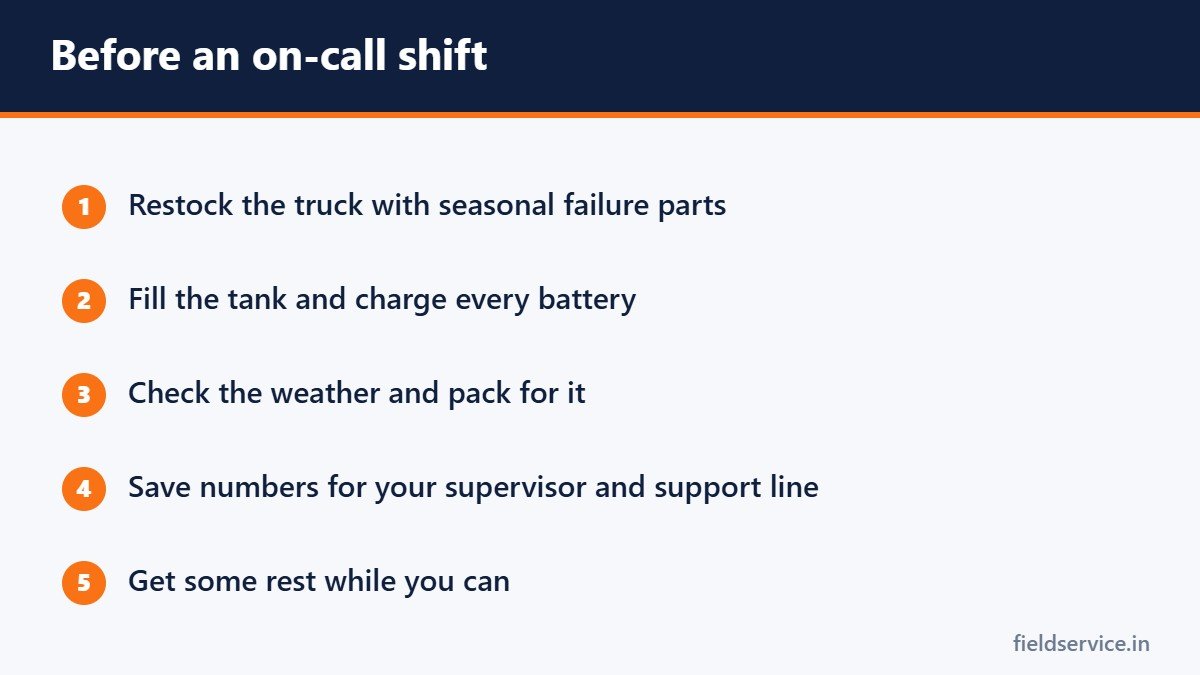
Before your on-call shift
- Restock the truck. Supply houses are closed at night. Carry the parts that fail most often in the current season.
- Fill the fuel tank.
- Charge everything. Phone, tablet, tool batteries, flashlight and headlamp.
- Check the weather and pack for it.
- Know who to call. Have numbers for your supervisor, technical support and any after-hours parts contact.
- Rest. If you are on call tonight, plan your day accordingly.
When the call comes in
Ask questions before you leave. A few minutes on the phone tells you how urgent the call is and what to bring.
- What exactly is happening, and when did it start?
- Is there any immediate danger, such as a gas smell, flooding or a carbon monoxide alarm sounding?
- What make and model is the equipment?
- Is there safe access, and will someone be there?
If the caller reports a gas smell, tell them to leave the building and call the gas utility or 911 from outside. If a carbon monoxide alarm is sounding, tell them to get everyone into fresh air and call 911. These come before any service call.
Sometimes a simple step makes the situation safe until morning, such as shutting off a water supply valve or switching a system off. Follow your company’s policy on giving that kind of advice by phone.
On site
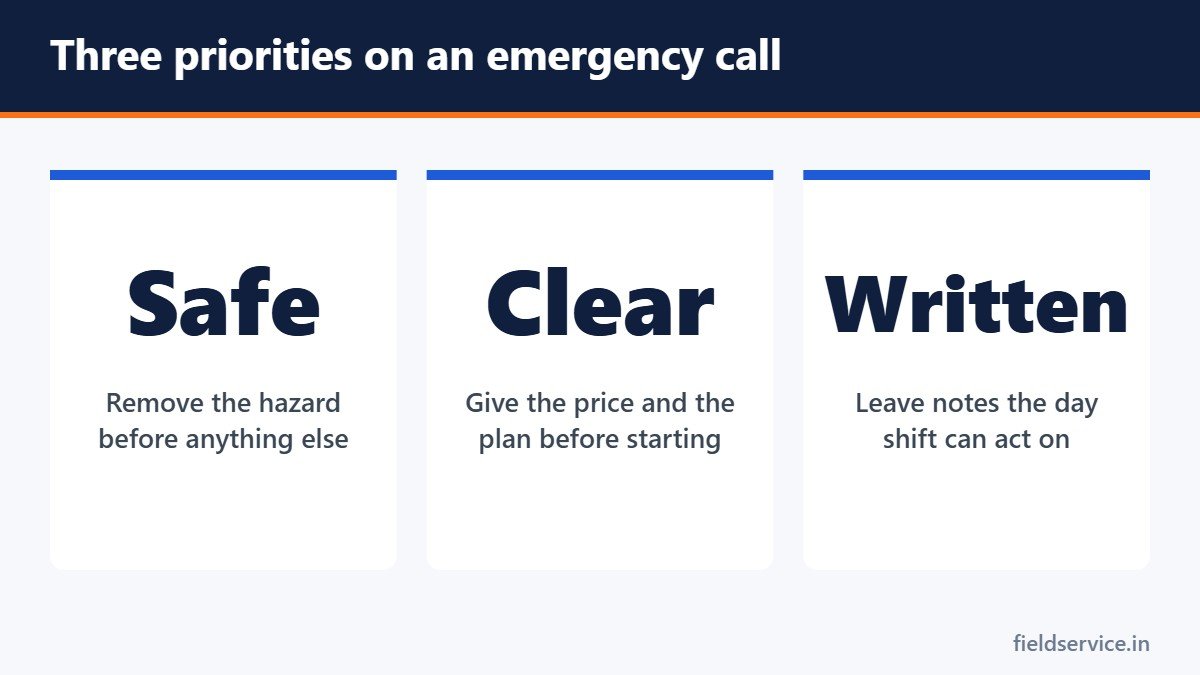
- Make it safe first. Stop the leak, isolate the fault and remove the hazard.
- Then diagnose. Work methodically. Tired people skip steps.
- Agree the price before you start. After-hours rates are usually higher, and the customer should hear the figure before work begins.
- Decide between a temporary and a permanent repair. If the part is not available tonight, a safe temporary fix and a booked return visit are a reasonable result.
Working alone at night
- Tell dispatch or a supervisor where you are going, and check in when you leave.
- Park in a lit area and keep the truck locked.
- If a situation feels unsafe, leave and call it in.
- Take extra care with ladders and roofs in the dark. See ladder safety for service technicians.
- Watch your own fatigue, especially on the drive home.
Talking to a stressed customer
People who call at 2 a.m. are worried and often upset. Tell them what you are going to do, how long it will take and what it will cost. Calm, clear information does more than reassurance. Our guide on how to explain a repair to a customer has a simple structure to follow.
Document it
Record what you found, what you did, any temporary measures and what still needs to be done. The day shift will pick up the job from your notes. See how to document a service call.
After the call
- Restock what you used.
- Flag the follow-up visit to dispatch.
- Get some sleep before your next shift if you can.
Understand your on-call pay
On-call arrangements vary a great deal. Ask your employer:
- Is there a flat payment for carrying the on-call phone?
- Is there a minimum number of paid hours for each call-out?
- Are after-hours calls paid at a higher rate?
- How is the rotation shared out?
Time spent on an actual call counts as hours worked and goes toward overtime. Whether the waiting time is paid depends on how restricted you are. Our article on how overtime pay works for field technicians explains the rule, and the overtime pay calculator will show what a heavy week comes to.
For owners
- Rotate on-call fairly and publish the schedule well ahead.
- Pay for it in a way that reflects the disruption.
- Set a clear policy on what counts as an emergency.
- Make sure a technician who was out most of the night is not expected to work a full day afterward.
Related guides
- How to Prepare for a Field Technician Interview
- Arrival Windows: How to Schedule Service Calls Customers Can Plan Around
- Working Safely in Attics and Crawl Spaces
Six everyday forms in Word and PDF, plus Excel workbooks that total mileage reimbursement and overtime pay.
Not sure yet? Try two forms free or see all packs.