


Two technicians with the same skills and the same schedule can finish the day an hour apart. The difference is rarely speed on the tools. It is what happens around the jobs: finding parts, backtracking across town, writing up three calls from memory at six in the evening. A simple routine removes most of that.
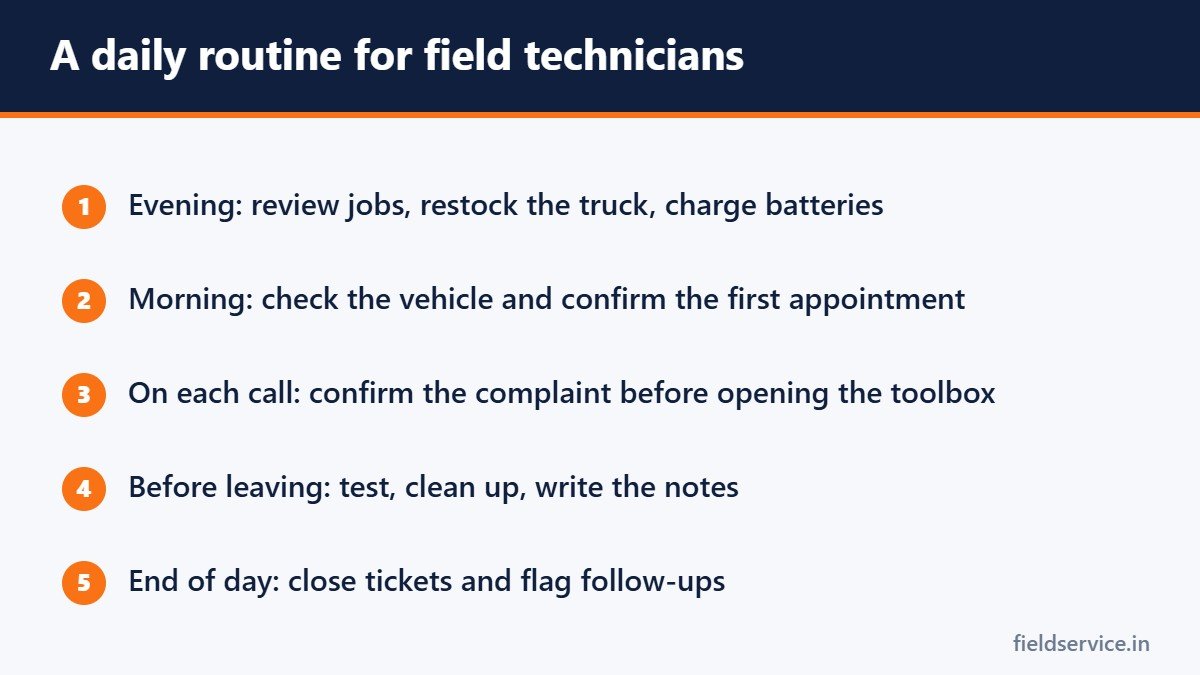
The night before
- Look at tomorrow’s schedule and read the notes on each job.
- Check that the parts you are likely to need are on the truck.
- Charge tool batteries, your phone and your tablet.
- Restock anything you used today from the day’s tickets.
- Fuel up if you are low, so the morning does not start at a gas station.
Fifteen minutes in the evening is worth more than the same time in the morning, because problems found at night can still be solved before the first appointment.
The start of the day
- Walk around the vehicle and check tires, lights and that the load is secure.
- Look at the route as a whole. If dispatch allows it, suggest swapping two jobs that would otherwise send you back across town.
- Call or text the first customer with an arrival time.
On each call
Arrive ready
Read the job history before you knock. Bring the bag with the tools you use on almost every job, so your first trip from the truck is usually your only one.
Confirm the problem
Ask the customer to describe what is happening and when it started. Two minutes of listening often saves twenty of diagnosis.
Diagnose, then quote
Find the cause before you replace anything, and get approval for the price before you start the repair.
Finish properly
Test the repair, clean the work area and write your notes before you start the truck. Notes written at the job are faster and more accurate than notes written later. Our guide on documenting a service call has a checklist.
Between calls
- Tell dispatch as soon as you are running late. Earlier is always better.
- Use short gaps for small tasks such as restocking a bin or returning a customer’s call.
- Eat and drink. Skipping lunch leads to mistakes in the afternoon.
When the day goes wrong
It will. A simple job turns into a long one, or a part is wrong. Decide quickly whether to stay and finish or to reschedule, tell dispatch, and let them call the affected customers. One honest call saying you will be an hour late is better than arriving late with no warning.
The end of the day
- Close every ticket.
- Flag any follow-up, such as a part to order or a quote to send.
- Restock from today’s tickets.
- Clear trash and scrap out of the truck.
Why it pays
An organized day means less driving, fewer second trips and fewer forgotten details. Those show up directly in first-time fix rate and in how many calls you can run. To see what the drive time alone is worth, try the travel time cost calculator.
Related guides
- PPE for Field Technicians: What to Wear and When
- Lockout/Tagout Basics for Service Technicians
- Ladder Safety for Service Technicians
Six everyday forms in Word and PDF, plus Excel workbooks that total mileage reimbursement and overtime pay.
Not sure yet? Try two forms free or see all packs.