


A service business can be profitable on paper and still run out of cash. Payroll goes out every week or two; supply houses want paying on their terms; fuel and insurance do not wait. Meanwhile customers pay when they pay. The gap between doing the work and receiving the money is where many small businesses get into trouble. The good news is that most of that gap is under your control.
Profit and cash are not the same
Profit is what is left after costs over a period. Cash is what is in the bank today. A month of large commercial jobs on 30-day terms can show a healthy profit while the bank balance falls, because you paid wages and parts now and will be paid later. Watching cash separately from profit is the first step.
Measure how fast you get paid
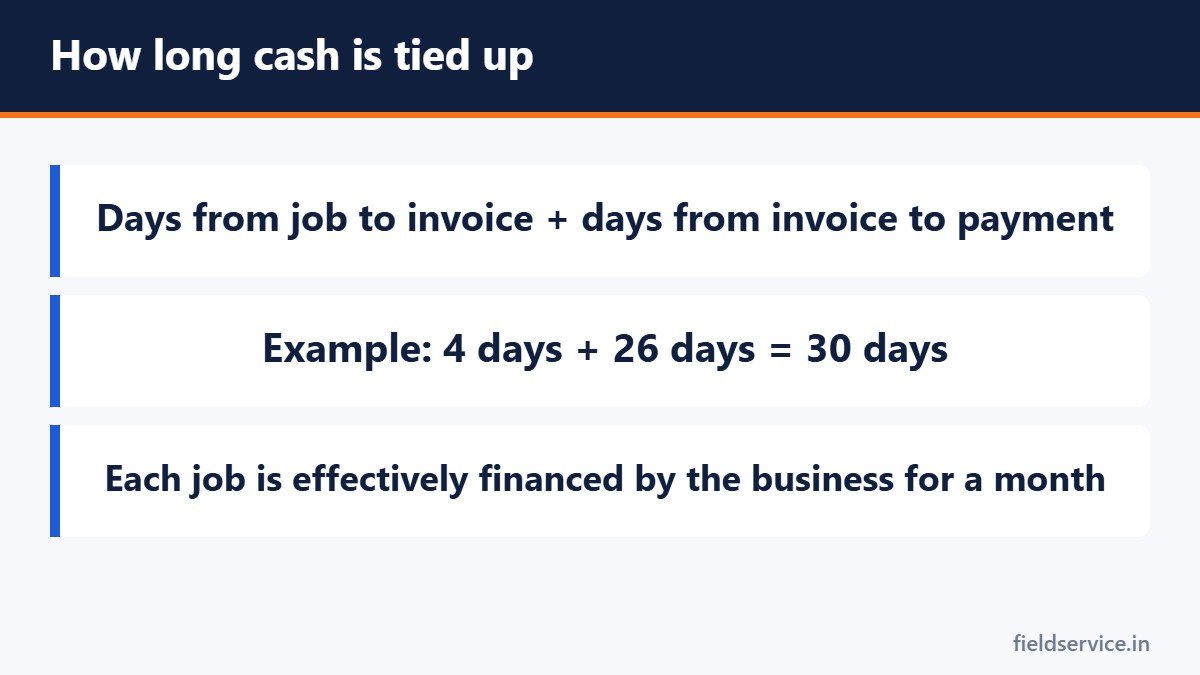
Two simple numbers tell you most of what you need:
- Days to invoice: the average number of days from finishing a job to sending the invoice.
- Days to collect: the average number of days from invoice to payment.
Nine ways to get paid faster
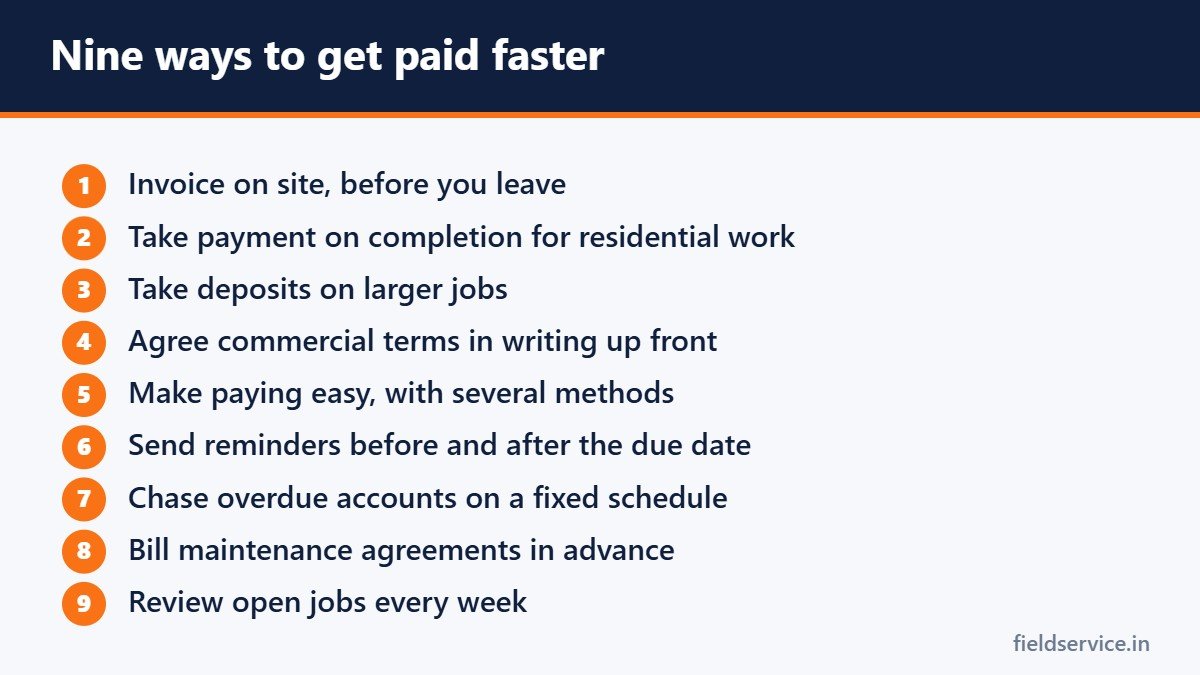
1. Invoice on site
An invoice handed over or emailed before the technician leaves is paid faster than one sent days later. It also catches mistakes while the customer is there. See how to write a service invoice.
2. Payment on completion for homeowners
For residential work, state on the estimate that payment is due when the job is done, and take it on site. See taking payments in the field.
3. Deposits on larger jobs
For installations, replacements and special-order parts, a deposit covers your material costs and confirms the customer’s commitment. Put the amount and refund terms in writing, and check whether your state limits contractor deposits.
4. Clear commercial terms
Commercial customers often expect 30-day terms. Agree them before the work, print the actual due date on each invoice, and know who approves payment at the customer’s end.
5. Make paying easy
Accept cards, bank transfers and online payment links. Card fees cost money, but so does waiting three weeks for a check.
6 and 7. Remind and chase on a schedule
| When | What to send |
|---|---|
| A few days before the due date | A friendly reminder with the invoice and a payment link |
| On the due date | A short note that payment is now due |
| 7 days overdue | A phone call and a written reminder |
| 30 days overdue | A firm letter stating next steps under your terms |
| Later | A decision: payment plan, collection agency or small claims |
Late fees must be agreed in advance and must comply with your state’s rules.
8. Bill agreements in advance
Maintenance agreements billed annually in advance, or monthly by automatic payment, bring steady cash before the work is done. See how to price a maintenance agreement.
9. Review open jobs weekly
Every week, check for jobs completed but not invoiced and invoices overdue. Ten minutes on a Monday catches money that would otherwise slip.
Plan for slow seasons
Most trades have busy and quiet seasons. Build a cash reserve in the busy months to cover payroll and overhead in the slow ones, and use quiet months for maintenance visits that bring cash in. See seasonal planning.
Knowing your break-even point tells you how much revenue a month must bring in to cover costs, which makes cash planning much easier.
Related guides
Estimate, invoice and work order templates in Word and PDF, plus Excel workbooks for job scheduling and maintenance agreement renewals.
Not sure yet? Try two forms free or see all packs.
Frequently asked questions
Why does my service business have cash problems when it is profitable?
Because profit and cash are measured differently. If you pay wages and suppliers before customers pay you, cash can fall even while the business makes a profit.
How can I get customers to pay faster?
Invoice on site, take payment on completion for residential work, offer several payment methods, take deposits on large jobs and send reminders on a fixed schedule.
Should I charge late fees?
Late fees can encourage prompt payment, but they must be agreed in advance and comply with your state’s laws. Many businesses find that easy payment and prompt reminders work better.
How much cash reserve should a service business keep?
Many owners aim to cover at least a few months of fixed costs, especially before a slow season. The right amount depends on how seasonal your work is.
This article is general information and is not financial, legal or accounting advice.