


Technicians climb ladders so often that the risk stops registering. Attic hatches, rooftop units, light fixtures and gutters are all routine. Falls from ladders are also one of the most common causes of serious injury in the trades, and most of them happen on ordinary jobs at modest heights. The basics below take seconds to follow.
Choose the right ladder
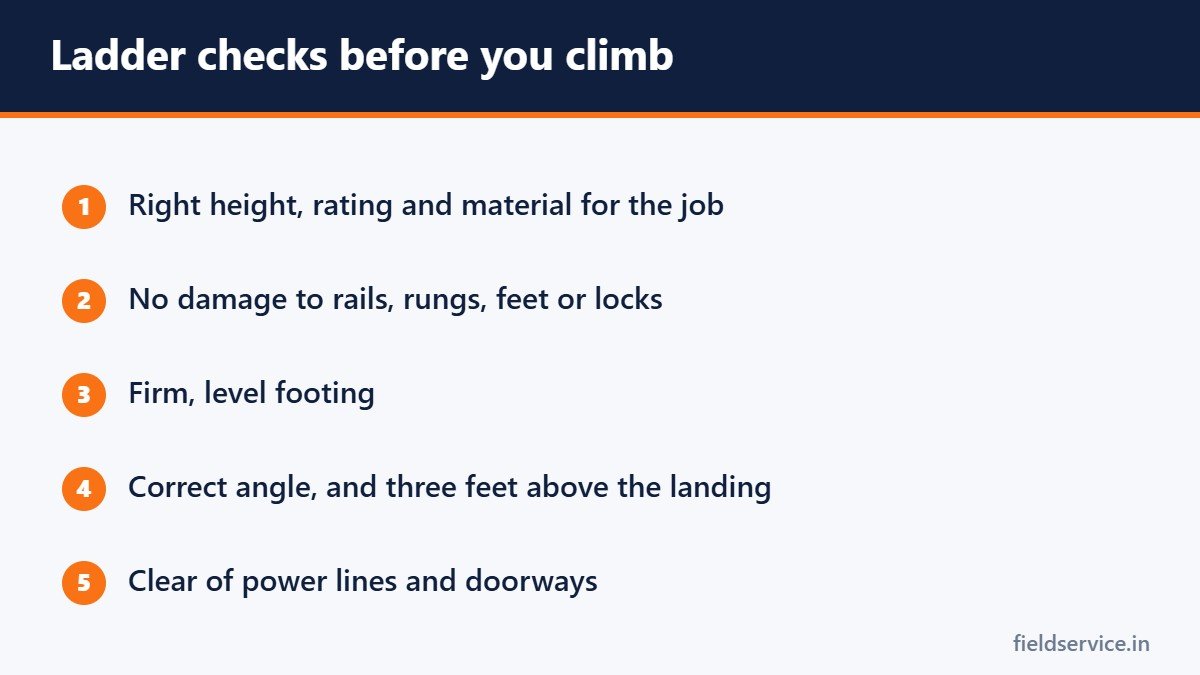
- Height. Pick a ladder tall enough that you do not have to stand on the top steps or overreach.
- Duty rating. The rating must cover your weight plus your tools and materials.
- Material. Use a non-conductive ladder, such as fiberglass, anywhere you could contact electrical equipment or power lines. Aluminum conducts electricity.
- Type. Use a stepladder for freestanding work and an extension ladder to reach a roof or upper level. Do not lean a closed stepladder against a wall unless it is designed for that.
Inspect it before every use
- Rails free of cracks, bends and splits
- Rungs and steps tight, clean and dry
- Feet and non-slip pads in place
- Spreader bars and locks working
- Rope and pulley in good condition on extension ladders
A damaged ladder should be tagged and taken out of service, not put back on the truck.
Set it up correctly
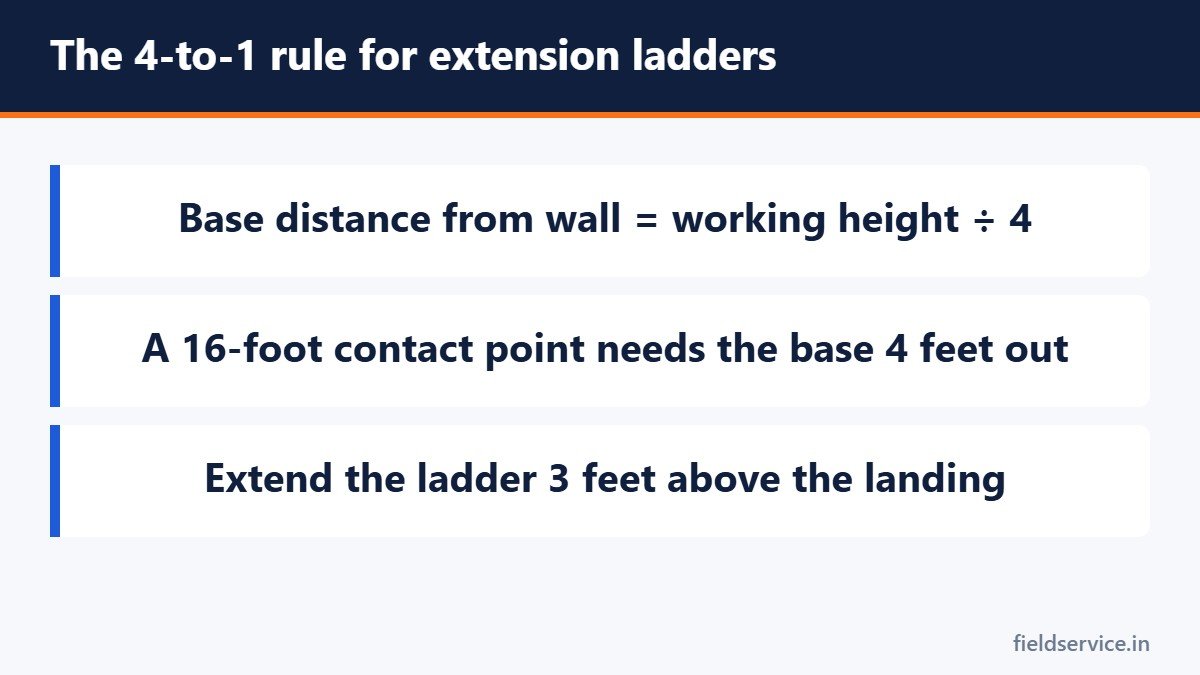
- Use the 4-to-1 rule. For every four feet of height to the point where the ladder touches, set the base one foot out from the wall.
- Extend three feet above the landing when you are stepping off onto a roof, so you have something to hold.
- Find firm, level ground. Do not stack boards or blocks under one foot.
- Secure the ladder at the top or the base where you can.
- Open stepladders fully and lock the spreaders.
- Look up. Check for power lines before raising the ladder, and keep clear of doors that could open into it.
Climb and work safely
- Face the ladder and keep three points of contact: two hands and one foot, or two feet and one hand.
- Carry tools on a belt or haul them up with a rope. Keep your hands free for climbing.
- Keep your belt buckle between the side rails. If you have to lean, climb down and move the ladder.
- Do not stand on the top cap or top step of a stepladder.
- Only one person on the ladder unless it is designed for two.
Mistakes behind most falls
- Overreaching to avoid moving the ladder
- Setting up on soft or uneven ground
- Using a ladder that is too short
- Carrying equipment in both hands while climbing
- Rushing at the end of the day
- Climbing in wet, icy or windy conditions
Rooftop work
Getting on and off the roof is the riskiest moment. Tie off the ladder where possible, step off to the side and never over the top rung, and follow your employer’s fall protection rules once you are on the roof.
For owners and managers
Supply ladders that suit the work your crews do, inspect them on a schedule, and train new hires before their first climb. Make it clear that moving a ladder is never a waste of time.
This article is a general overview. Follow OSHA requirements, the ladder manufacturer’s instructions and your employer’s safety program.
Related guides
- Working Alone: Safety for Lone Field Technicians
- Driving Safety for Service Technicians
- How to Explain a Repair to a Customer
Sources
Seven safety forms in Word and PDF, plus an Excel log that counts incidents, open actions and safety meetings.
Not sure yet? Try two forms free or see all packs.