

Heating and cooling equipment breaks in every kind of economy, and somebody has to fix it. That is a large part of why HVAC is one of the steadier skilled trades to get into. It does not need a four-year degree, you can earn while you learn, and the work cannot be done from another country. This guide covers what the job pays, how people get into it and what you need to be certified for.
What the job involves
HVAC technicians install, maintain and repair heating, air conditioning, ventilation and refrigeration systems in homes and commercial buildings. A typical day mixes diagnosis, electrical work, brazing, airflow measurement and a good deal of talking to customers. It is physical work. Expect attics in summer, rooftops in winter, crawl spaces and ladders.
Most techs start in residential service or installation. From there the trade branches into commercial systems, refrigeration, controls and building automation, and sales or management.
Pay and job outlook
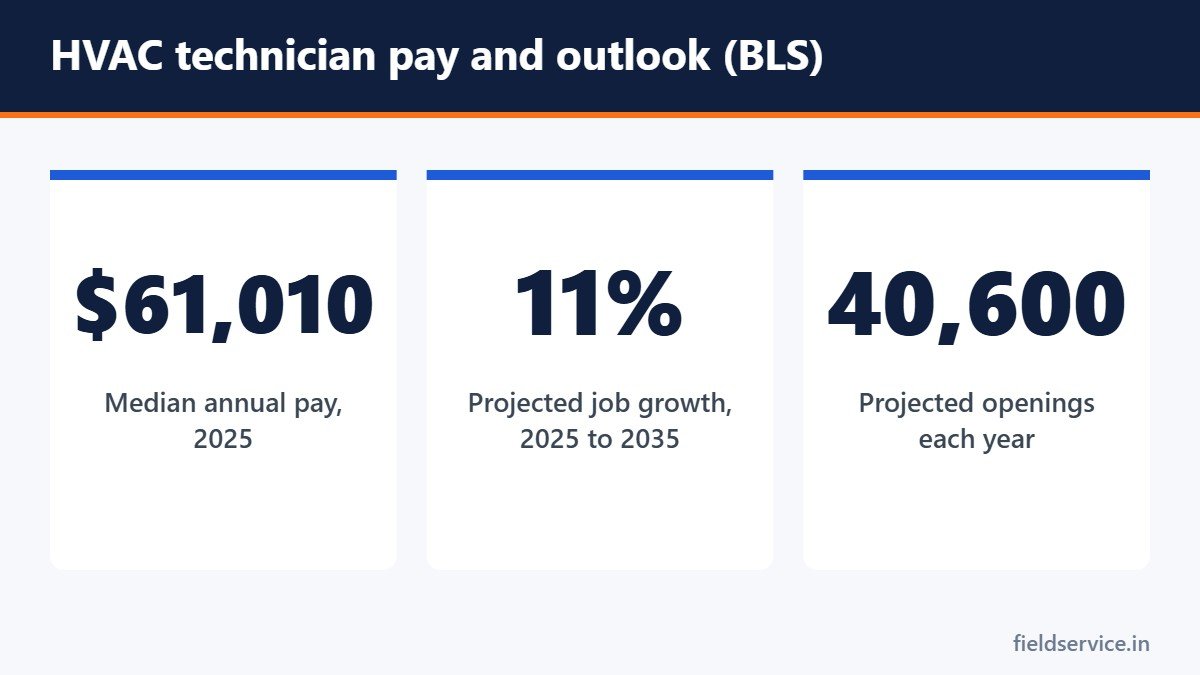
The U.S. Bureau of Labor Statistics publishes figures for heating, air conditioning and refrigeration mechanics and installers:
| Measure | Figure |
|---|---|
| Median pay, 2025 | $61,010 a year ($29.33 an hour) |
| Lowest 10 percent earned | Less than $40,050 |
| Highest 10 percent earned | More than $95,210 |
| Jobs, 2025 | 440,900 |
| Projected growth, 2025 to 2035 | 11 percent |
| Projected openings each year | About 40,600 |
The BLS describes that growth rate as much faster than the average for all occupations. Pay varies widely with region, specialty and experience, and many technicians add to their base pay with overtime, on-call pay and commissions. To see what an hourly rate comes to over a year, use the hourly to annual pay calculator.
Two routes into the trade
Trade school or community college
Certificate and associate degree programs in HVACR typically run from about six months to two years. You learn electrical theory, the refrigeration cycle, heating systems and safety in a classroom and a lab, and most programs include preparation for the EPA certification exam. You pay tuition and graduate needing field experience, but you start with a solid base of theory.
Apprenticeship
An apprenticeship combines paid work under an experienced technician with classroom instruction, usually over three to five years. Unions, contractor associations and individual employers all sponsor them. You earn a wage from the first day and the pay rises as you progress. Places can be competitive.
Some people take a third path and start as a helper or installer with a contractor willing to train them. It works, though the quality of the training depends on the employer.
The certification you must have
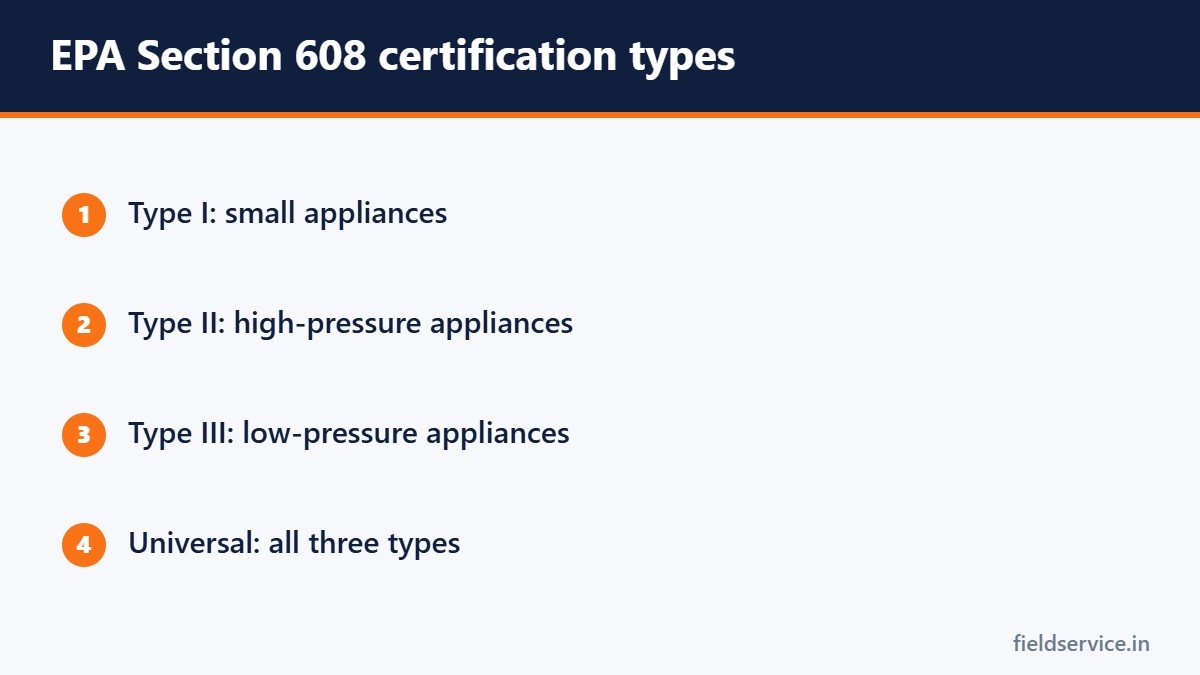
Under Section 608 of the Clean Air Act, anyone who maintains, services, repairs or disposes of equipment that could release refrigerant must be certified by an EPA-approved organization. There are four types:
- Type I: small appliances
- Type II: high-pressure and very high-pressure appliances, which covers most residential and commercial air conditioning
- Type III: low-pressure appliances
- Universal: all three
Most people go for Universal. The certification does not expire.
State and local licenses
Licensing rules differ a great deal from state to state. Some states license individual technicians, some license only the contractor who owns the business, and some leave it to cities and counties. Check with your state licensing board before you plan around a job in a new area.
Optional credentials
Industry certifications such as NATE are voluntary. They show employers that you have passed a knowledge test in a specialty, and some companies pay more for them. Manufacturer training is also valuable, particularly on newer equipment.
Skills that make a technician valuable
- Electrical troubleshooting. A large share of service calls come down to an electrical fault. Being comfortable with a multimeter and a wiring diagram sets you apart early.
- A methodical approach. Good technicians find the cause of a failure before they replace anything.
- Communication. Explaining a repair clearly to a worried homeowner is a skill, and it affects how much work you sell and how many complaints you get.
- Documentation. Clear notes and readings protect you and help the next tech. See our guide on documenting a service call.
- Staying current. Equipment is changing. Since 2025, new residential systems use A2L refrigerants, which we cover in our guide to the R-410A rule change.
What the first years look like
Expect to start with maintenance visits and installation help: changing filters, cleaning coils, pulling wire and carrying equipment. It is not glamorous, and it is where you learn how systems are put together. Within a year or two most people are running their own service calls. Buy good hand tools gradually, ask questions and keep a notebook of the faults you see and how they were fixed.
Steps to get started
- Finish high school or a GED. Math and basic physics help.
- Look at HVACR programs and registered apprenticeships in your area and compare cost and length.
- Call local contractors and ask what they look for in a new hire.
- Pass the EPA Section 608 exam.
- Check your state’s licensing rules.
- Get a clean driving record. Most service jobs require one.
Related guides
- How to Become an Electrician: Training, Licensing and Pay
- How to Become a Plumber: Apprenticeship, Licensing and Pay
- Field Service Career Paths: Where the Trades Can Take You
Sources
- U.S. Bureau of Labor Statistics, Occupational Outlook Handbook: Heating, Air Conditioning, and Refrigeration Mechanics and Installers
- EPA, Section 608 Technician Certification
Six everyday forms in Word and PDF, plus Excel workbooks that total mileage reimbursement and overtime pay.
Not sure yet? Try two forms free or see all packs.